

On most planets in the Solar System, if life exists at all, it is hidden beneath their surface. However, there is not enough sunlight there. Scientists suggest that high-energy cosmic radiation particles, capable of penetrating even ice and rock, may serve as a source of energy for it.
A new perspective on the conditions for life
A new study conducted at New York University Abu Dhabi has shown that high-energy particles from space, known as cosmic rays, can generate the energy needed to sustain life underground on planets and moons in our Solar System.
Research shows that cosmic rays may not only be harmless in certain environments, but may actually promote the survival of microscopic life. These findings challenge the traditional view that life can only exist near sunlight or volcanic heat.
The study, published in the International Journal of Astrobiology, was led by Dimitra Atri, principal investigator at the Space Research Laboratory of the Center for Astrophysics and Space Sciences (CASS) at New York University Abu Dhabi (NYUAD).
Radiolysis on other planets
The team focused on what happens when cosmic rays hit water or ice underground. The impact breaks water molecules and releases tiny particles called electrons. Some bacteria on Earth can use these electrons to generate energy, similar to how plants use sunlight. This process is called radiolysis, and it can sustain life even in dark, cold environments without sunlight.
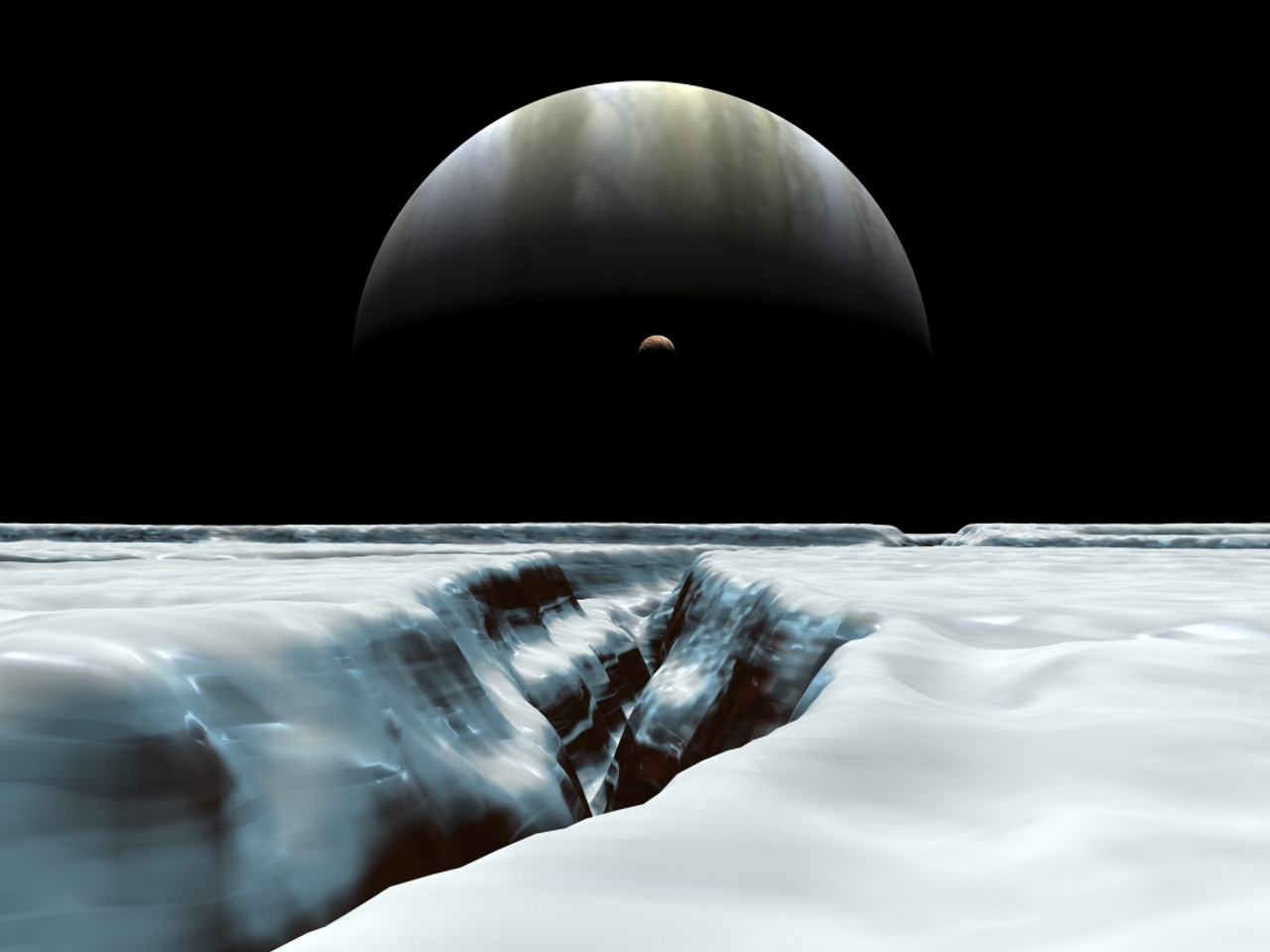
Using computer modeling, scientists investigated how much energy this process could produce on Mars and on the icy moons of Jupiter and Saturn. It is believed that water is hidden beneath the thick layer of ice on these moons. The study showed that Saturn’s icy moon Enceladus has the greatest potential for sustaining life, followed by Mars and then Jupiter’s moon Europa.
Expanding the habitable zone
“This discovery changes the way we think about where life might exist,” said Atri. “Instead of looking only for warm planets with sunlight, we can now consider places that are cold and dark, as long as they have some water beneath the surface and are exposed to cosmic rays. Life might be able to survive in more places than we ever imagined.”
The study presents a new concept called the “radiolytic habitable zone.” Unlike the traditional “Goldilocks Zone” — the area around a star where liquid water can exist on the surface of a planet — this new zone focuses on places where water exists underground and can be activated by cosmic radiation. Since cosmic rays are found throughout space, this could mean that there are many more places in the Universe where life could exist.
These findings provide new guidelines for future space missions. Instead of looking for signs of life only on the surface, scientists can also explore underground environments on Mars and icy moons using instruments capable of detecting chemical energy generated by cosmic radiation.
This study opens up exciting new possibilities in the search for life beyond Earth and shows that even the darkest and coldest places in the Solar System may have conditions suitable for life.
According to phys.org

