

New scientific work casts doubt on the origin of key organic molecules discovered on Saturn’s moon Enceladus. The study suggests that they may be a byproduct of cosmic radiation rather than direct “messengers” from the hidden ocean, complicating the search for life.
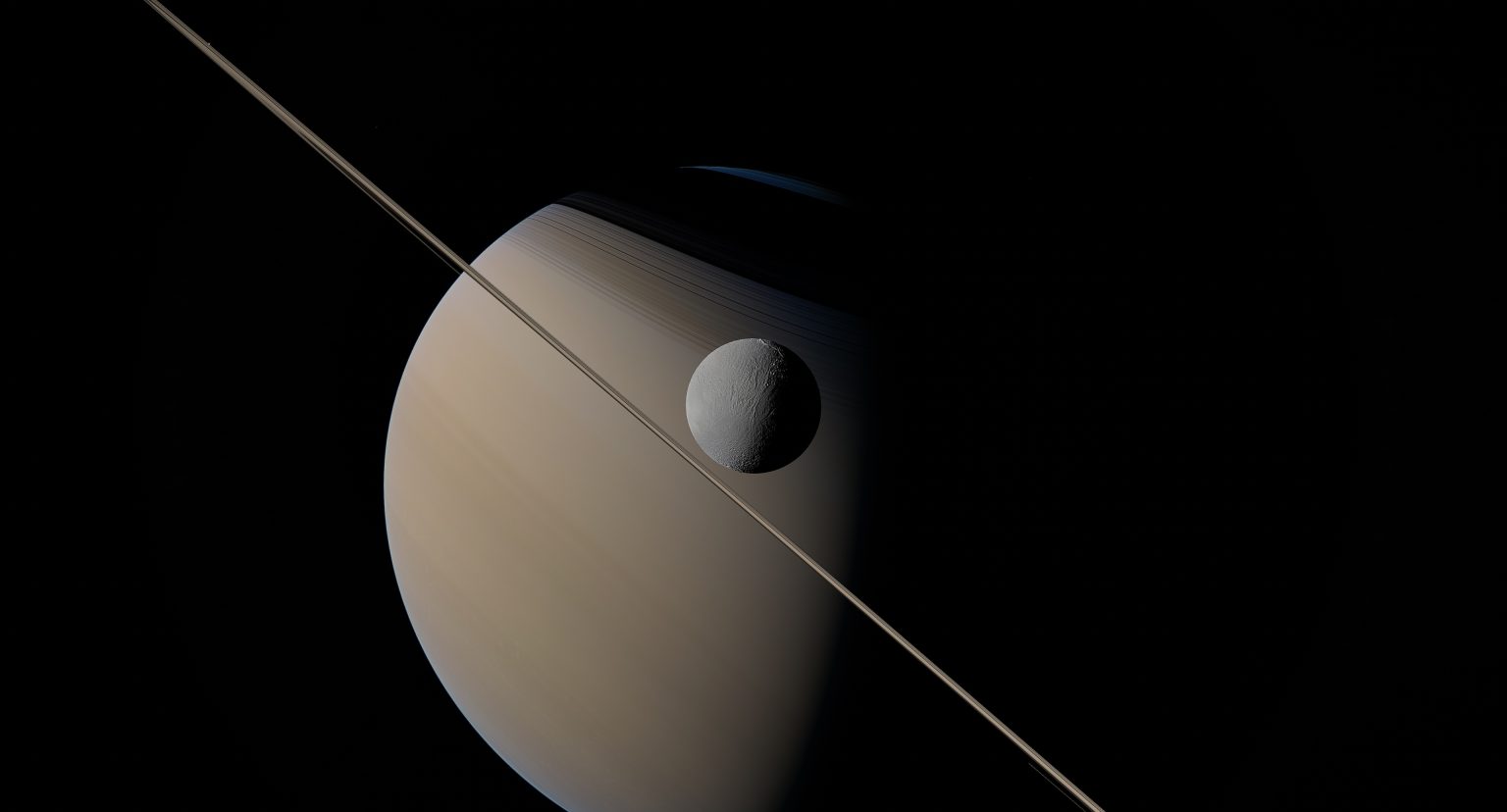
Enceladus is an icy world that hides a global ocean of liquid water beneath its surface. Through cracks in the ice at the south pole, this water bursts into space, forming giant jets consisting of ice particles. It was in these clouds that NASA’s Cassini spacecraft discovered various organic molecules between 2005 and 2015.
This discovery caused real excitement: organic matter in the ocean could indicate the presence of chemical conditions suitable for life. However, new research has proposed a less optimistic but scientifically sound explanation.
Radiation as the creator of life
To determine the role of cosmic radiation, a team led by planetary scientist Grace Richards simulated Enceladus’ conditions in a laboratory. They created a mixture of water, CO₂, methane, and ammonia—the main components of the moon’s ice—cooled it to -200 °C, and began bombarding it with water ions to simulate the radiation environment.
The result was impressive: radiation triggered a chain of chemical reactions that produced a whole cocktail of organic compounds, including amino acid precursors. This proved that radiation alone can create organic molecules on the surface of Enceladus without “inviting” itself into the deep ocean.
Fresh traces from the depths
However, the story does not end there. A parallel study led by Nozair Khawaja discovered even more complex organic molecules in Cassini’s data, such as ethers and cyclic compounds. The key argument is that these molecules were found in fresh ice grains that had spent only a few minutes in space.
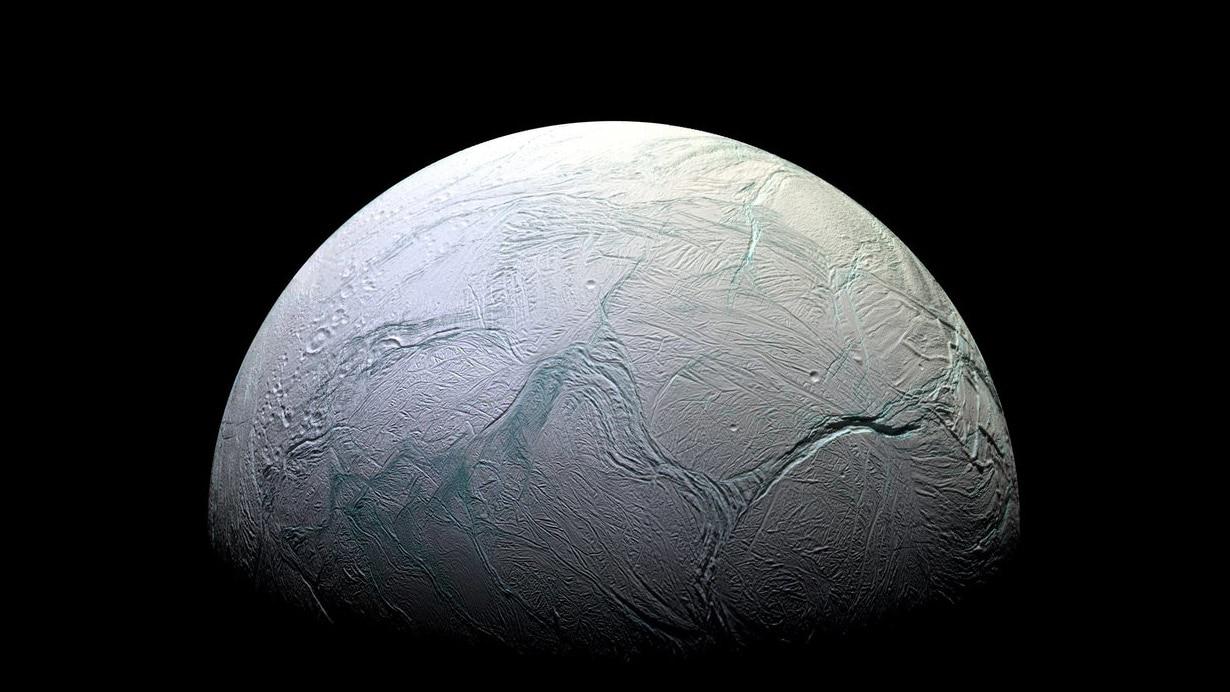
“Large grains, full of organic matter, that have just flown out from beneath the surface? This is much more difficult to explain with radiation,” notes planetary scientist Alexis Bouquet. Several waves of radiation would not have been enough to synthesize such complex substances. This may be direct evidence that rich organic matter is formed deep in the ocean.
Still searching
So, science has two contradictory but equally important theories. On the one hand, radiation could have “contaminated” the icy whirlpools with surface compounds, and on the other hand, Enceladus’ ocean may indeed be chemically rich and active.
These discoveries only increase interest in Enceladus. They will help develop equipment for future missions that will be able to accurately distinguish “real” traces of life from cosmic mirages.
“There’s no better place to search than Enceladus,” Khawaja is convinced. And this cosmic detective story is gaining momentum.
Earlier, we reported on how the last key component of life was discovered on Enceladus.
According to Space

