

Astronomers at Lowell Observatory have reported measuring the mass of one of the largest binary stars ever found in our galaxy. It is more than 160 times heavier than the Sun.
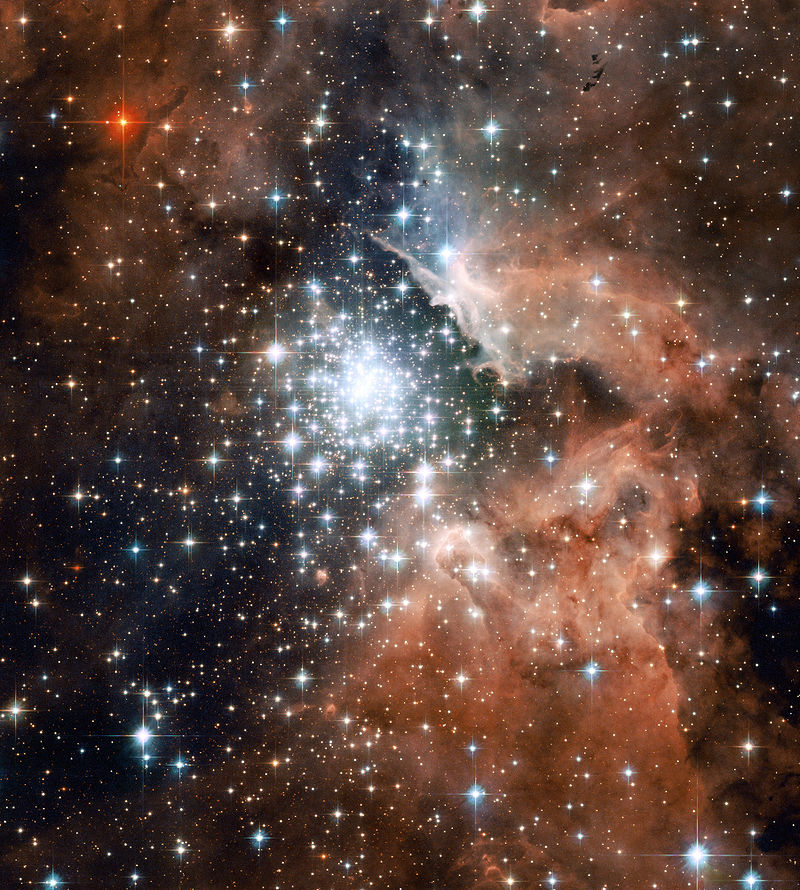
We are talking about the star system NGC3603-A1. It is located 25,000 light-years from Earth and is part of one of the largest star-forming regions in the Milky Way. Astronomers have long known that it is home to two stars. However, determining their mass was difficult due to complications in measuring radial velocities caused by the extreme density of the cluster.
Everything changed in 2020, when Carleton College student Sarah Bodansky drew attention to old data from the Hubble telescope. She managed to discover spectral features of NGC3603-A1 that allow determining the mass of its individual components. Thanks to this discovery, astronomers were able to perform calculations.
It turns out that the central component of the system has a mass 93 times greater than that of the Sun, with a surface temperature of 37,000 °C. Its companion’s mass exceeds that of the Sun by 70 times at a temperature of 42,000 °C. Together, they form one of the most massive binary systems ever discovered in our galaxy.
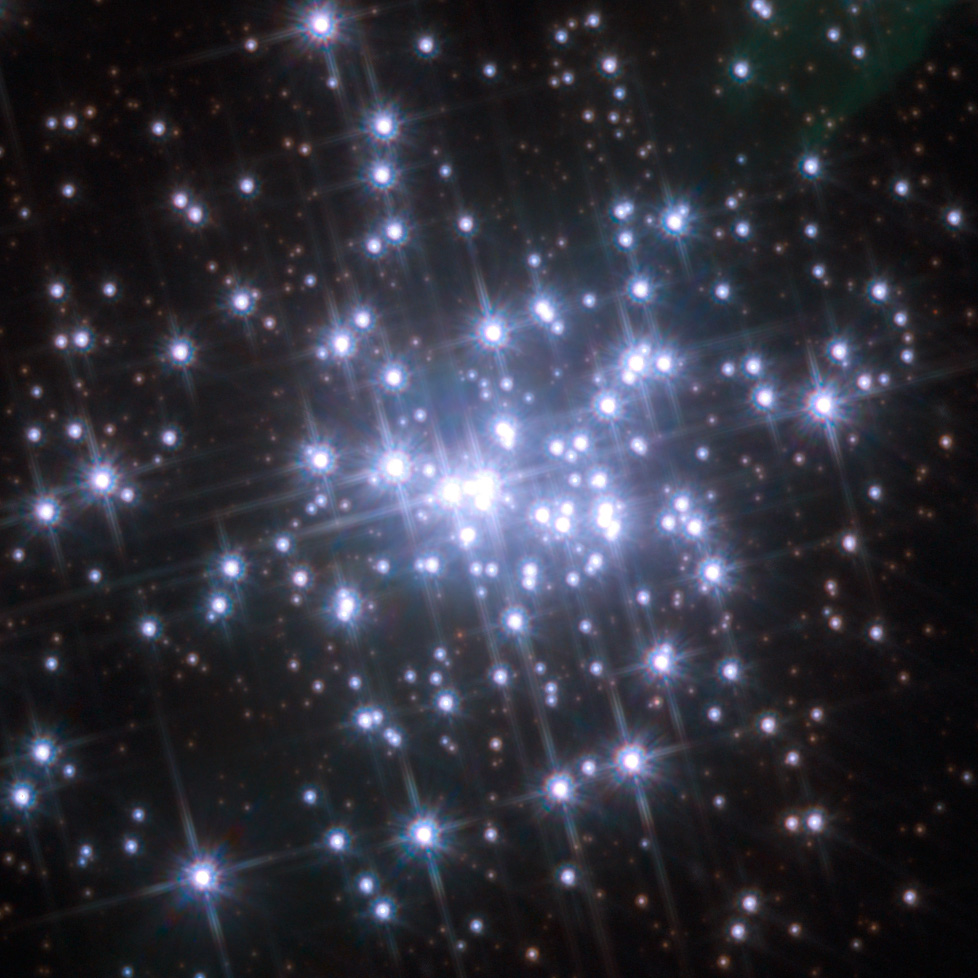
What makes this system even more unusual is the speed of its orbital motion. The two giants orbit each other once every 3.8 days. Their proximity and incredible mass create a dynamic relationship that changes both stars.
They are so massive and energetic that they resemble Wolf-Rayet stars, which are typically older, dying giants that eject their outer layers through intense stellar winds. However, the components of NGC 3603-A1 are actually still young, exhibiting extreme conditions that can make massive stars appear older than they really are.
According to astronomers, the smaller of the two stars stole mass from its larger companion in the past, causing it to spin faster. This mass transfer is crucial for understanding how massive stars change over time and provides insight into their ultimate fate.
In the future, both components of NGC 3603-A1 will end their existence with supernova explosions. Astronomers believe that such massive binary systems are precursors to binary black holes, which may eventually merge to form gravitational waves. Understanding these stellar relationships helps predict where and when such collisions might occur.
According to Phys.org

