

Scientists from Purdue University have found evidence that oases may have once existed in some areas of the Red Planet. They had a humid climate and abundant rainfall comparable to the tropical climate on Earth.
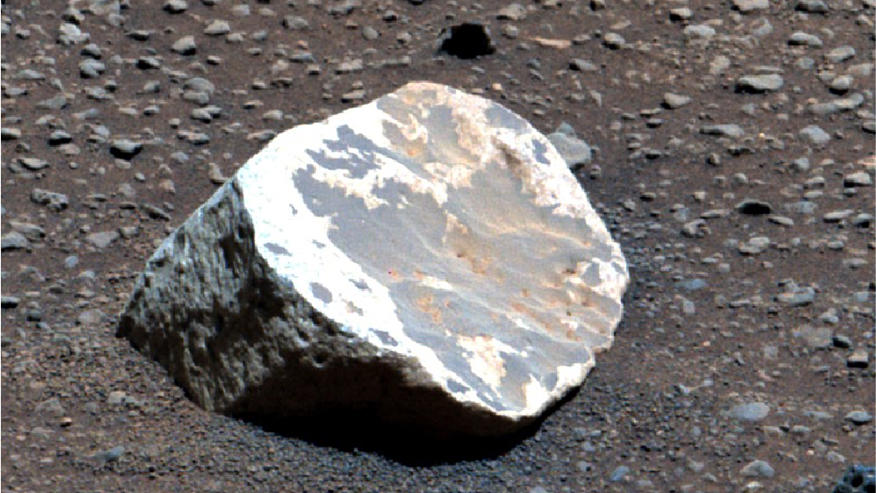
The discovery was made thanks to the Perseverance rover. It found distinctive light-colored rocks consisting of white, aluminum-rich kaolinite clay. On Earth, this clay forms after rocks and sediments are washed of all other minerals as a result of millions of years of a wet, rainy climate. Analysis showed that Martian kaolinite is very similar in composition to its Earth counterpart.
According to researchers, these are some of the most important minerals found on Mars. Their formation requires so much water that it may be evidence of an ancient warmer and wetter climate, when it rained for millions of years. On Earth, kaolinite is most commonly found in the tropics.
“So when you see kaolinite on a place like Mars, where it’s barren, cold and with certainly no liquid water at the surface, it tells us that there was once a lot more water than there is today,” said lead author Adrian Broz.
In addition to tropical climates with abundant rainfall, kaolinite on Earth also forms in hydrothermal springs when hot water leaches rock. However, this process creates a chemical composition in the rock that is different from that formed by rain leaching at lower temperatures over thousands and millions of years.
One question that researchers have yet to answer is the origin of the kaolinite found by Perseverance. Although light-colored rocks are scattered along the rover’s route, there are no large outcrops nearby from which they could have originated. Previously, there was a lake where Perseverance is now operating. Perhaps the rocks were carried there by a river that flowed into it, or they are fragments knocked out by an asteroid impact.
Satellite images have captured large outcrops of kaolinite in other areas of Mars. However, these are beyond the reach of the rovers’ working surface, so scientists are left with only small rocks to study.
According to scientists, kaolinite is a time capsule containing information about the climate history of the Red Planet billions of years ago. Studying it can not only give us an idea of Mars’ past, but also insight into how it came to be in its current barren state.
Earlier, we reported on how electrical discharges were found on Mars for the first time.
According to Purdue.edu

