

Using data from several Earth observation satellites, researchers discovered a massive flood in Greenland. It was so powerful that it broke the ice sheet.
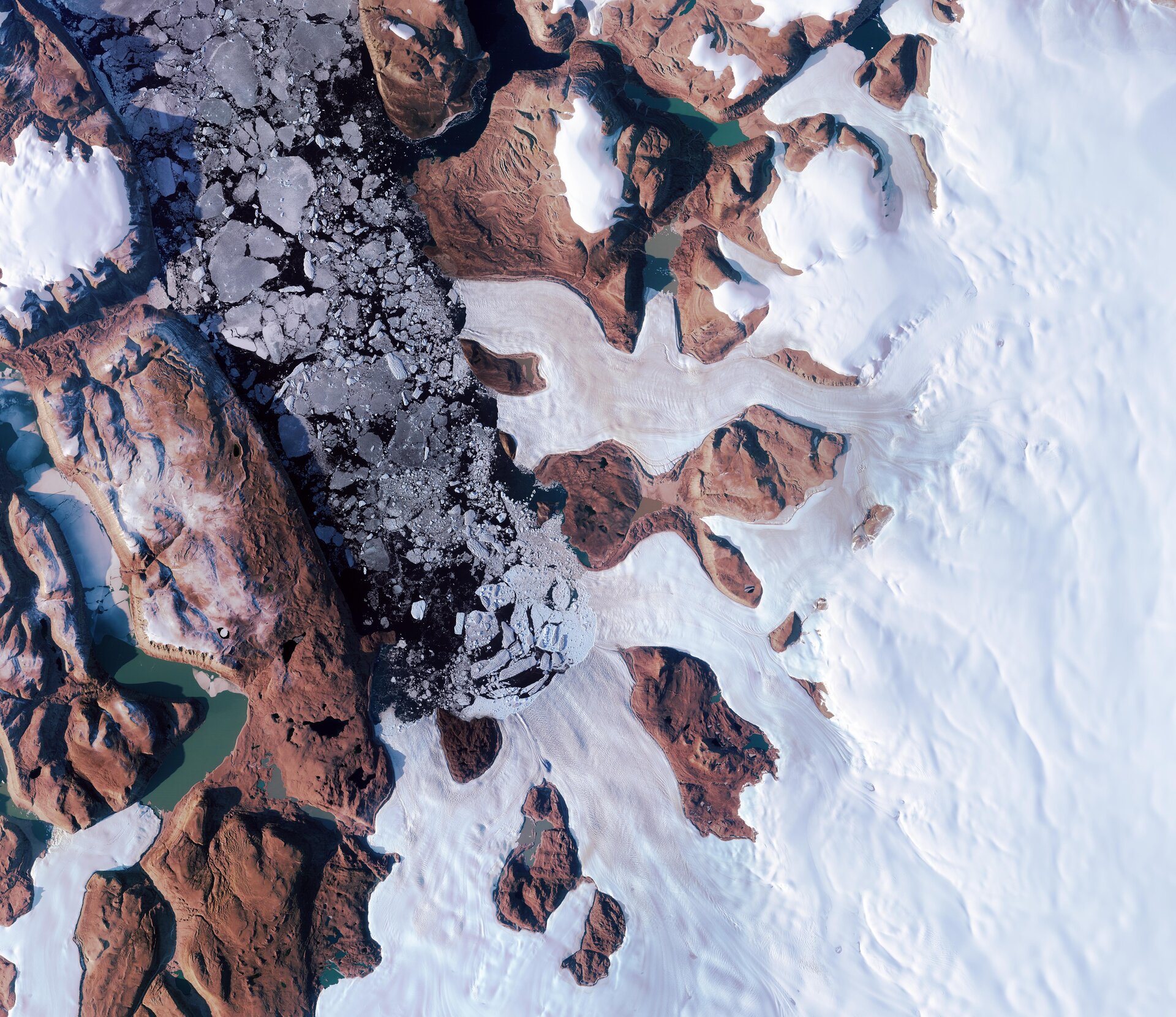
Scientists have only recently been able to prove that, like Antarctica, there are also ice lakes beneath the Greenland ice sheet. Previously, it was believed that the meltwater forming them created a layer between the glacier and the ground and ultimately flowed into the ocean. However, as it turned out, water can also move in the opposite direction — upward through ice.
Using 3D models of the ice surface from the ArcticDEM project, as well as data from several European satellite missions, including ERS, Envisat, and CryoSat (ESA), Sentinel-1 and Sentinel-2, and the American ICESat-2, researchers discovered a subglacial lake that suddenly dried up in 2014.
The drying up of the lake led to the formation of a huge crater 85 meters deep and 2 km² in area on the surface of the Greenland ice sheet. According to scientists’ estimates, 90 million cubic meters of water flowed out during the flood. This is equivalent to the amount of water flowing through Niagara Falls in 9 hours.
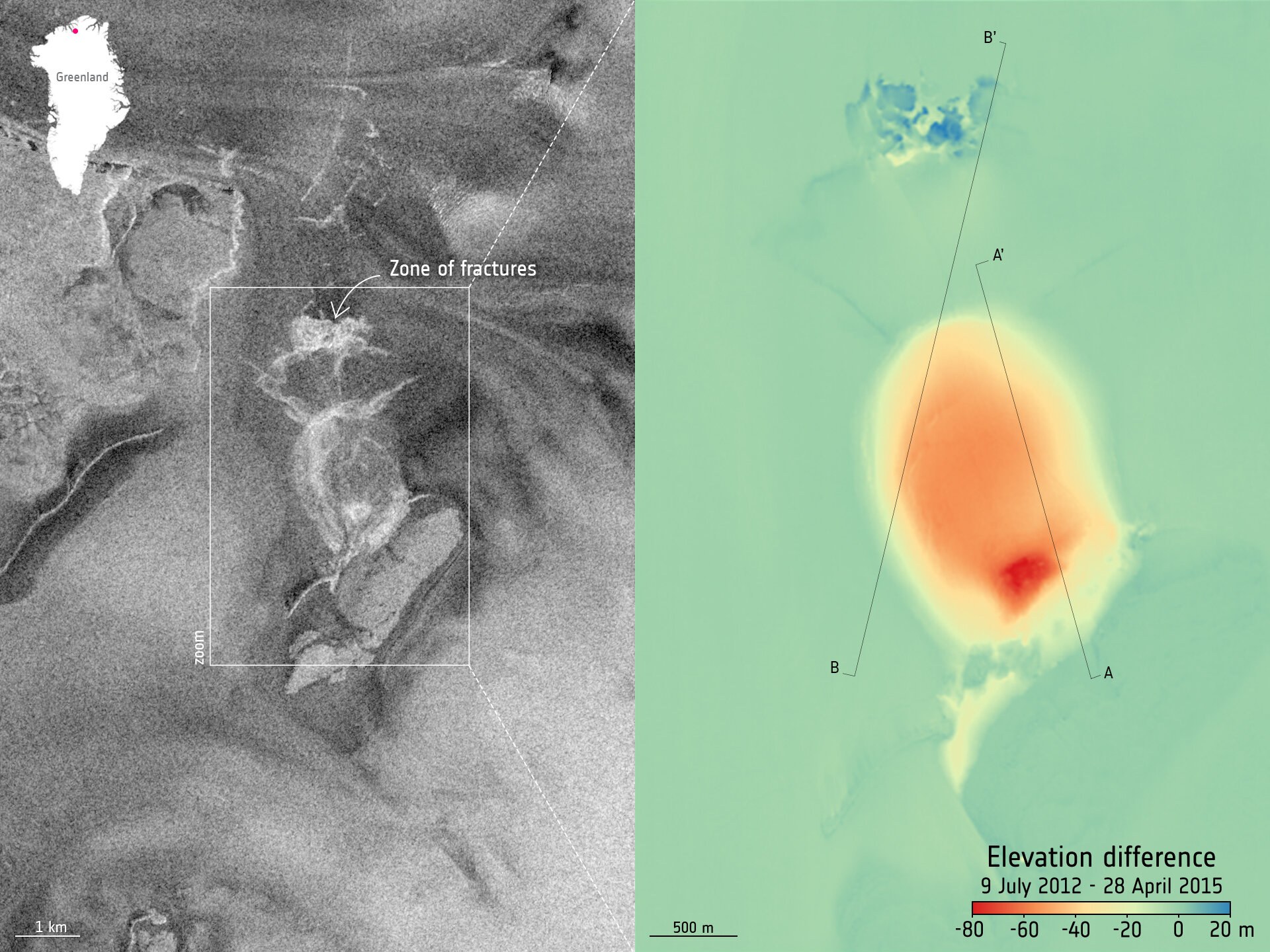
Although the sudden surge of meltwater was striking, even more alarming was the destruction that accompanied it: 25-meter-high ice blocks torn from the surface, deep cracks in the ice cover, and a washed-out ice surface.
According to the scientists, when they first discovered the effects of the lake’s drainage, they decided that something was wrong with their data. However, as the analysis deepened, it became clear that the observed phenomenon was caused by a huge amount of water flowing out from under the ice.
Even more surprising was the discovery that the flooding occurred in an area where, according to models, the ice bottom was frozen. This led researchers to speculate that intense pressure caused cracks under the ice sheet, creating channels through which water could rise.
The discovery sheds light on the destructive potential of meltwater stored beneath the ice sheet. It also demonstrates that existing models predicting the response of ice sheets to climate change and increased melting need to be refined, as they do not take into account the processes of meltwater rising through cracks.
Earlier, we reported on the results of another study that found how the ocean around Antarctica was getting saltier as the ice melted.
According to ESA

