

The Japan Aerospace Exploration Agency (JAXA) has officially ended the mission of its Akatsuki spacecraft on Venus. This means that there are no longer any active missions in orbit around our closest neighbor, and the planet is temporarily without space explorers. The decision was made after contact with the probe was lost last year and all attempts to reestablish it proved unsuccessful.
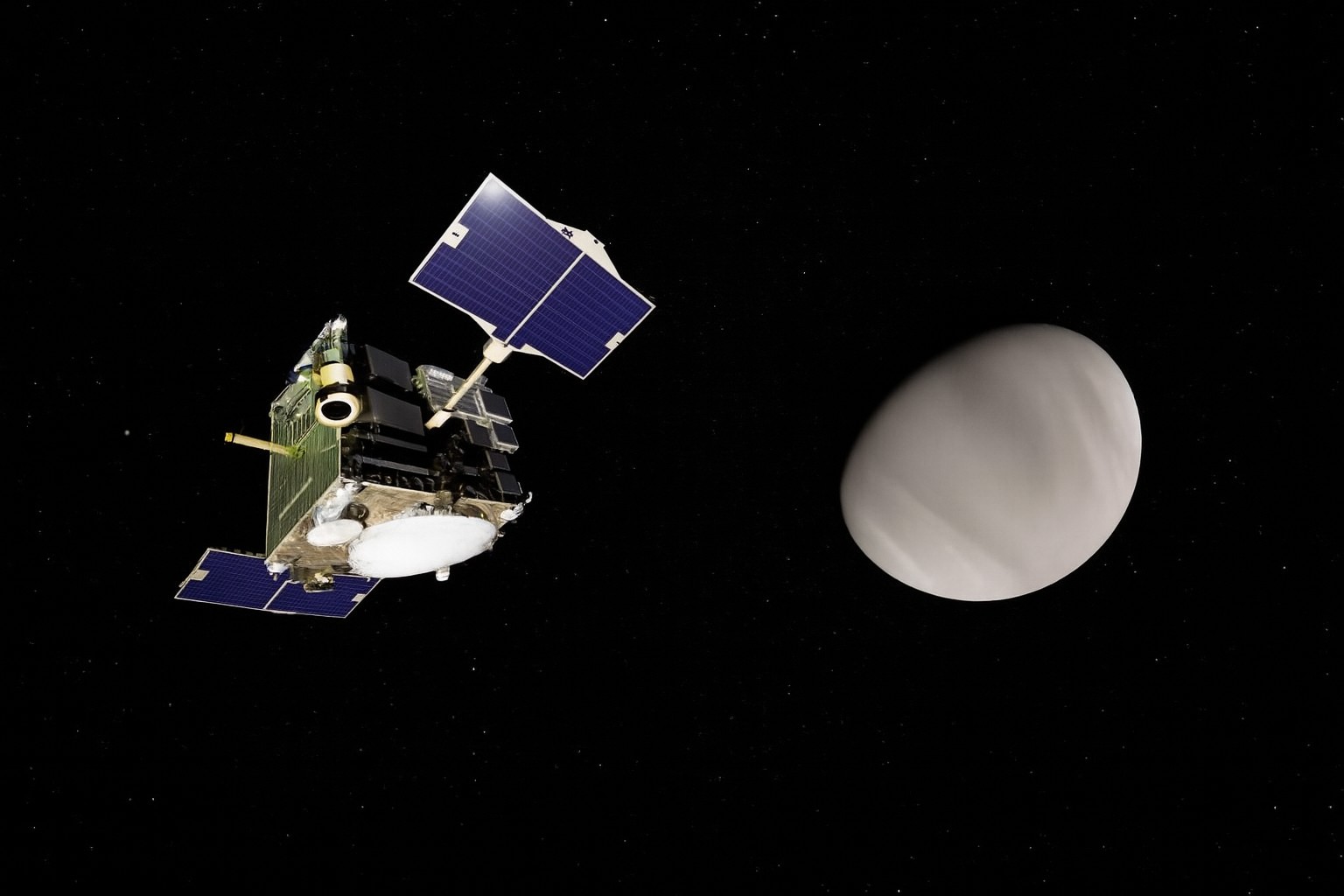
The journey of Akatsuki (translated from Japanese as “Dawn”) to Venus was a real challenge. Launched in 2010, the spacecraft was designed to study the planet’s climate and weather phenomena. However, during a critical maneuver to enter orbit in 2015, the main engine failed. It seemed that the mission was lost. But Japanese engineers did not give up. They found an ingenious solution by using additional position control system motors. Despite their low power, Akatsuki managed to reach Venus’ orbit five years after the planned date.
The legacy of the spacecraft
While operating in orbit, Akatsuki made a number of important discoveries. One of the most impressive discoveries was a giant curved structure in the atmosphere stretching from one pole to the other. Scientists have discovered that this phenomenon is caused by pulsations in the atmosphere caused by air currents over the mountainous regions of Venus. The vehicle also studied cloud cover and looked for signs of lightning, equipped with powerful cameras to operate in different spectrums. In addition to its scientific value, Akatsuki became famous for its unusual cultural baggage — thousands of engravings depicting the virtual singer Hatsune Miku, which fans placed on the probe’s body.
Future missions
Although Venus has been left without satellites, its loneliness will not last long. NASA plans to launch two new missions to the planet in the 2030s: DAVINCI and VERITAS. Their goal is to understand how a world similar to Earth in size and mass turned into a veritable hell with a scorching surface and acid rain.
The Akatsuki era has come to the end, but it has paved the way for new research that will help unravel one of the greatest mysteries of our Solar System.
Earlier, we reported on how a Soviet spacecraft designed to study Venus fell to Earth — no one knows where.
According to gizmodo.com

