

Although active volcanism on the Moon largely ceased over a billion years ago, traces of ancient volcanic activity remain in many of the geological structures we see today. These include lunar seas, as well as cones and domes, such as the one in the center of the image obtained by the LRO spacecraft.
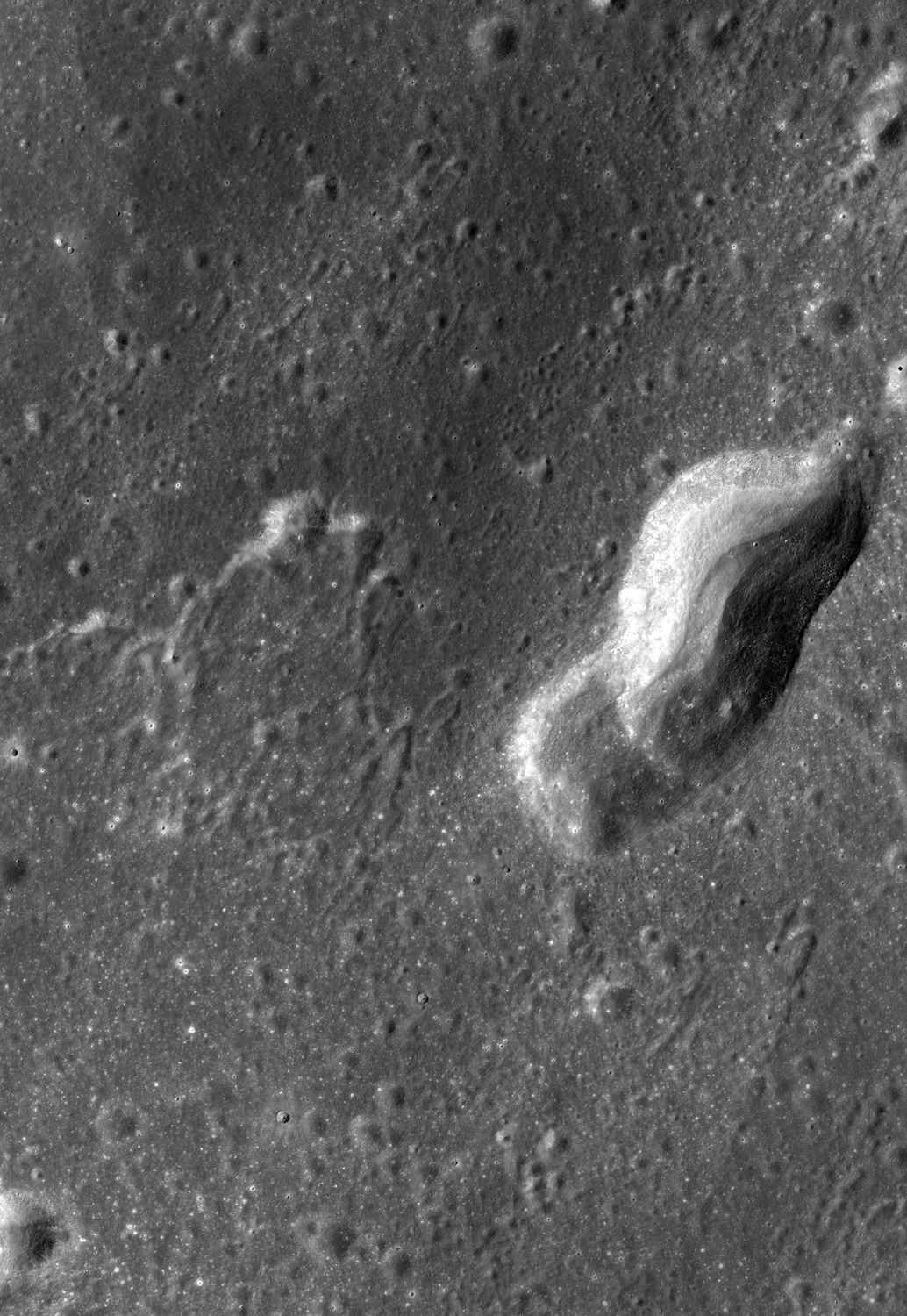
The dome photographed by LRO is called Herodotus Omega. It is located in the center of Oceanus Procellarum, a giant basalt plain located in the western part of the visible side of the Moon. Like many lunar domes, Herodotus Omega got its name by adding a Greek letter to the name of the nearest large crater — the 35-kilometer-wide Herodotus crater, located about 70 kilometers to the north.
Unlike most lunar domes, which are usually located in groups, Herodotus Omega stands alone. Although its full size is difficult to discern in the image due to its relatively gentle slopes and low relief, its diameter is approximately 12 km, and its maximum height above the surrounding sea level is approximately 220 meters. The LRO image also shows a distinctive irregularly shaped depression. It was most likely formed as a result of the collapse of a magma chamber.
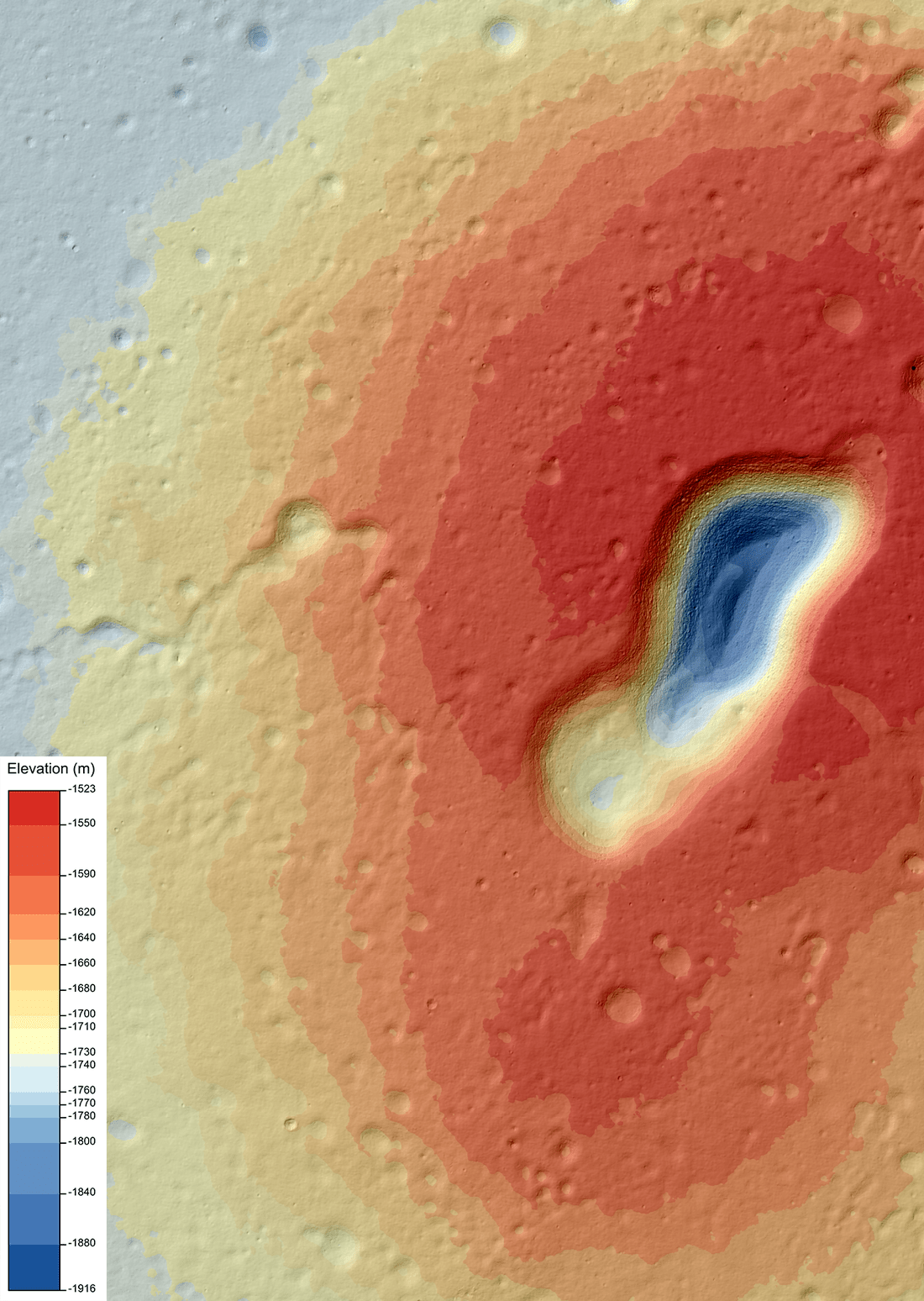
A summit crater is a geological feature of volcanic structures characterized by a bowl-shaped depression at the summit. These craters often form as a result of collapse into a low-pressure reservoir following volcanic activity. They can be found on various types of volcanoes, including shield volcanoes and stratovolcanoes.
Scientists believe that lunar domes formed over a period of approximately one billion years, beginning 3.7 billion years ago. Although the specific origin of Herodotus Omega remains unknown, it exhibits characteristics similar to other domes found in other lunar seas. Like most similar formations, it has a relatively low albedo (reflectivity).
Traces of lunar volcanic activity have long been of interest to the scientific community. At one point, NASA even considered a group of domes in Mare Insularum as a possible destination for a manned expedition as part of the Constellation program. However, the cancellation of the program in 2010 put a stop to these plans. But perhaps in the future, Hephaestus Crater or other lunar craters will still await their explorers, whether robots or humans.
According to LROC

