

Despite the extreme thinness of the Martian atmosphere, its winds can have a significant impact on the surface. The Mars Express spacecraft has revealed the landforms created by these winds near the planet’s equator.
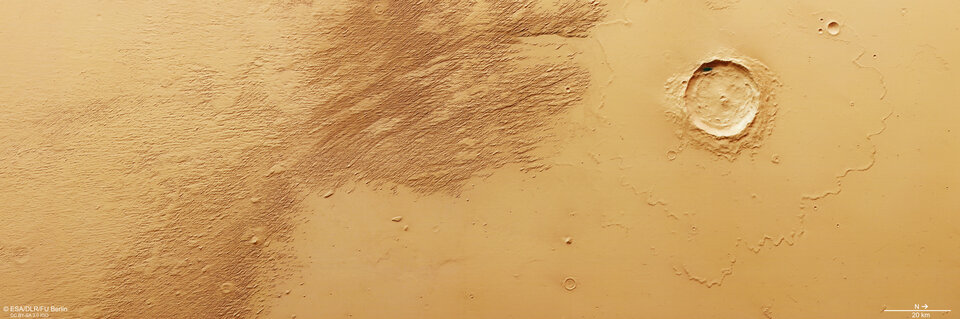
The ridges, hills, or columns that remain after the surrounding soil has been eroded are called yardangs and are widespread on Mars. They are evidence of powerful Martian winds acting as a kind of sandblasting machine. They lift grains of sand into the air and carve furrows tens of kilometers long into the surface.
The mechanism of this phenomenon is as follows. Winds laden with sand blow into soft layers of sedimentary rock, finding existing cracks and eroding the material in these areas. This results in the formation of impressive landforms.
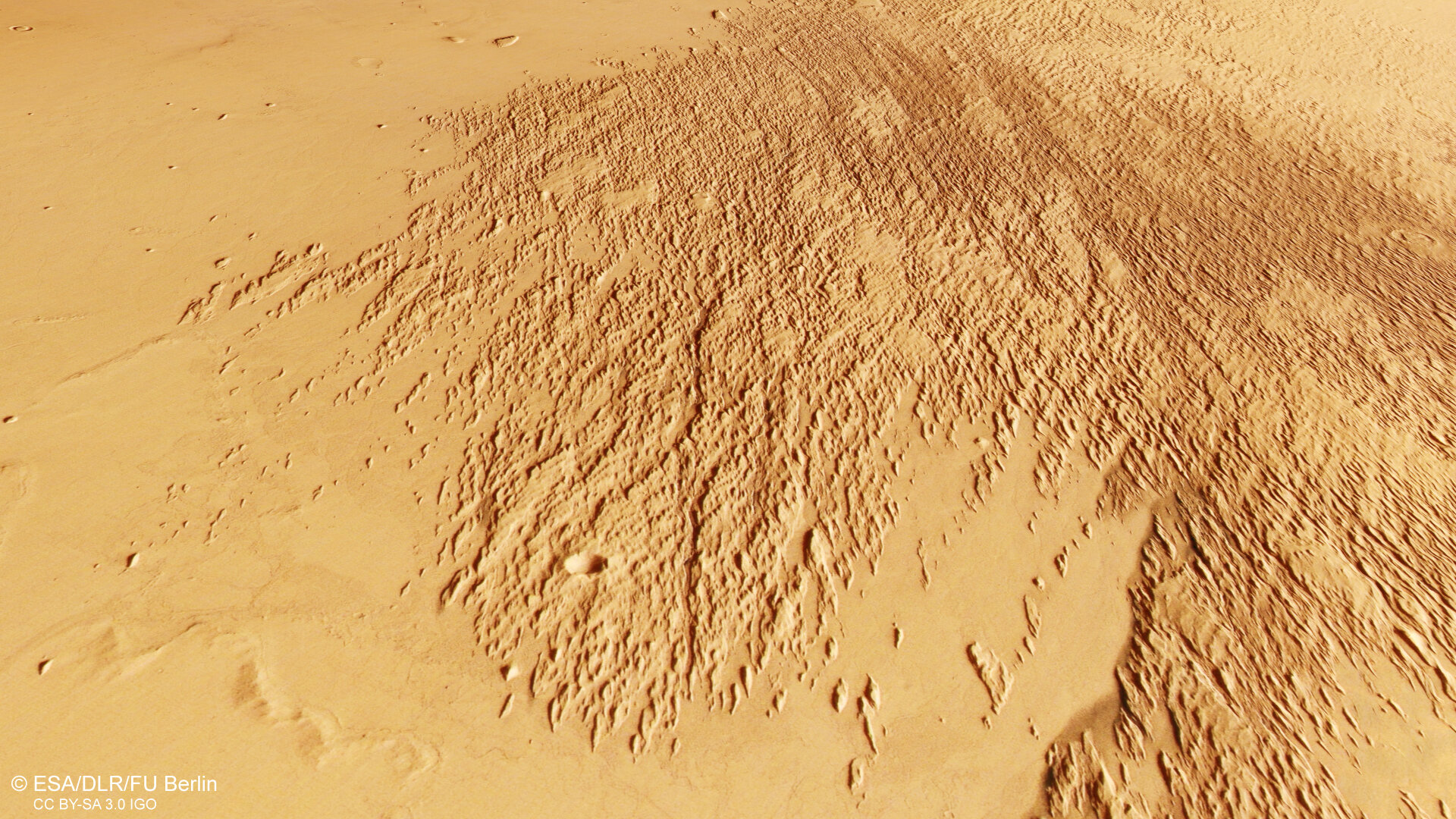
An example of this kind of landscape is captured in an image taken by Mars Express, which covers an area the size of Belgium. The yardangs stretch in the same direction, indicating the prevailing winds in this region.
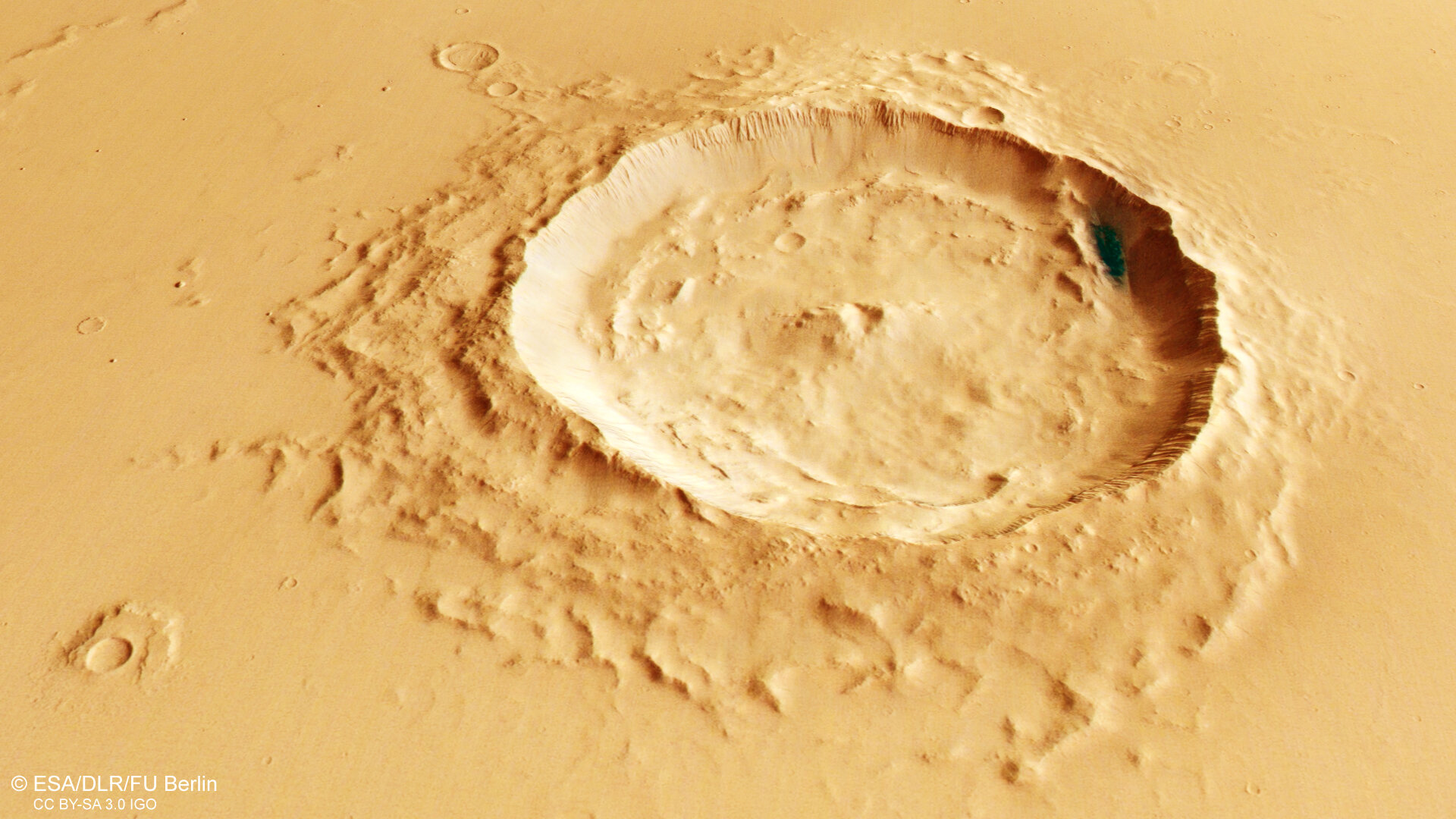
The Mars Express images also reveal other interesting features of the Martian landscape. One of these is a crater. It is relatively young and surrounded by a large “veil” consisting of material ejected during the impact.
The second element is more subtle and can only be seen upon closer inspection. Just below and next to the main mass of yardangs lies a so-called sheet flow, which somewhat resembles the floating ice sheets that can be seen on Earth. When ancient lava moved across this area, its surface became covered with a crust. The lava continued to flow beneath it, pulling the solid surface along with it, breaking it into pieces and moving them in the form of solidified lava “rafts” or “slabs.”

It is believed that the yardangs not only border this laminated flow, but were also formed on its top. This indicates that they were probably formed relatively recently.
Earlier, we reported on an unusual butterfly crater photographed by Mars Express.
According to ESA

