

The original software developed for studying Mars has become a kind of X-ray for bridges and aircraft. Swiss startup Mondaic (a spin-off of ETH Zurich) has adapted wave technologies developed to decode seismic data from NASA’s InSight mission to detect hidden defects in infrastructure on Earth.
The essence of the approach: ultrasonic waves are passed through the component, sensors record their changes, and a software digital twin compares the expected and actual wave propagation patterns. Any discrepancies indicate cracks, voids, or water penetration. The company already cooperates with the Swiss Federal Roads Office (FEDRO) in the field of bridge inspection and has tested this method on aviation composites in collaboration with ETH Zurich and FHNW. Thanks to cloud computing, analyses that previously required supercomputers can now be performed in minutes and are accessible to teams without deep knowledge of wave physics.
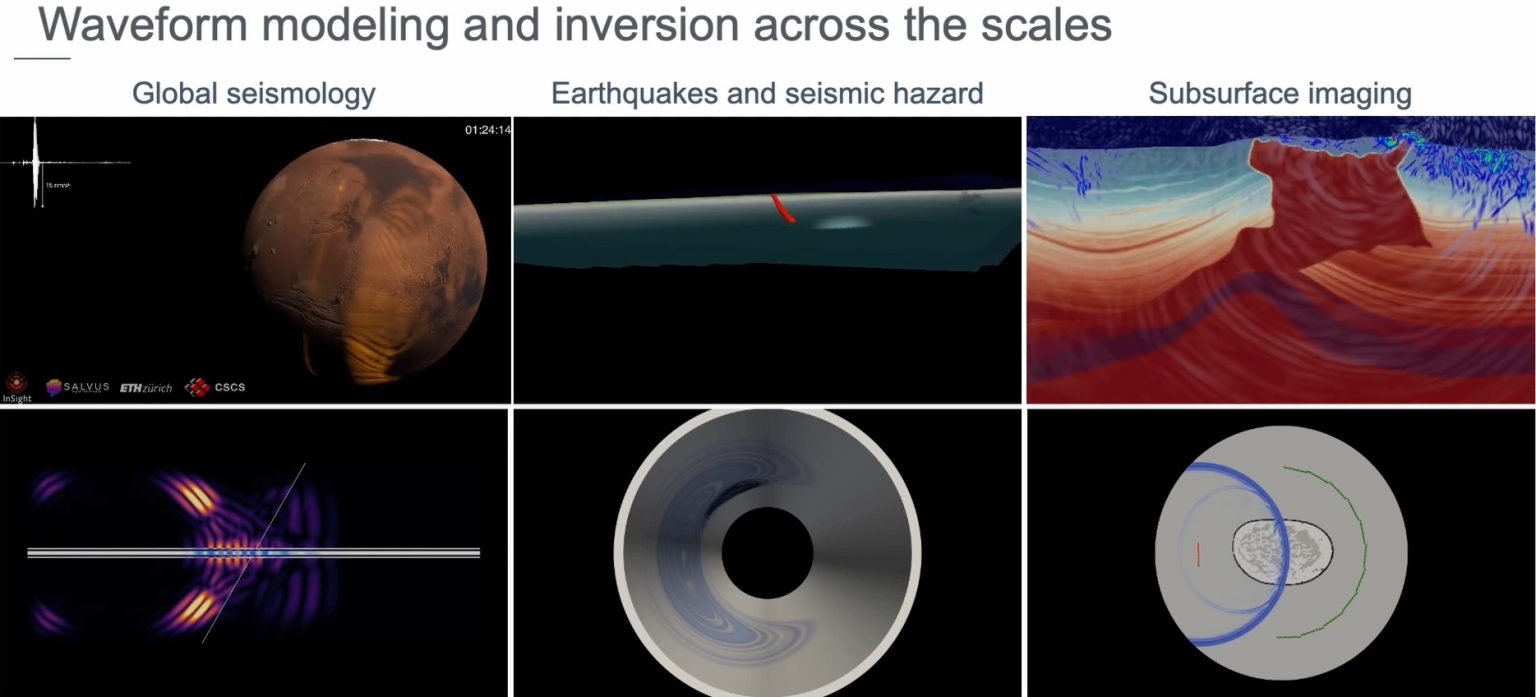
According to Christian Boehm, co-founder and CEO of Mondaic, the very tools that once helped us peer into the depths of the red planet now allow us to inspect the inside of concrete beams, pipelines, or aircraft parts without cutting or drilling. The platform is delivered as a complete stack: sensors, software, consulting, and cloud processing, so it can be integrated into regular technical monitoring of bridges, pipes, and aircraft, identifying defects at an early stage and reducing repair and downtime costs.
Alternatives to non-destructive testing — from capillary and magnetic particle methods to radiography and ultrasound — usually provide local or superficial results and are highly dependent on operator skill and conditions. Wave diagnostics with a digital twin is superior because it reconstructs a three-dimensional picture inside the structure, automates interpretation, works with complex composites and reinforcement, and does not use ionizing radiation. Thanks to cloud processing, it can cover large areas in a scalable way and detect cracks before they reach the surface. It is best to combine approaches: rapid screening using the wave method and spot verification of critical areas using classic UT/ECT/RT.
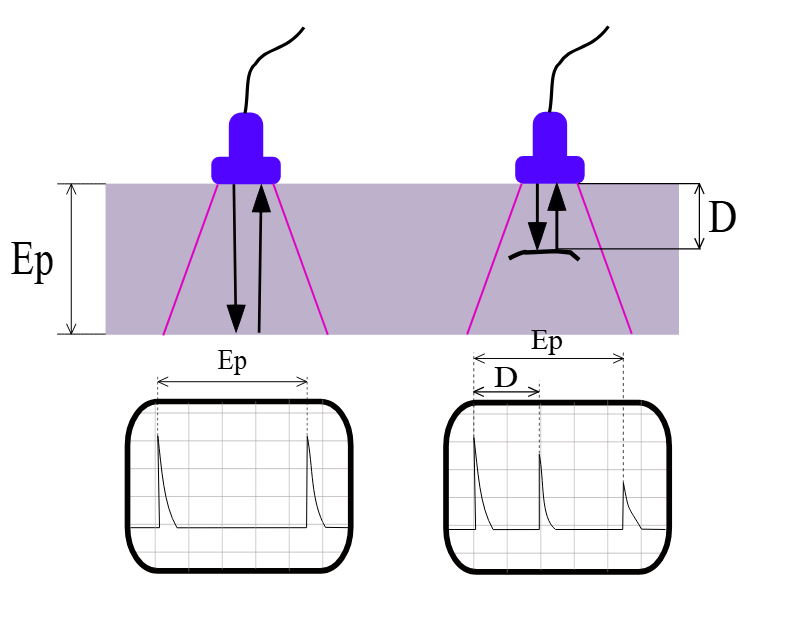
Why is this important? Transferring Martian wave modeling algorithms back to Earth strengthens both fields. First, the space industry gains more reliable non-destructive testing methods for rocket tanks, carbon panels, and ground infrastructure at spaceports. Secondly, the commercialization of such instruments stimulates the development of faster inversion models and signal processing, which will further improve the quality of interpretation of seismic data from the Moon, Mars, or asteroids in future missions. In other words, the technology developed for InSight closes the cycle between “space ↔ Earth,” improving safety both here and during subsequent flights.
Want to know if it’s really possible to turn Mars into Earth 2.0? How can we raise the temperature, thicken the atmosphere, restore the magnetic field, and restart the water cycle — and what of this is truly possible in the coming decades? In the article “Earth 2.0,” we examine scientific scenarios for terraforming without hype: from the use of polar ice CO₂ to orbital mirrors and bioengineering, with honest assessments of energy budgets, risks, and timelines. If you are interested in the future of colonies and the limits of our technological imagination, click on the article!
According to ethz, interestingengineering


