

One of the biggest scientific challenges of exploring the Solar System is the possibility of life on Mars. However, a significant number of earthlings are already convinced that it exists there. Let’s try to figure out why this is the case.
Scientists are often asked whether they have finally recognized the fact that life exists on Mars. After all, the press has provided a lot of “evidence”, informing the public about mysterious canals, pyramids, the face of the Sphinx, and doors of obviously artificial origin.
Despite all the refutations, including photos taken by automated devices, people stubbornly continue to believe that there is something on the Red Planet. And the explanation for this fervent belief is historical. After all, the existence of Martians is a modern mythology that has been formed over several centuries.
It all started in the 17th century, when scientists finally accepted the idea that other planets in the Solar System were almost the same as Earth. None of the astronomers of the time knew for sure whether the similarity was limited to the spherical shape or whether there were seas, forests, and meadows there as well.
The idea that life and even intelligent beings existed on other planets in the Solar System and on the Moon was quite acceptable. But Mars showed the greatest signs of resemblance to Earth. In 1644, the Jesuit astronomer Daniello Bartoli reported that the surface of this planet was heterogeneous, with light and dark spots. Other scientists soon confirmed this.
In 1659, the Dutch astronomer Christian Huygens attempted to make the first map of Martian spots. Among other things, it showed the dark area of Syrtis Major. Now, scientists know that it is a huge volcanic plateau covered with dark ash. At the time, it looked like a sea or ocean, so it was named after a bay near the modern coast of Libya.
Huygens was the first to see on Mars something similar to the polar caps on Earth and found that the period of the planet’s axial rotation was approximately 24 hours. A few years later, other astronomers determined the length of a Martian day to be 24 hours and 40 minutes, which is only three minutes longer than the real thing. All this indicated that the Red Planet is extremely similar to ours.
In the 18th century, the exploration of many planets put an end to the idea of life there. But the opposite was true of Mars. Confidence was reinforced, in particular, by observations of changes in the polar caps, which indicated that there was a change of seasons there, similar to the Earth’s. Even such an authority on astronomy as William Herschel argued in 1781 that Martian inhabitants must be in situations similar to ours.
Myth 1: Martian canals are man-made objects of an extinct civilization
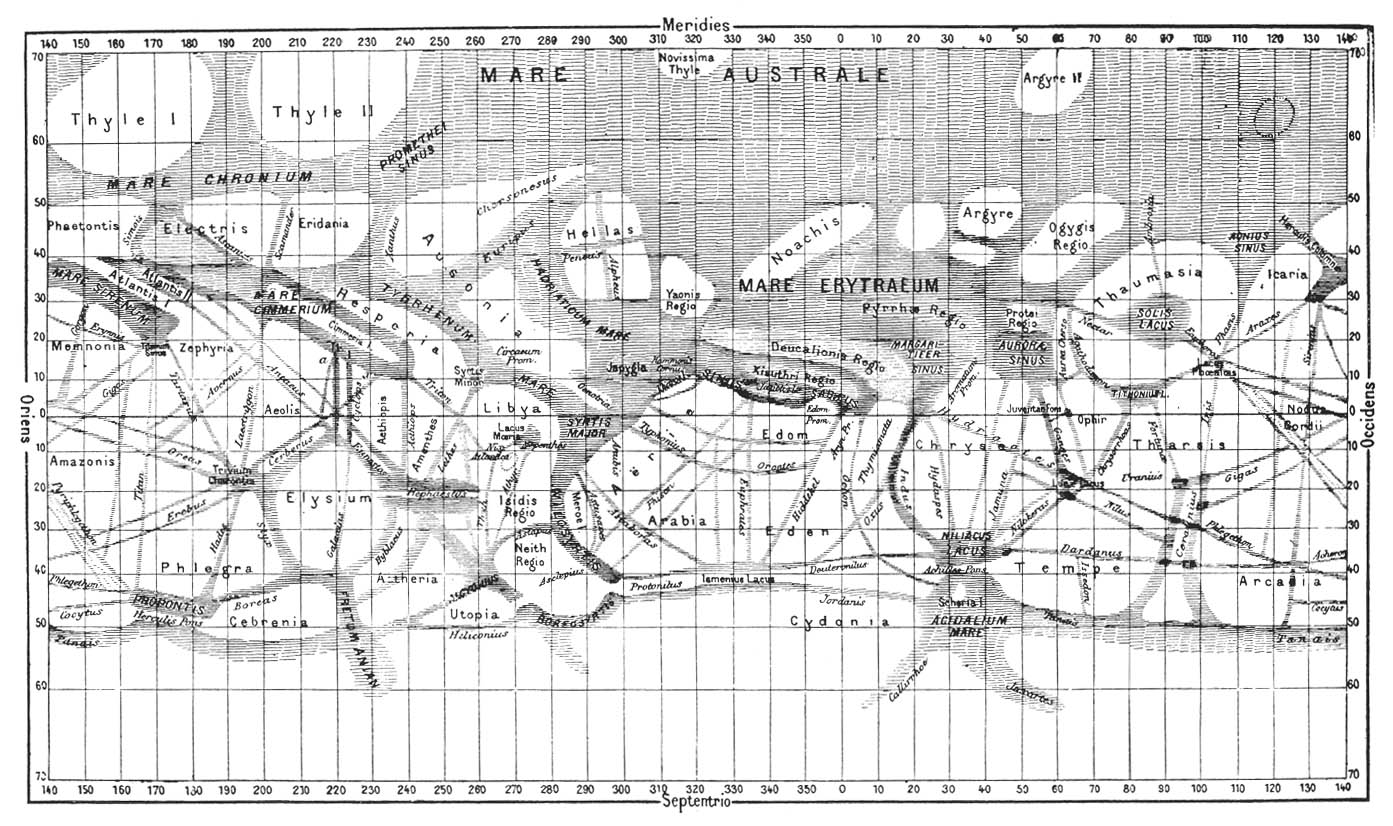
However, the main thing was yet to come. With the advent of more powerful telescopes in the 19th century, scientists were able to see the surface of Mars more clearly, so its maps became much more detailed.
Source: NASA
In 1858, the Italian astronomer Angelo Secchi saw a network of lines on the planet’s surface that he called “canali”. In his understanding, this could mean any strait or body of water. A little earlier, he also discovered a spot on Mars that he thought was a cloud.
Astronomers were finding more and more evidence that Mars was indeed similar to Earth. In 1866, spectroscopic studies revealed the presence of water vapor in its atmosphere. At the same time, interest in scientific research, including astronomical research, was growing worldwide. So, when Giovanni Schiaparelli reported the discovery of the canals again in 1877, the world press picked up on it as a sensation and spread the belief that civilization did exist on the neighboring planet.
However, the scientific community at the time had no confidence in this. The lines on Mars were visible. But not all researchers considered them to be engineering structures. Scientists became less certain in 1892 when new spectroscopic studies revealed that the conclusion about the presence of water vapor in the atmosphere of the Red Planet was incorrect, suggesting it was more akin to the Moon.
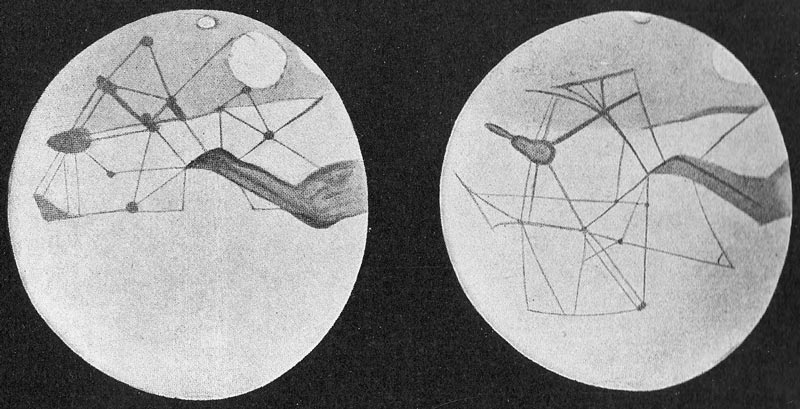
However, it was in the 1890s that the prominent astronomer and Solar System exploration enthusiast Percival Lowell advocated the idea that intelligent life exists on Mars. Based on the fact that the Martian climate is arid, he hypothesized that an advanced civilization there had begun to build canals to provide itself with water. The version was quite logical and saved the myth of the nearest extraterrestrial civilization for many decades.
However, in the scientific world, the assumption of Mars’ habitability did not stand up to criticism. In 1907, the prominent biologist Alfred Wallace published a paper in which he not only pointed out the absence of water vapor in the Martian atmosphere but also showed that astronomers had overestimated the temperature of the planet’s surface. Wallace argued that the atmospheric pressure there was too low for water to exist in a liquid state. In the end, he became one of the first scientists to depict Mars as we know it today.
At the same time, in 1903, experiments were conducted that showed that in a chaotic image of spots, people could see straight lines due to an optical illusion. And in 1909, new images of Mars did not confirm the presence of canals.
Myth 2: Martians with big heads
However, in the mass consciousness, the Martian civilization continued to exist thanks to the development of science fiction, which paid special attention to Mars. The most important work of that time about Martians was the novel The War of the Worlds by H.G. Wells, published in 1897, at the very peak of Lowell’s theories.
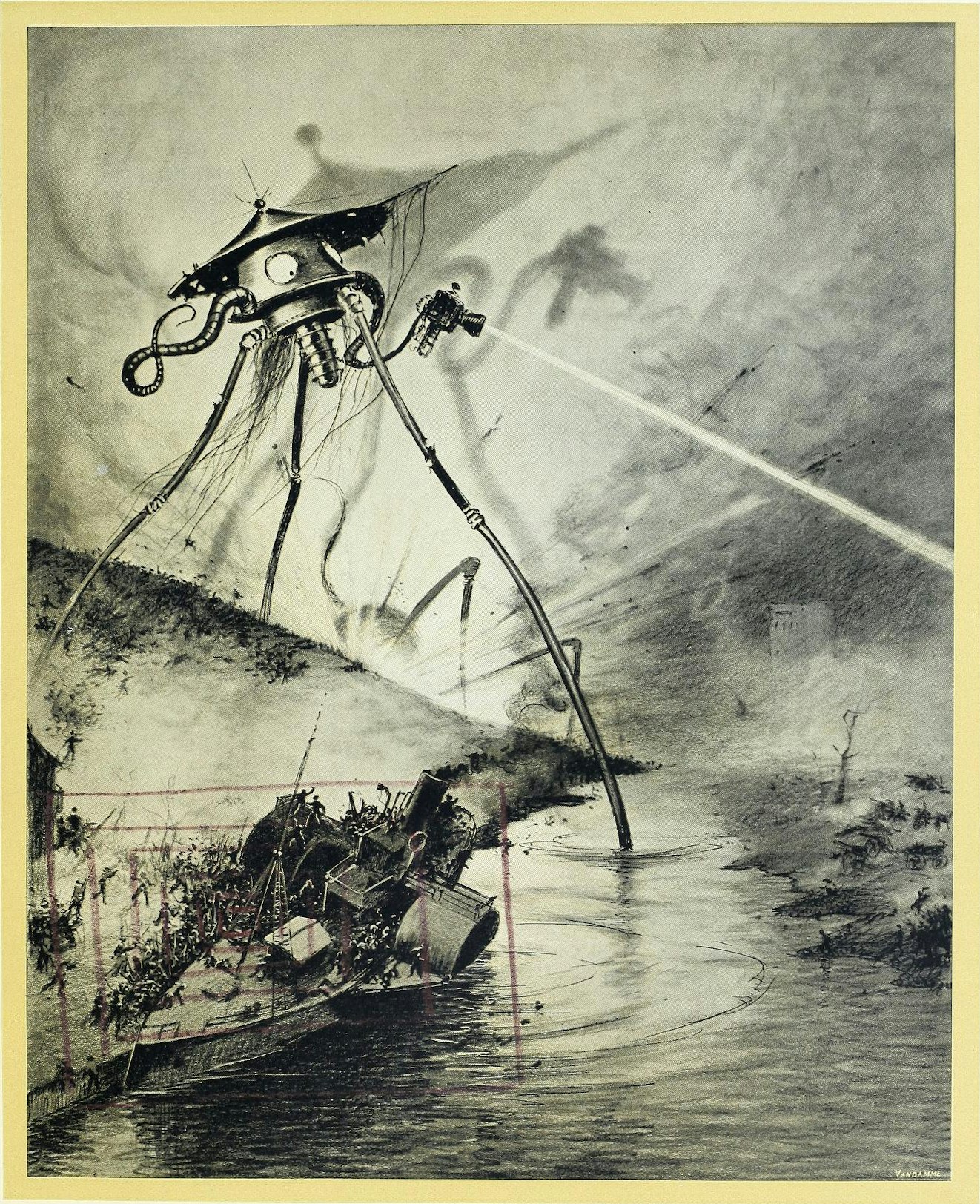
Wells depicted the inhabitants of Mars who decided to conduct a “special military operation” on Earth, based on their ideas about evolution. The writer suggested that the Mars civilization is much older than the Earth’s. Therefore, local intelligent beings were originally humanoids, but evolved. For humans, the main organ is the brain, which thinks, and the hand, which does something. According to H.G. Wells, they were the ones that had to evolve, and everything else had to be reduced.
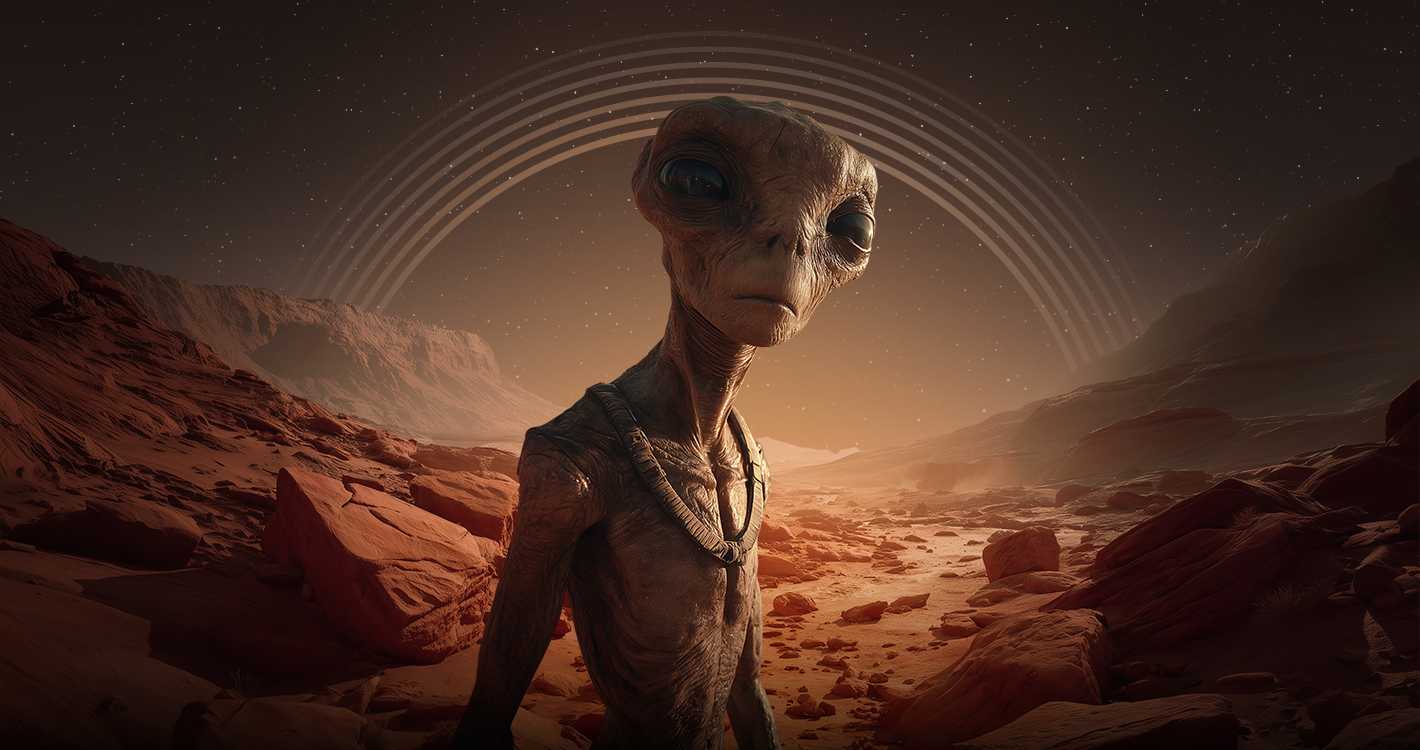
In the novel, Martians are described as octopuses with large heads and no digestive system. The explanations given by the writer seemed so successful that they are still used by authors of science fiction and conspiracy theories to describe typical aliens.
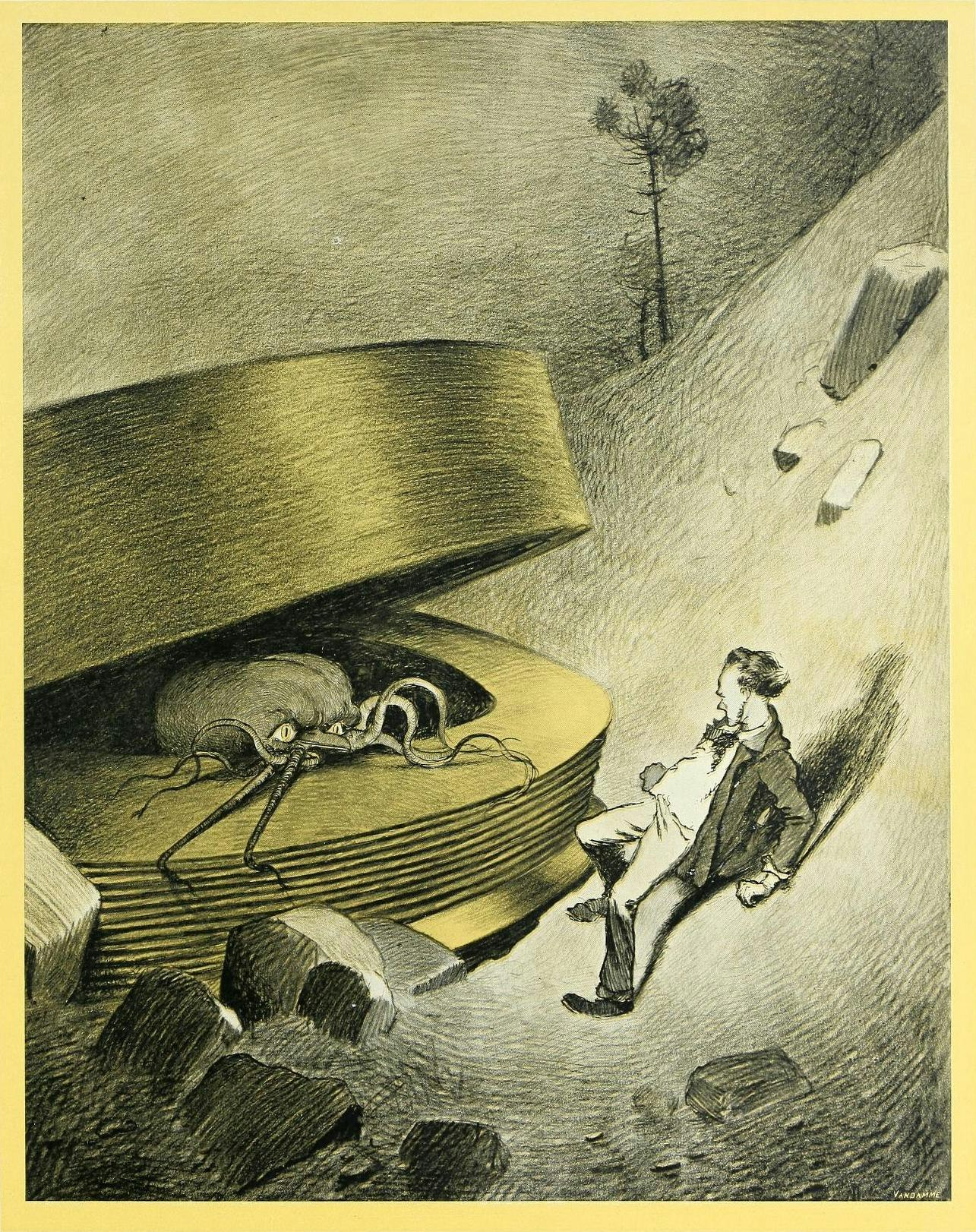
A large, naked head with large eyes, a body that can be disregarded because it no longer performs any useful functions, and long, flexible fingers that are convenient for pressing keys to destroy enemies – this image is thanks to Wells.
Myth 3: The Martian “sphinx” and the pyramids
In 1965, Mariner 4 flew by Mars and showed that the planet was dry and cold and had no canals. And in 1971, Mariner 9 entered orbit around it, mapped its surface, and finally buried all ideas of a developed Martian civilization.
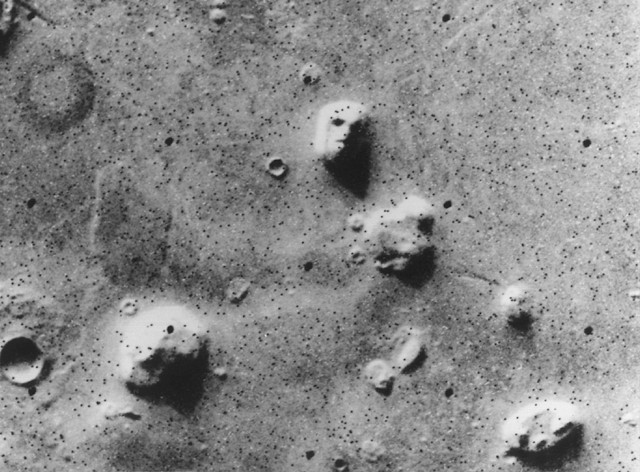
However, supporters of this theory found new “evidence”. On June 25, 1976, the Viking 1 spacecraft took an orbital image of a small region in the northern hemisphere of Mars that stands out for its albedo. This term refers to the ability of a surface to reflect light; the higher it is, the whiter and more brilliant it appears.
Later, the area was named Cydonia, after an ancient Greek polis located on the island of Crete. This region consists of three very different parts. The first of them is the Cydonia Colls, an area where small hills meet. But the Labyrinth of Cydonia is a chaotic jumble of valleys that intersect at different angles. The landscape of the Table Mountains of Cydonia is predominantly large elevations with flat tops and steep slopes.
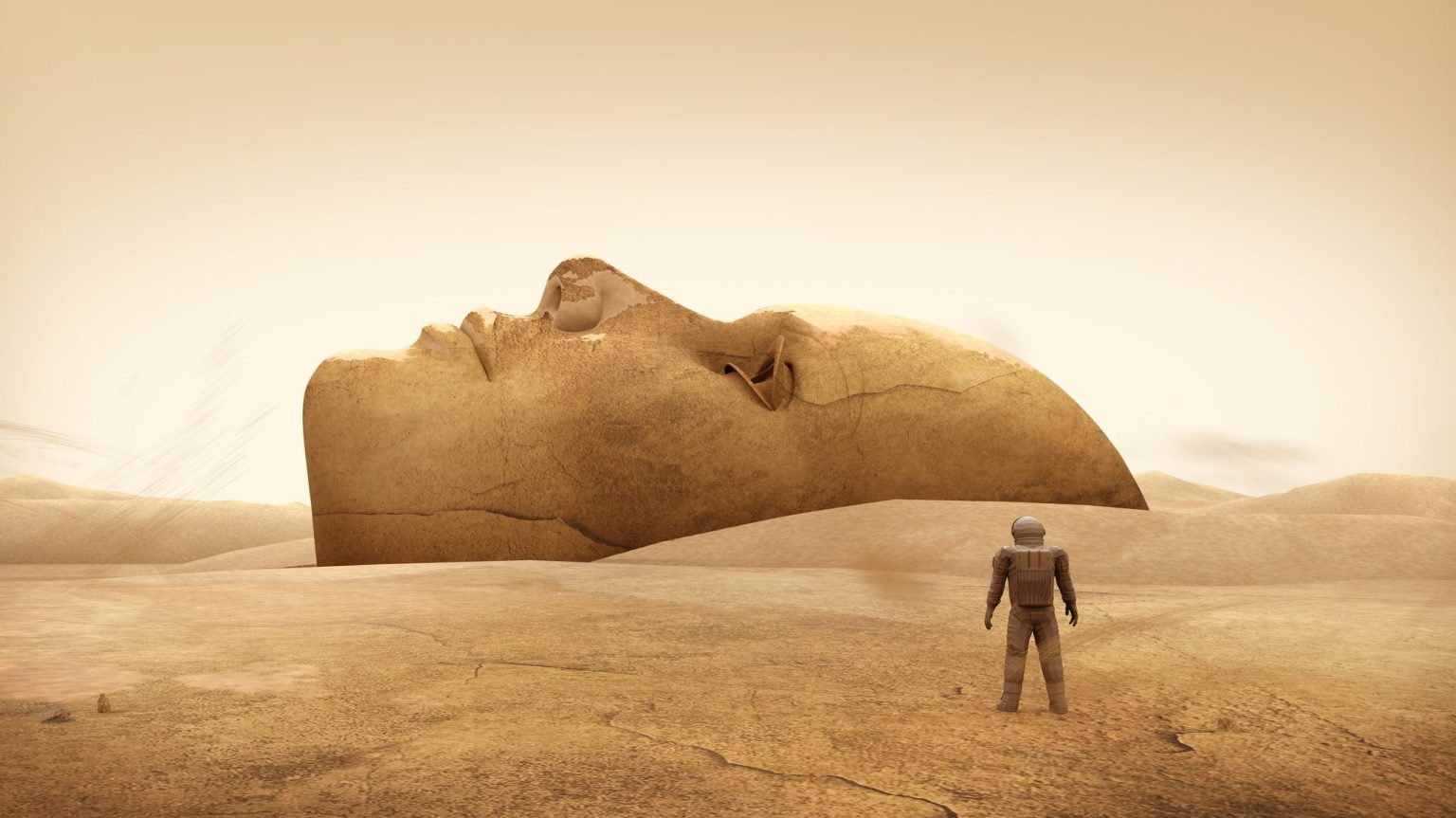
It was in the latter’s image that scientists noticed something resembling a human face pointing upward. Everyone was immediately struck by the similarity of this object to the Egyptian Sphinx, so they began to call it that. Soon after, the researchers found another photo showing the Martian “sphinx” from a completely different angle, which allegedly proved that it was not an optical illusion. The face was gigantic. Its length reached two kilometers, so it was a sign of the high development of the civilization that created it.
In addition, a few kilometers from the “sphinx,” they saw something very similar to regular pyramids. The press started talking about how these were the very remains of a Martian civilization that had died out many thousands of years ago. For a long time, there were no cameras that could take new photographs of the area, and newspapers and magazines published articles about the mysterious “city” of Cydonia for almost two decades in a row. Some people even “saw” a stone tear on the face of the Martian “sphinx” and began to freely interpret its meaning.
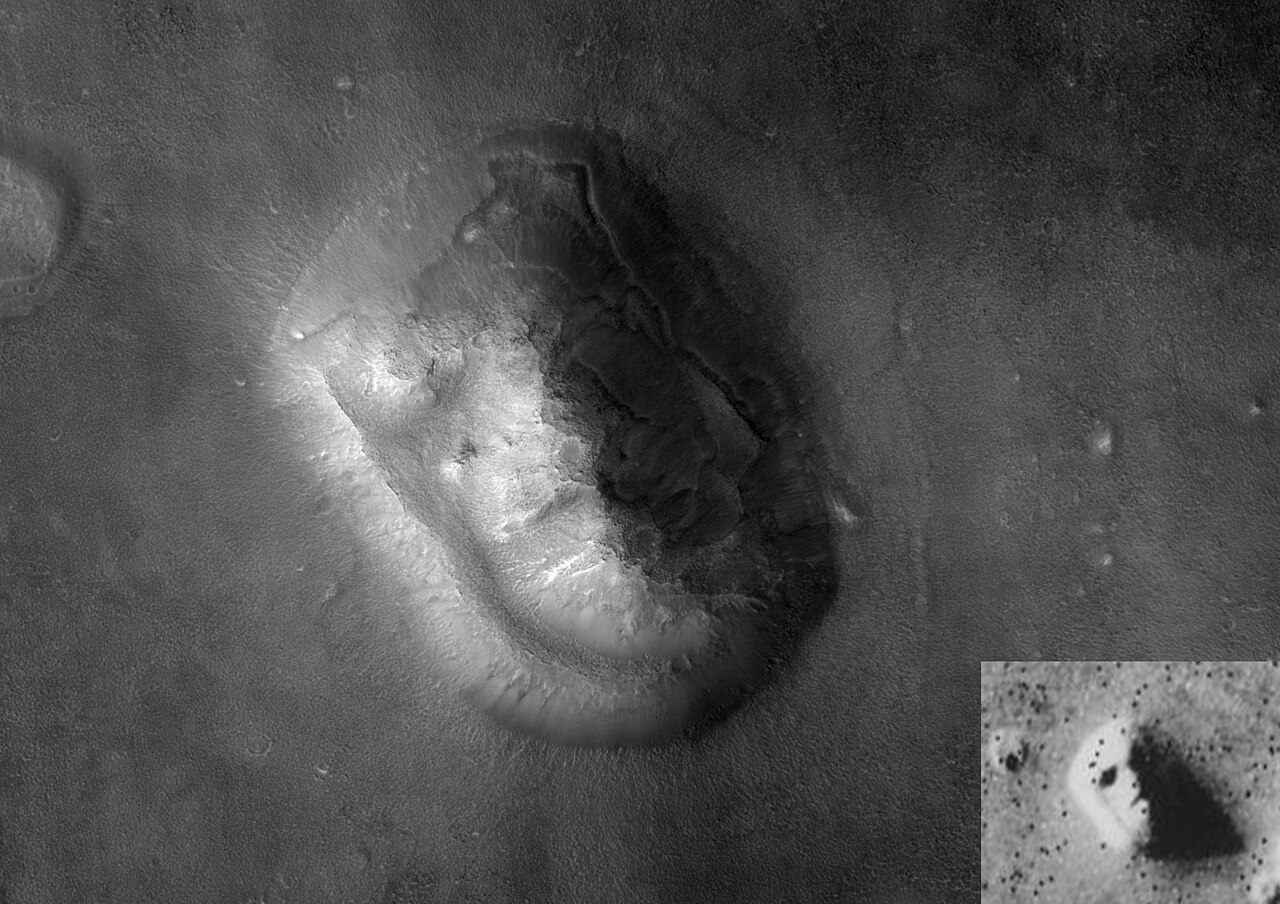
It was only in 2001 that the Mars Global Surveyor spacecraft took a new photo with much better resolution than Viking I. It clearly shows that what was thought to be a giant face carved out of stone is just a flat-topped hill, like many landforms around it. And the pyramids turned out to be sharp rocks.
Are the Martian myths over?
With the advent of high-quality images of the Red Planet’s surface taken by spacecraft in areocentric orbit, and then by rovers, talk of any traces of civilization began to subside. It is hard to talk about a great civilization of the past when almost the entire surface of Mars has been photographed and no mysterious ruins have been found there. However, this does not mean that Martian myths have disappeared forever.
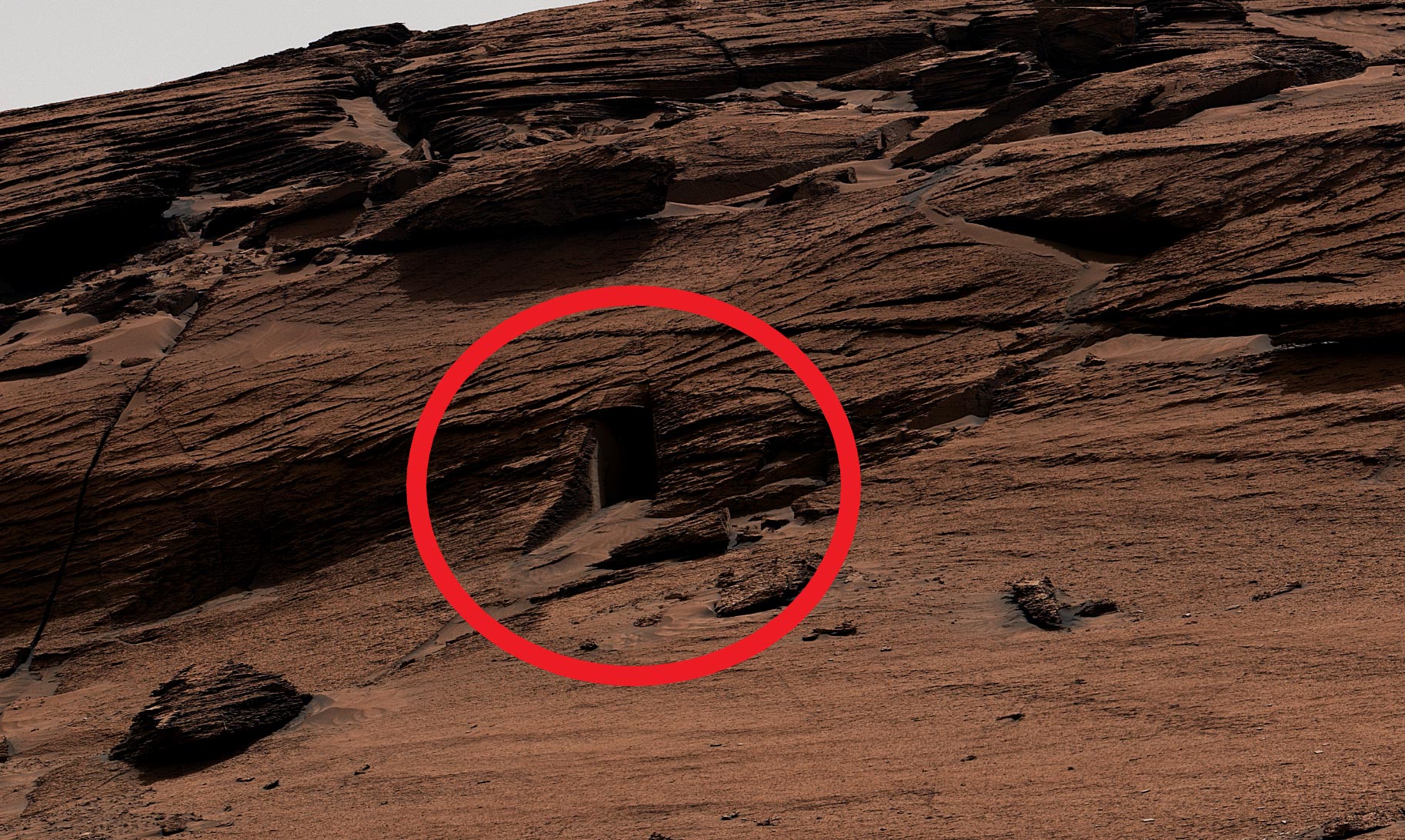
People like to invent beautiful fairy tales. The story of the Martian “door” proves this. In 2022, one of the images taken by the Curiosity rover showed something that looked like a rectangular passage in the Martian rocks. Sensation lovers immediately began to hypothesize about the entrance to the dungeon, where anything could be, up to and including live Wellsian octopuses.
The scientists quickly reassured everyone: The “doors” turned out to be just cracks on which shadows fall in such a way that they appear to be completely flat. However, this is not the last time that enthusiasts have found “indisputable” evidence of the existence of intelligent life on Mars. The hoaxes will stop only after someone settles there, for example, humans themselves.
This article was published in Universe Space Tech magazine #1 (190) 2024. You can buy this issue in the electronic version in our store.

