

An international team of astronomers has announced the discovery of the smallest object consisting of dark matter. The discovery was made using a gravitational lens.
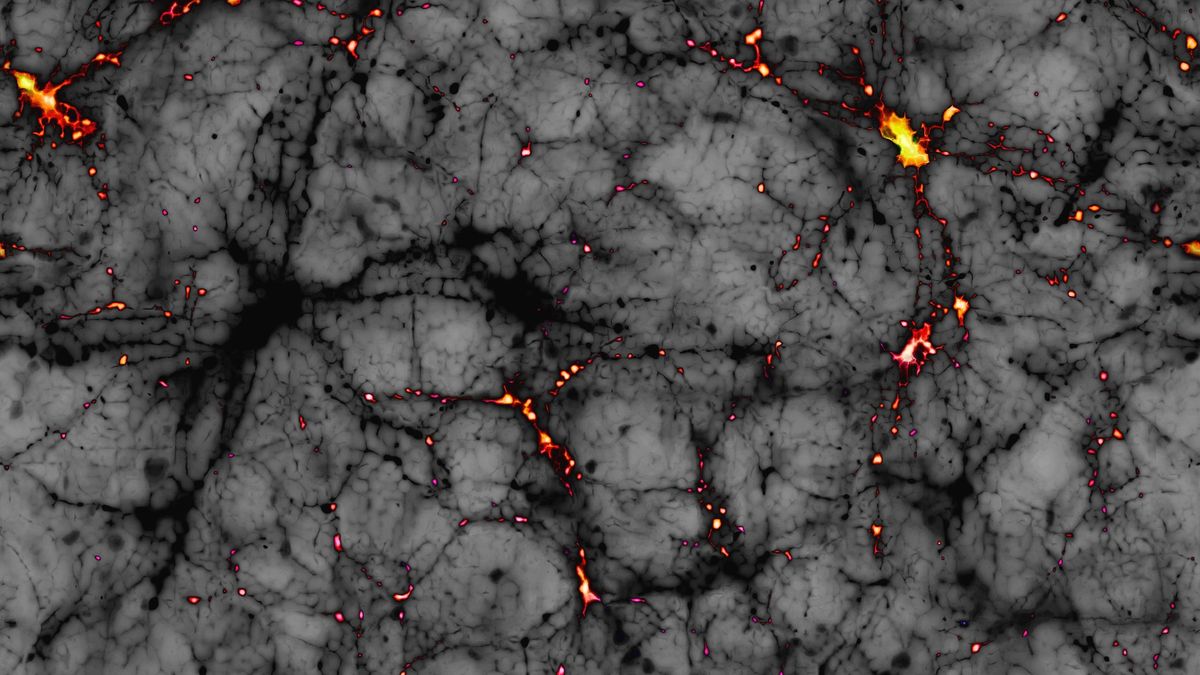
Dark matter is a mysterious form of matter that is believed to have no electromagnetic interaction and accounts for about a quarter of the mass-energy of the Universe. Since dark matter is a fundamental building block of the cosmos, studying it is important for understanding the evolution and development of the structure of galaxy clusters that we observe today.
A key question for astronomers is whether dark matter is homogeneous or clumpy, as this could reveal its composition. Since dark matter cannot be observed directly, its properties can only be determined by using the gravitational lensing effect, in which light from a more distant object is distorted and deflected by the gravity of an object composed of it.
To solve this problem, the team of astronomers used a network of radio telescopes from around the world, including the Green Bank Telescope, VLBA, and EVN. This made it possible to create an Earth-sized super telescope that could detect weak gravitational lensing signals. To analyze the huge array of data they collected, the team had to develop new modeling algorithms that could only be run on supercomputers.
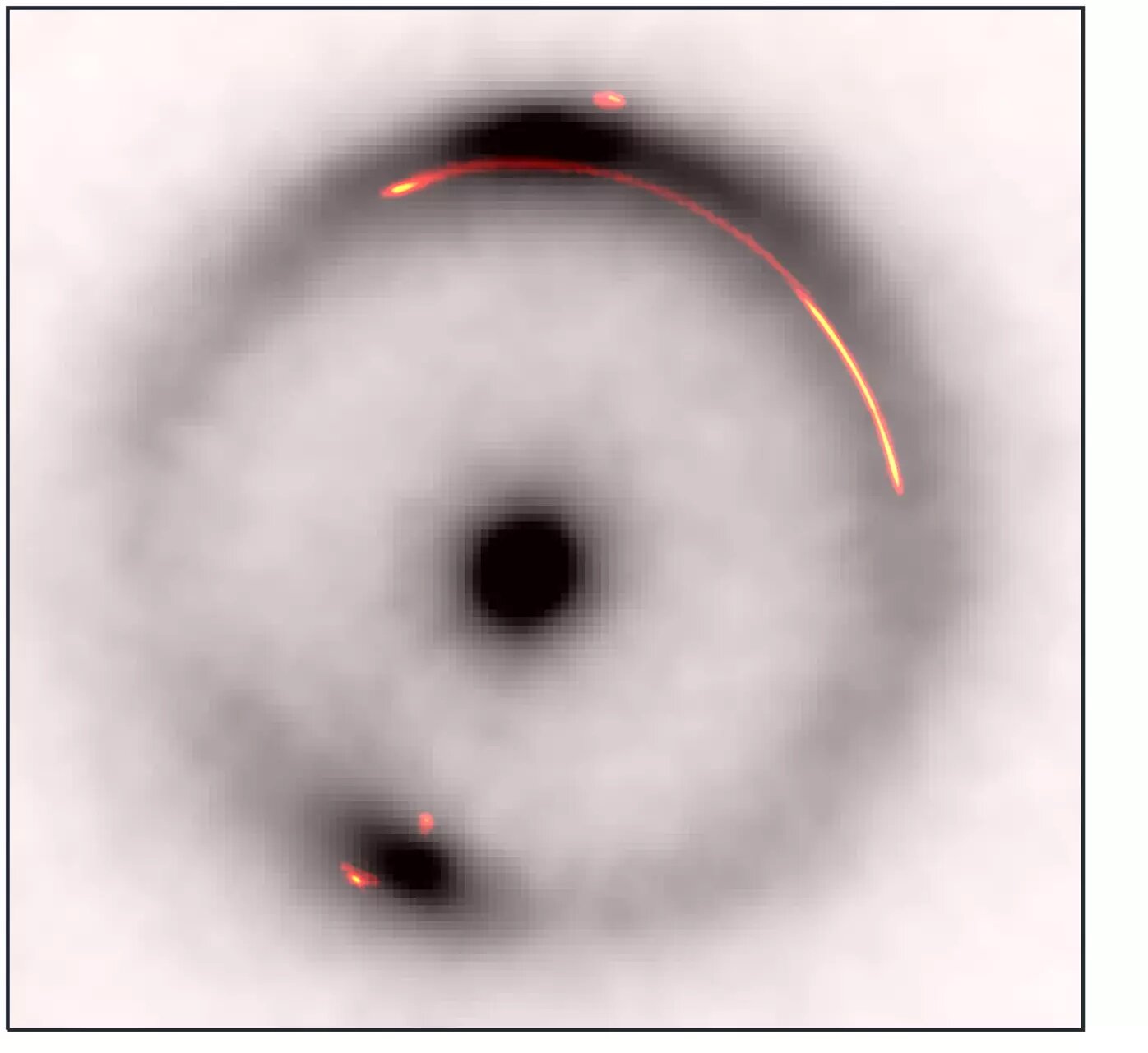
During their search, astronomers discovered a dark matter object with a mass a million times greater than the mass of the Sun. It is located in a remote region of space approximately 10 billion light-years from Earth. Taking into account the space-time expansion effect, it existed at a time when the Universe was only 6.5 billion years old.
To date, this is the smallest dark object discovered using this technique. Its mass is 100 times less than that of the previous record holder.
According to researchers, the discovery is consistent with the so-called “cold dark matter theory,” upon which much of our understanding of the way galaxies form is based. They are currently conducting further analysis of the data to better understand what this mysterious dark object might be.
Astronomers will also continue to explore other parts of the sky to find out if more examples of such low-mass dark objects can be found using the same technique. If they continue to find them in other parts of the Universe and if they really turn out to be completely devoid of stars, then some alternative theories of dark matter may be disproved.
According to Phys.org

