

Using the TESS space telescope, an international team of astronomers has discovered an exoplanet orbiting an orange dwarf star. It is a mini-Neptune.
The TESS telescope was launched in 2018. It searches for exoplanets around 200,000 of the brightest stars closest to us. The instrument does this using the transit method — tracking fluctuations in brightness that may be caused by transits of stellar companions. During its service, TESS has identified approximately 7,700 exoplanet candidates. Over 700 of them have since been confirmed.
Recently, a new world has been added to this list — the exoplanet TOI-283 b. It orbits a bright orange dwarf star located 269 light-years from Earth. It is about 15% smaller and 20% less massive than our Sun.
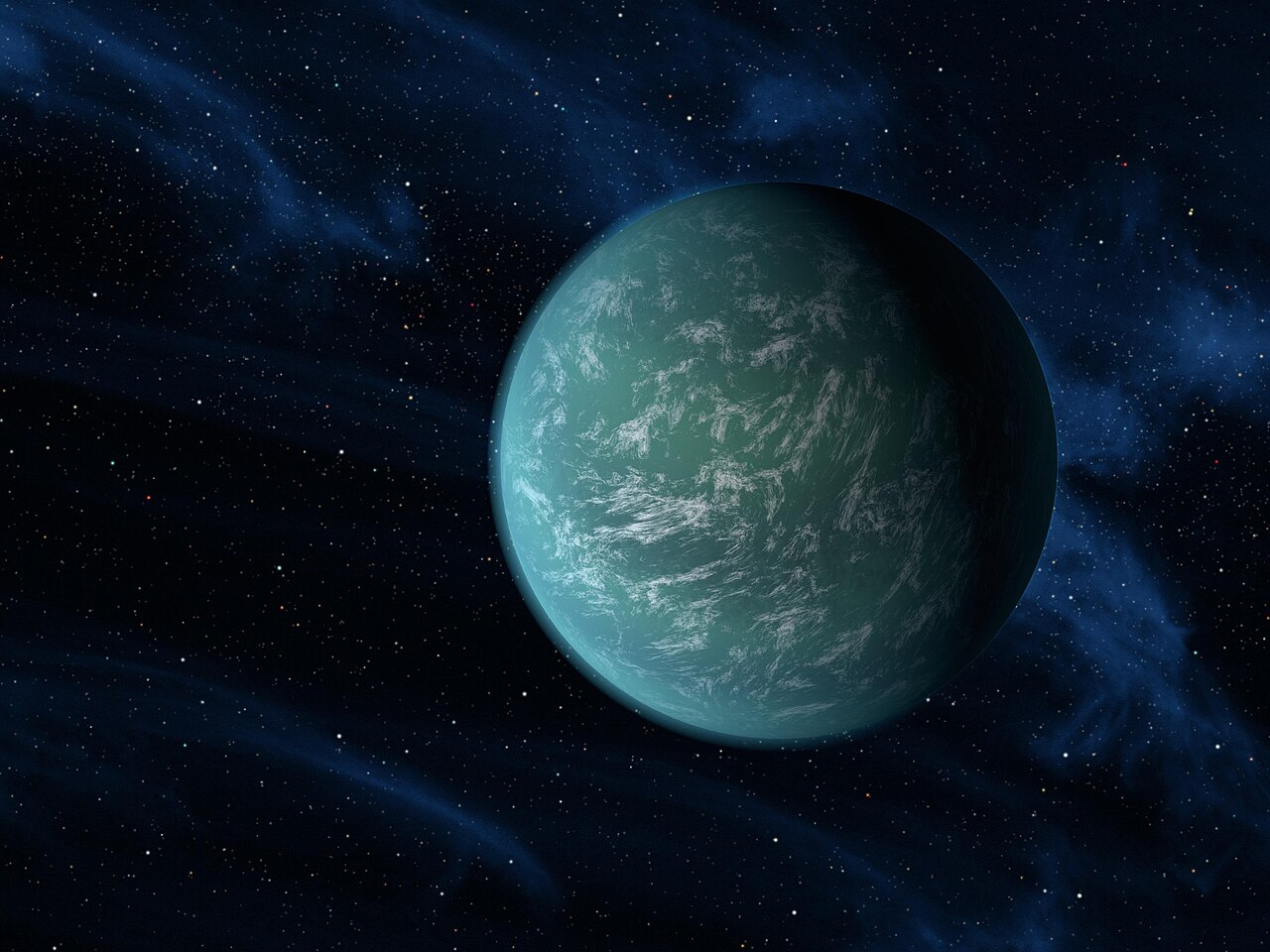
Observations show that TOI-283 b has a radius of about 2.34 times that of Earth and is approximately 6.54 times more massive than Earth. This gives it an average density of 2.81 g/cm3. The exoplanet’s orbital period is 17.6 days, and its orbit is about 0.12 AU (18 million km) from the star. The equilibrium temperature of this world is estimated at 388 °C.
Thus, based on its physical properties, TOI-283 b has been classified as a mini-Neptune. Such worlds occupy an intermediate position between planets like Neptune and rocky worlds like Earth. They are believed to have rocky cores surrounded by thick shells of light substances (water and ammonia) and to have extended atmospheres consisting of hydrogen and helium.
To confirm the presence of water in the planet’s atmosphere, scientists plan to use the James Webb Space Telescope. As for the parent star, the data collected indicates that it is much older than the Sun. Its age is estimated at 10.4 billion years.
Earlier, we reported on how astronomers discovered three Earth-like planets in a binary system.
According to Phys.org

