

The US Department of Defense’s secret X-37B spaceplane is preparing for its eighth orbital flight in August 2025. This mission carries two key experiments aimed at improving space communications and navigation. The US Space Force emphasizes that this research is critical to ensuring the security and sustainability of American orbital systems.
“Our goal is to make the combined forces more cohesive, resilient, and ready to act in any conditions,” said General Chance Saltzman, Chief of Space Operations. “This is how we protect our country’s interests in space.”
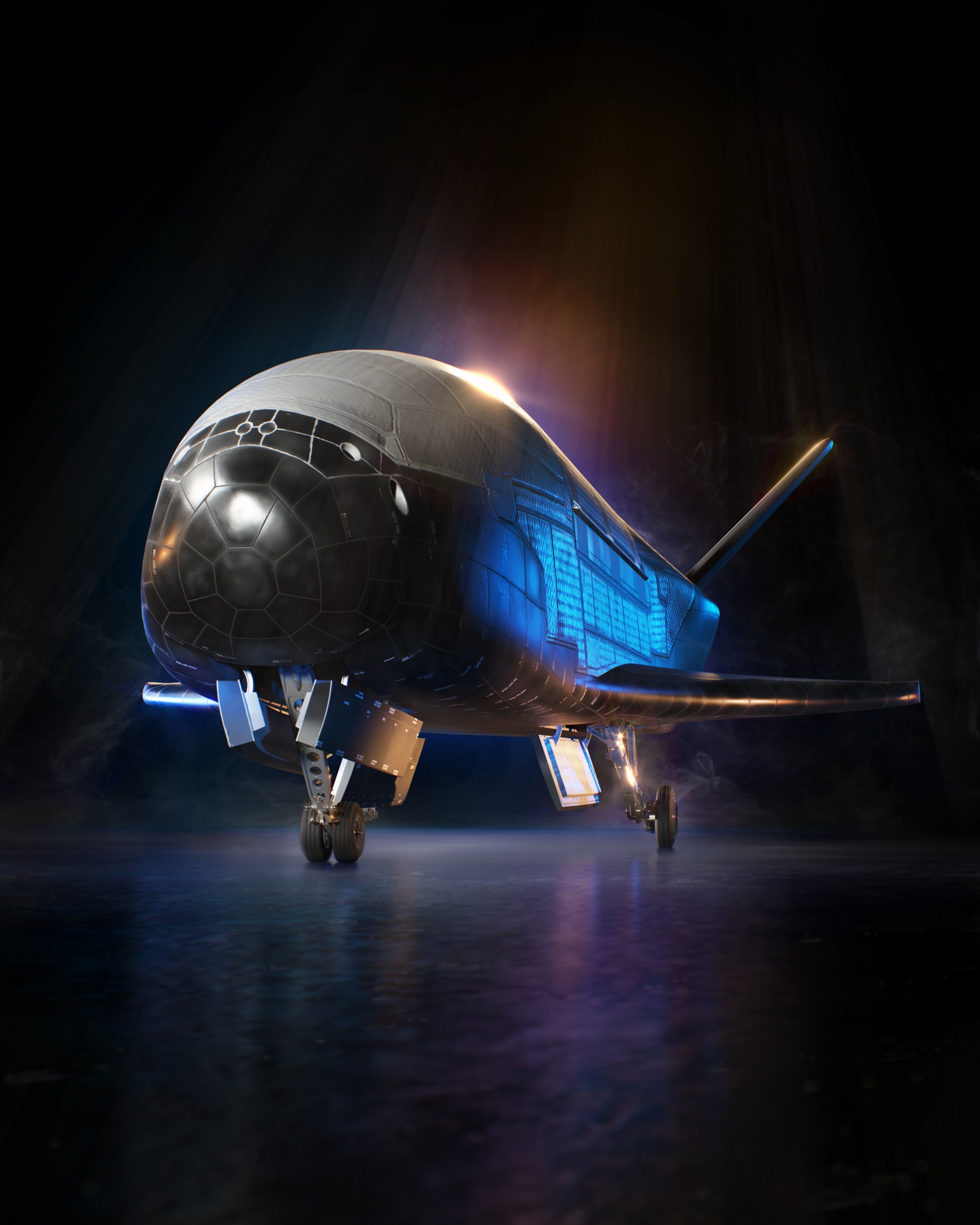
Created by aviation giant Boeing, the X-37B has become a unique space laboratory for the Pentagon and NASA, testing technologies and maneuvers out of the public eye. Although many details remain secret, the information policy regarding spaceplane missions is gradually becoming more transparent.
Laser bridge over Earth
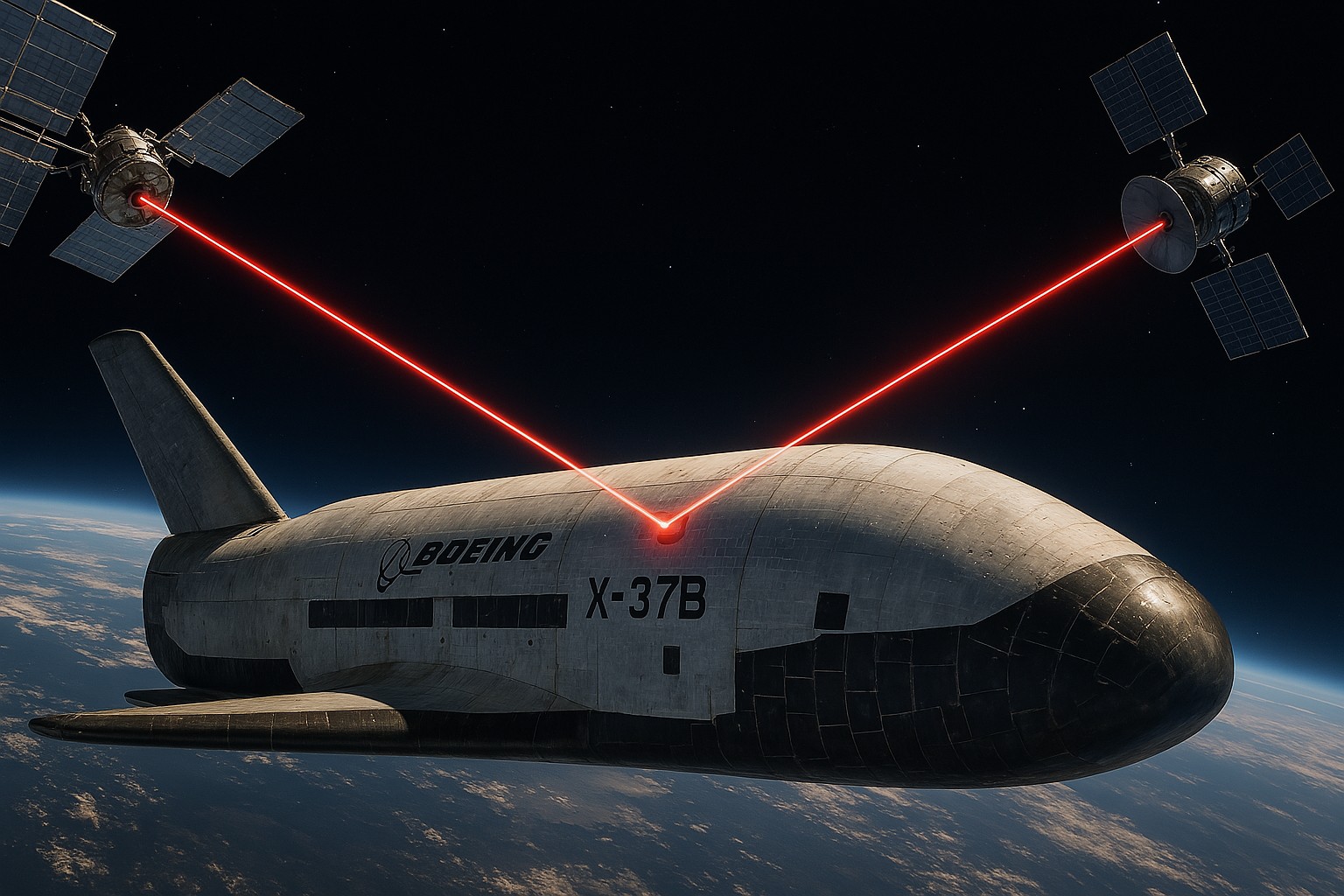
One of the mission’s flagship experiments is the demonstration of laser communication. The X-37B is designed to interact with commercial satellite networks in low Earth orbit no higher than 2,000 km above the Earth. Laser data transmission promises much higher transmission speeds and increased security compared to conventional radio waves. The key advantage is the elimination of the “point of failure.” The use of an extensive network of relay satellites makes the entire US space architecture significantly more resilient to failures or attacks.
Quantum compass without GPS
The second groundbreaking experiment is the world’s most powerful quantum inertial sensor in space. This device is designed to accurately determine the position and movement of the aircraft without the need for external systems such as GPS.
“This technology is indispensable where GPS is unavailable, which increases the resilience of our navigation against potential threats,” explains Space Force. Quantum sensors open the way not only for protecting orbital vehicles, but also for long-distance interplanetary missions and research in near-lunar space, where traditional global positioning systems are ineffective.
Launch and prospects
The launch will take place from the Kennedy Space Center in Florida. The specific duration of the mission has not yet been disclosed. But the previous, seventh flight lasted a record 908 days, or about 2.5 years. At that time, the X-37B successfully demonstrated aerodynamic braking to change its orbit with minimal fuel consumption.
Operational control of the mission is carried out by the Fifth Space Operations Squadron in partnership with the Space Rapid Capabilities Office. This flight is another step in utilizing the unique potential of the X-37B to test future technologies.
Earlier, we reported on how the first photo of the X-37B from space was published.
According to defensenews.com

