

The origin of the Moon is one of the great mysteries of the Solar System, which has remained unsolved even after analyzing soil samples brought back by astronauts. How exactly it formed and what collided with the young Earth—science still does not have a definitive answer to these questions.
A collision billions of years ago
Researchers agree that about 4.51 billion years ago, a large celestial body—which scientists have named Theia—collided with Earth. It was from the debris of this collision that the Moon formed.
But there is no consensus on what Theia was like: estimates range from a body similar in size to Mercury to an object half the size of Earth today. “Our planet suffered a massive impact that effectively rewrote its entire subsequent history,” says Wim van Westrenen, a planetary scientist at Vrije Universiteit Amsterdam.
What the “Genesis rock” revealed
Immediately after the impact, the future Moon was a molten ball of magma—no solid rock existed yet. It formed later, as the Moon cooled. Among the most famous samples brought back by the Apollo missions is the so-called “Genesis Rock,” discovered in 1971 during the Apollo 15 mission.
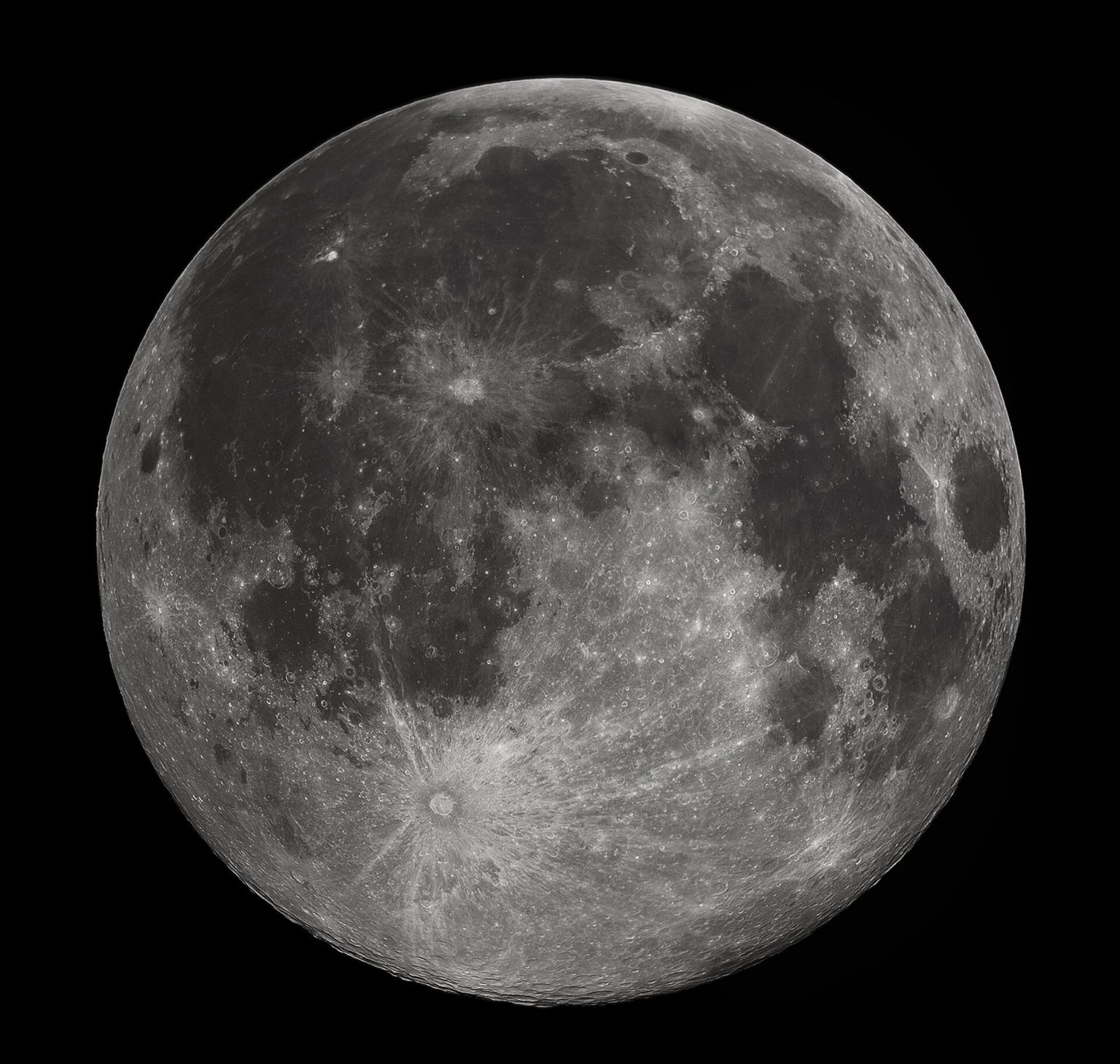
It is 4.46 billion years old and consists almost entirely of the white mineral plagioclase. This lightweight mineral rose to the surface of the magma ocean, and it is this mineral that gives the Moon its characteristic white color. “The presence of plagioclase across the entire surface means that we are essentially looking at the roof of an ancient, massive magma chamber,” says van Westrenen.
Lunar soil under pressure
A team of scientists is recreating the conditions of the lunar interior in the laboratory: they heat the material to over 1,700 degrees Celsius and compress it to a pressure equivalent to 250,000 Earth atmospheres. By comparison, the maximum pressure deep within the Moon itself is estimated to be approximately 50,000 atmospheres. This makes it possible to “travel” to the center of the celestial body without leaving the laboratory.
According to van Westrenen, his team was the first to conduct a comprehensive experimental study of which minerals form and in what order during the solidification of the deep magmatic ocean.
The main discrepancy
The biggest challenge for planetary scientists is the chemical similarity between the Moon and Earth. All classical models predict that, following a collision, the Moon should consist primarily of material from Theia rather than from Earth. But lunar rocks have turned out to be strikingly similar to those on Earth.
If Theia came from another part of the Solar System—which is most likely the case—its chemical composition would have differed significantly from that of Earth. This contradiction remains unresolved for now. “Everyone can see the moon with the naked eye, but few people realize that its formation is inextricably linked to the history of our own planet,” says van Westrenen.
According to phys.org

