

On July 30, the GSLV F16 rocket was launched from the Satish Dhawan Space Center. It successfully launched the NISAR satellite into orbit, which is a joint project between NASA and the Indian Space Research Organization (ISRO).
Go NISAR! ?
The joint NASA-India satellite aboard @ISRO's Geosynchronous Launch Vehicle launched from the southeast Indian coast at 8:10am ET (1210 UTC) on its mission to monitor Earth's changing land and ice surfaces. pic.twitter.com/2Y3LUxlM2D
— NASA (@NASA) July 30, 2025
NISAR is the first instrument ever equipped with a dual-frequency synthetic aperture radar operating in the L and S bands. Its creation and launch cost NASA and ISRO approximately $1.5 billion. This makes NISAR one of the most expensive satellites ever built for imaging the Earth’s surface.
The satellite is designed to map the relief of land and ice masses on Earth with a resolution of 3 to 10 meters. According to experts, its radar will be able to track changes in the surface of our planet with centimeter precision.
NISAR data will help:
- measure plant biomass and its changes;
- track changes in the area of active agricultural crops;
- understand changes in wetland areas;
- map the ice sheets of Greenland and Antarctica, sea ice dynamics, and mountain glaciers.
- characterize the deformation of the Earth’s surface caused by seismic activity, volcanism, landslides, as well as subsidence and uplift associated with changes in underground aquifers, oil reservoirs, etc.
India’s rocket successfully launched a 2.8-ton spacecraft into a sun-synchronous orbit at an altitude of 747 km. The next important step will be to deploy its radar. First, the satellite will unfold a 9-meter mast, and then a 12-meter grid antenna reflector.
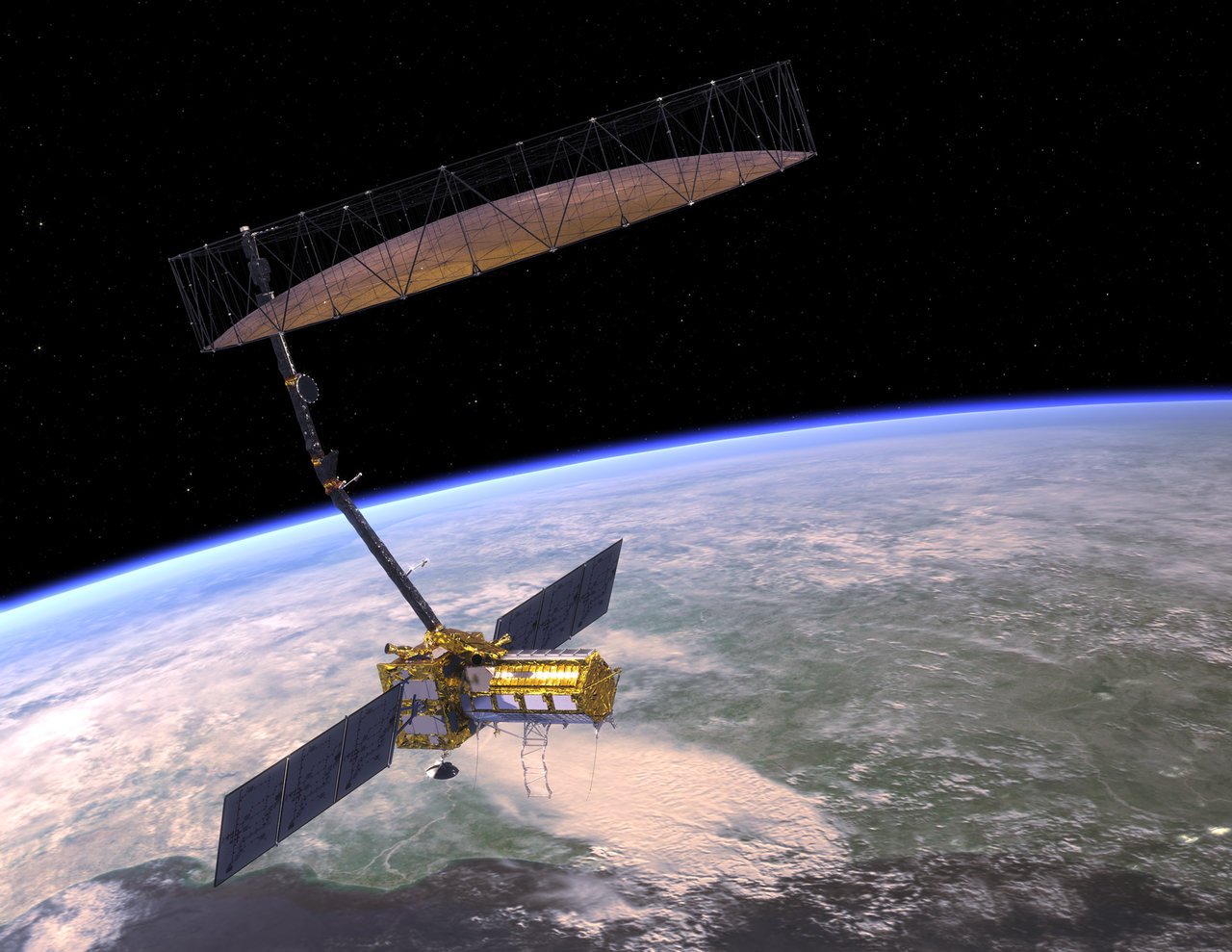
Once operational, NISAR will scan land and glaciers twice every 12 days. The data collected by it will be available to all users from various fields. They can be used in areas such as disaster response, infrastructure monitoring, and agriculture. The satellite is designed to have a service life of five years.

