

Earth’s hurricanes and tornadoes generate invisible waves that travel through the atmosphere and reach near-Earth space. NASA confirmed this using an instrument aboard the International Space Station. The mission concluded on May 21, 2026, after more than two years of observations.
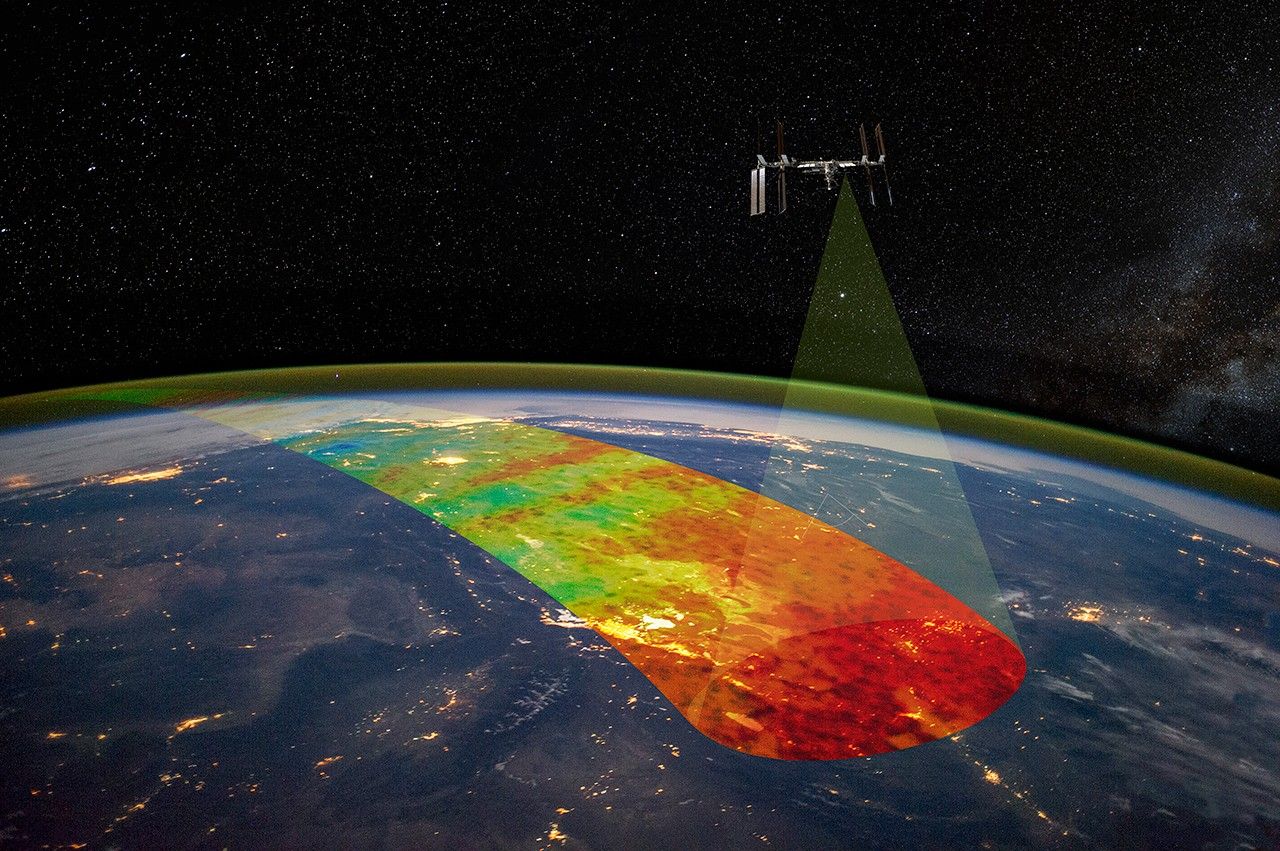
Atmospheric gravitational waves
The AWE (Atmospheric Waves Experiment) instrument studied atmospheric gravity waves. These are massive oscillations in the atmosphere that occur when strong winds flow around high mountains or during catastrophic weather events such as tornadoes, thunderstorms, and hurricanes.
AWE detected these waves in the atmosphere’s own glow (known as airglow). This term refers to the faint, colored bands of light that appear in the upper layers of the atmosphere and are clearly visible from space. Unlike the aurora, the atmosphere’s glow covers the entire planet and is not dependent on solar activity.
Nearly 30 months on the ISS
AWE was installed on the exterior of the ISS in November 2023. Over the course of 30 months of operation, it captured four infrared images per second and accumulated a total of more than 80 million nighttime images.
Among the recorded events were a series of tornadoes in the central United States in May 2024 and the impact of Hurricane Helene on the Florida coast in September 2024. Observations have shown that different types of storms generate different waves: for example, a thunderstorm in Texas produced smaller, irregular waves with noticeable asymmetry compared to storms in the same region earlier that month.
Why is this important for satellites?
Atmospheric gravity waves affect the density of plasma in the upper atmosphere. Changes in this density disrupt the transmission of radio signals between satellites and ground stations, as well as between satellites themselves, and can reduce the accuracy of navigation and communication systems.
AWE also found that waves with a short horizontal wavelength of 30 to 300 kilometers have the greatest impact on the upper atmosphere. It was designed specifically to measure such waves.
What’s next?
The AWE has been deactivated to make room for the new CLARREO Pathfinder instrument, which will measure sunlight reflected from Earth and the Moon with five to ten times greater precision than existing instruments. The ISS robotic arm will soon remove the AWE from its mount.
All collected data will be made publicly available. Some of it is already available on the University of Utah website in the form of interactive visualizations, where AWE observations are overlaid on a globe or map.
According to science.nasa.gov

