

This summer, NASA will launch a satellite to test technology for storing and transferring cryogenic fuel in space. This is one of the key requirements for future missions to the Moon and Mars.
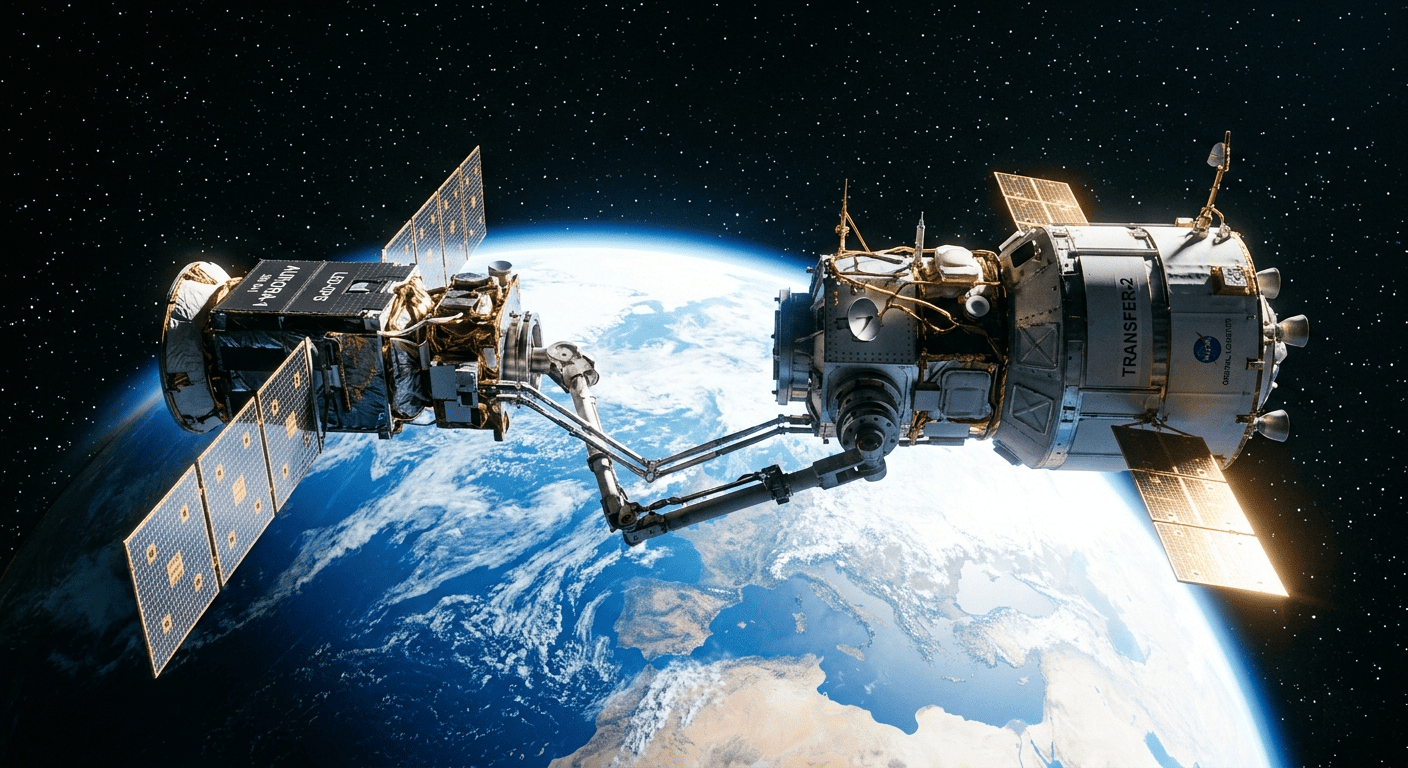
Why has fuel become a problem?
Large manned spacecraft use up most of their fuel reserves while entering Earth’s orbit. To continue their journey to the Moon or Mars, they need to refuel in space.
Cryogenic fuel is efficient but demanding, as it needs to be stored at extremely low temperatures. In microgravity, the liquid behaves differently than on Earth, where gravity naturally separates it from the gas. In microgravity, it sticks to the walls of the tanks and forms chaotic bubbles, making it difficult to even measure the remaining fuel.
What is LOXSAT?
The LOXSAT (Liquid Oxygen Flight Demonstration) satellite was built by Eta Space, a company based in Rockledge, Florida. The satellite is scheduled to be launched into low Earth orbit no earlier than July 17 aboard a Rocket Lab Electron rocket from a launch site on the Mahia Peninsula in New Zealand.
Over the course of nine months, the satellite will test 11 cryogenic fluid control technologies, including evaporation reduction, fuel transfer between spacecraft, tank pressure maintenance, and residual fuel measurement. NASA plans to use the collected data to develop orbital fuel depots, which the agency describes as “space gas stations.”
Connection to the Artemis program
Eta Space has received funding through NASA’s Tipping Point initiative, which supports private companies developing technologies for the Artemis program. The goal of Artemis is to establish a permanent base on the Moon as a springboard for future missions throughout the Solar System.
Both lunar landers selected by NASA under contract—SpaceX’s Starship HLS and Blue Origin’s Mk1—run on cryogenic fuel. For the Artemis IV mission in 2028 to land astronauts on the Moon, at least one of these vehicles must first demonstrate the ability to refuel in orbit. SpaceX has not yet resolved the issue of fuel evaporating spontaneously due to temperature fluctuations, which forces Starship to vent gas and lose fuel.
Competition with China
The United States and China are competing to be the first to return humans to the Moon by the 2030s. According to available reports, China has already tested in-orbit refueling technology using the Shijian-21 and Shijian-25 satellites.
However, no country has yet demonstrated in-flight refueling between two large manned spacecraft.
According to interestingengineering.com

