

NASA specialists are preparing for a new dress rehearsal for the SLS rocket launch. According to unofficial information, it may take place at the end of this week.
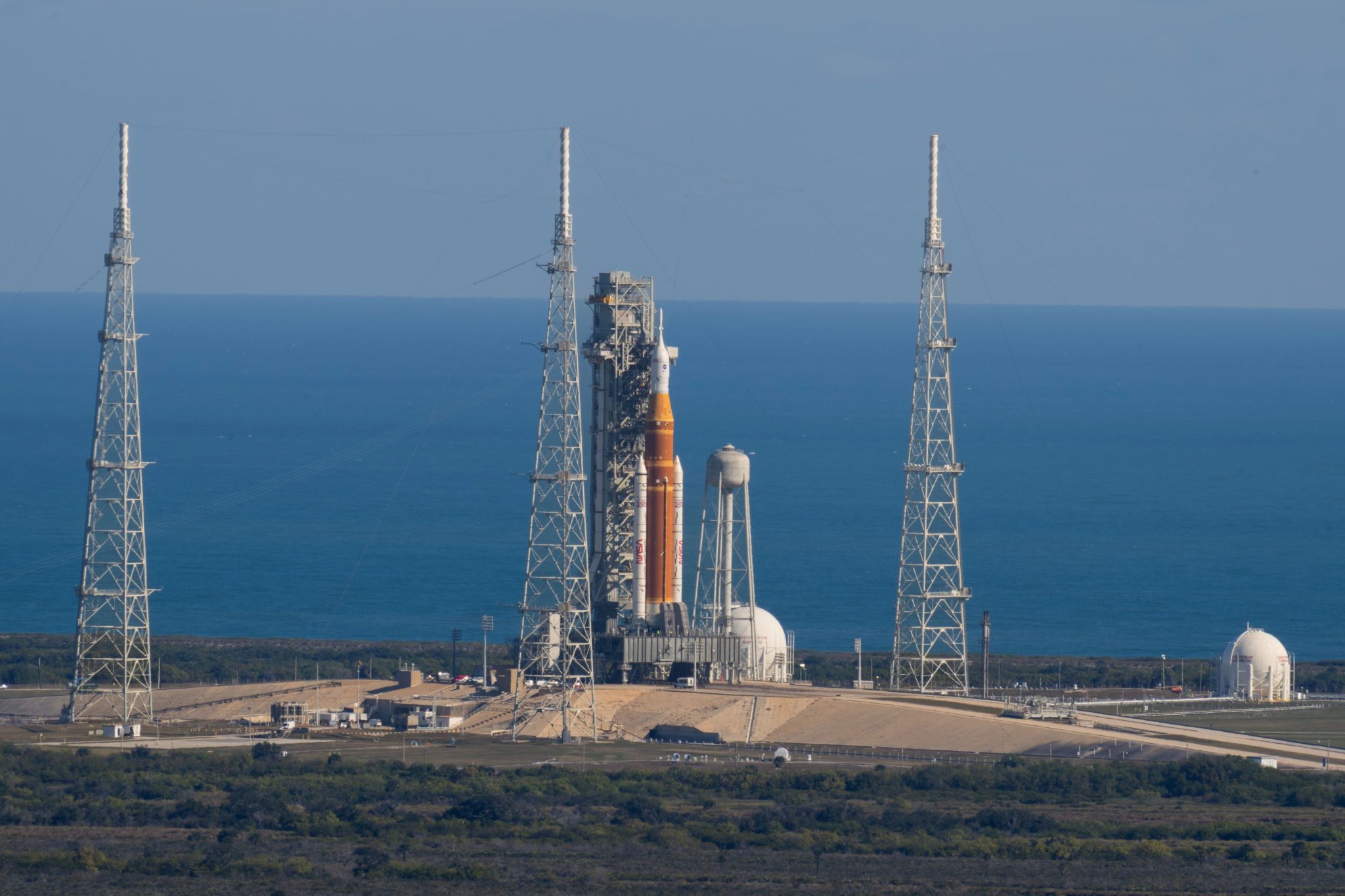
The dress rehearsal (known as a “wet dress rehearsal”) is a crucial test before the launch of the Artemis II mission, during which the Orion spacecraft with four astronauts will fly around the Moon. During this process, engineers completely fill the SLS rocket with liquid hydrogen and oxygen, and then conduct a countdown rehearsal.
The first attempt to conduct a wet dress rehearsal took place on February 3. However, due to hydrogen leaks detected during the rehearsal, NASA had to interrupt the operation. Once the SLS rocket tanks had been emptied of fuel, engineers began work on accessing the tail service mast on the mobile launch platform and disconnecting the rocket and ground connection plates to inspect the area where the hydrogen leak had been detected and replace the seals around two fuel lines.
Two tail service masts, each about three stories high, provide cryogenic fuel lines and electrical cable connections to the SLS core stage. Tail service masts tilt back before launch and incorporate “quick-disconnects,” mechanisms that detach instantly upon takeoff to ensure safe and reliable retraction during launch.
According to a NASA press release, engineers are considering options for testing the repairs before the next dress rehearsal to ensure that the seals are working as expected. NASA will also update the schedule for the next dress rehearsal. Specifically, several procedures that were successfully completed during the previous attempt would be excluded from the schedule.
NASA has not yet announced the date of the next wet dress rehearsal. However, according to unofficial information, it may take place as early as the end of this week. If everything goes well this time, Artemis II could be launched early next month. The next window for a flight to the Moon will open on March 6.
You can find out more about the Artemis II mission and its flight plan in our article.
According to NASA

