

Mexico City is rapidly sinking into the ground. This massive—though invisible to the naked eye—geological crisis threatens the safety of nearly 20 million residents of the metropolis. The satellite, developed through a joint effort by NASA and ISRO, has provided irrefutable evidence that this destructive trend is accelerating, producing the most accurate map of the Mexican capital’s subsidence ever created.
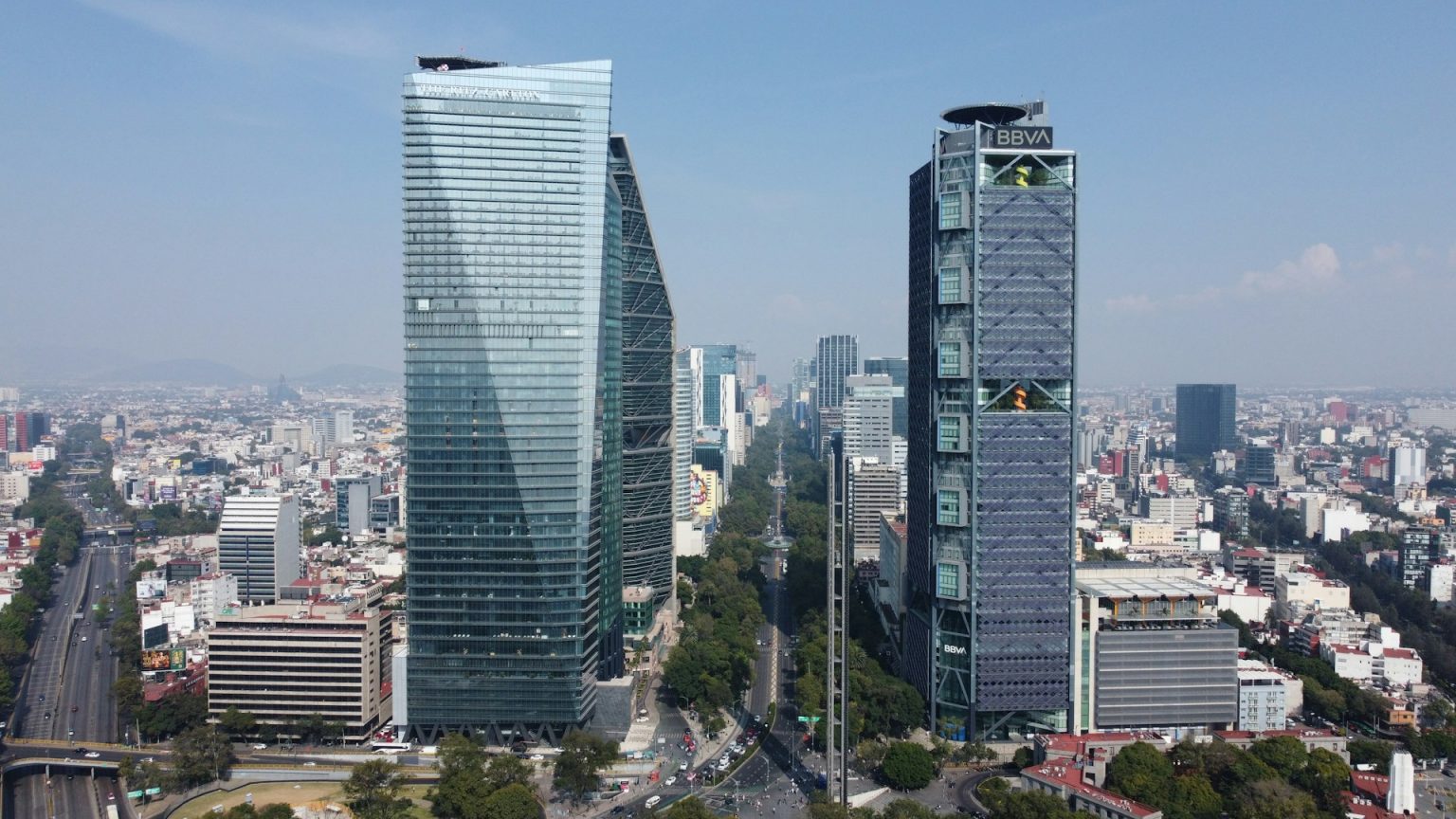
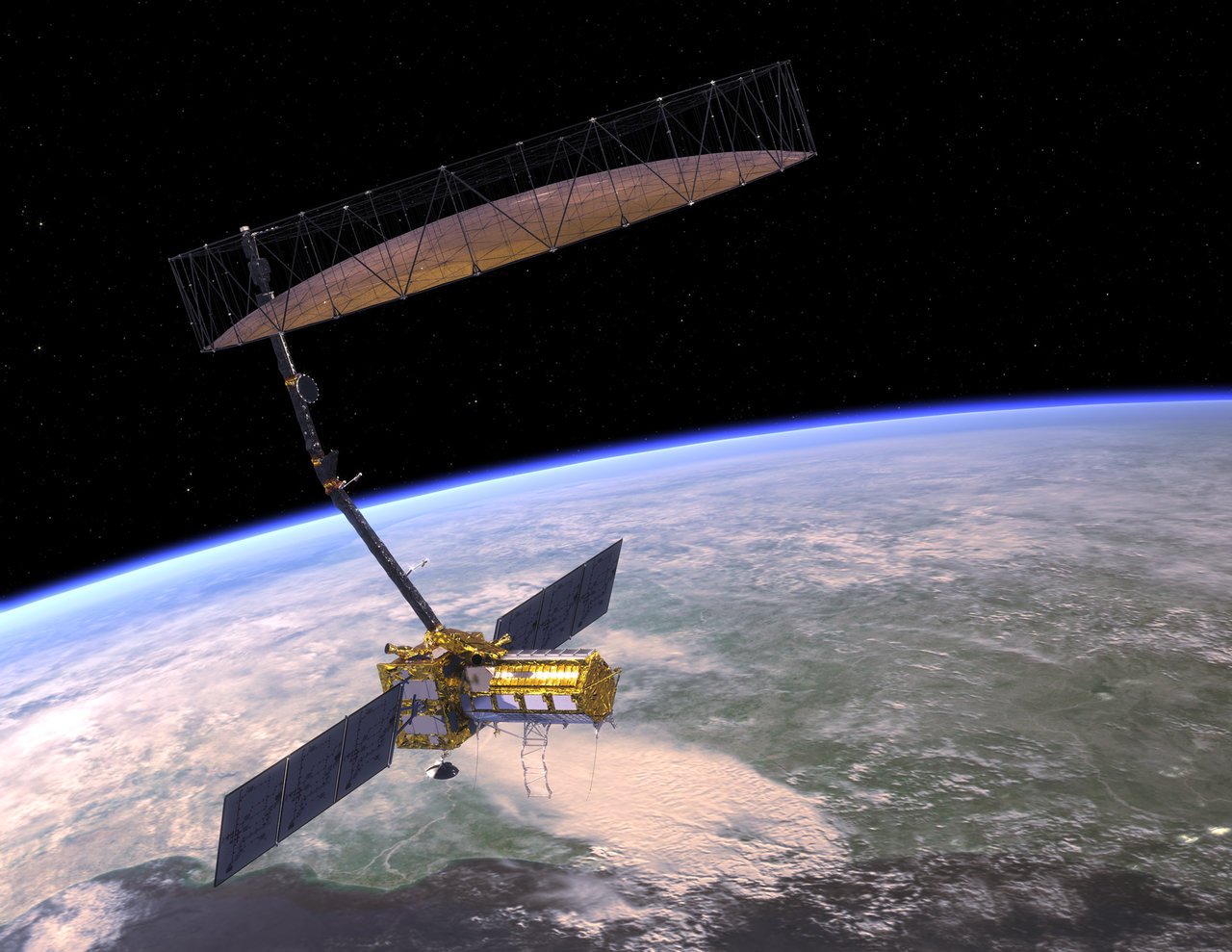
The NISAR (NASA-ISRO Synthetic Aperture Radar) instrument was able to capture the evolution of ground subsidence with unprecedented detail. Researchers analyzed satellite data collected during the dry season—from October 2025 to January of this year.
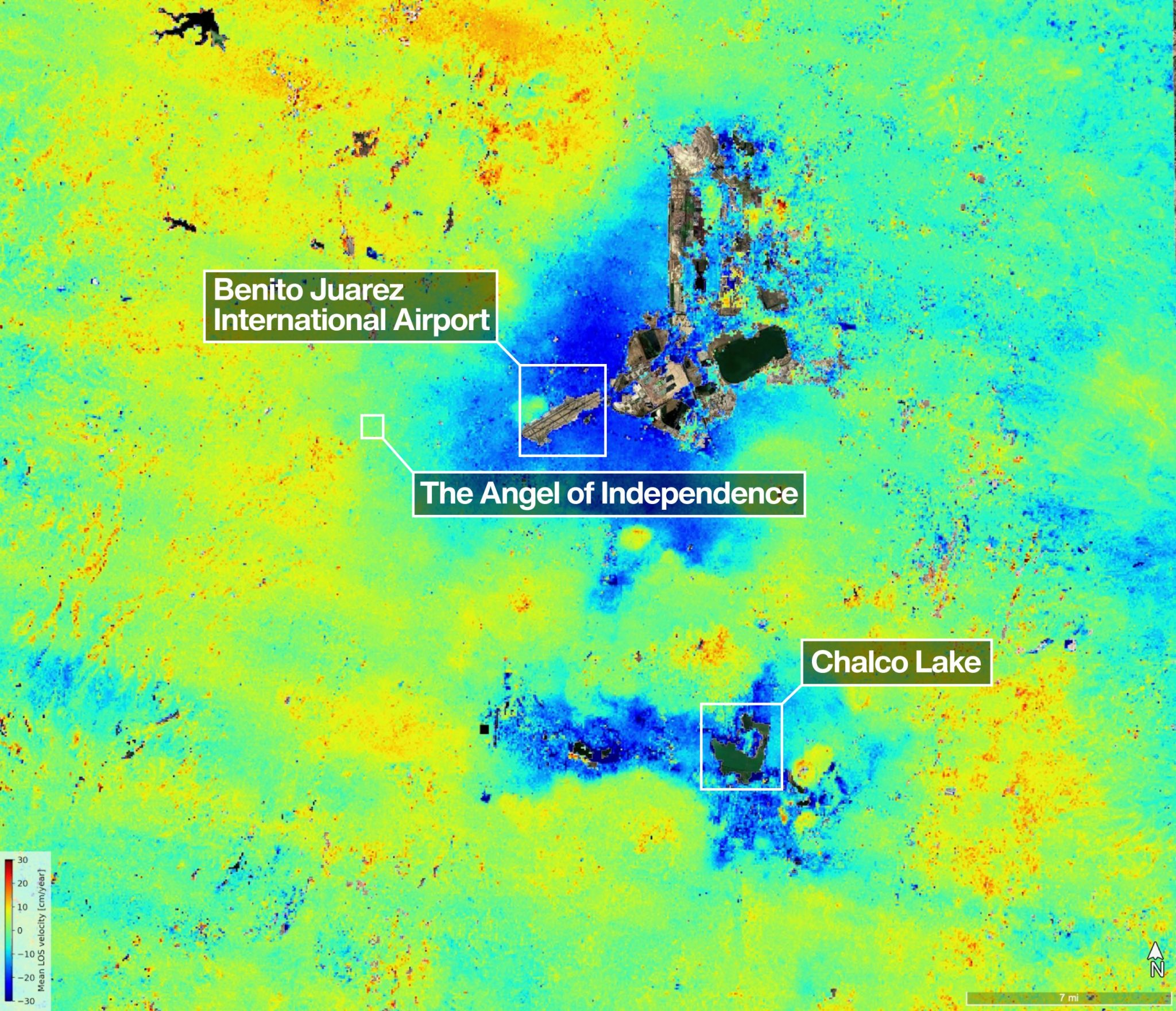
The result is an impressive map showing the deformation of the city’s surface. Critical areas, where the ground is sinking at a rate of more than 2 cm per month, are marked in dark blue. The yellow and red areas are currently considered background “noise” that will disappear as more data is collected. The area around Benito Juárez International Airport looks particularly alarming, as it has turned out to be at the epicenter of rapid subsidence. Craig Ferguson, the project’s deputy director, notes that these initial images have fully met expectations and confirmed the high accuracy of NISAR’s measurements.
Legacy of the dried-up Lake Texcoco
The root of the problem lies in the region’s unique geology and unchecked urbanization. Mexico City is built on soft clay soils—the bed of the ancient, dried-up Lake Texcoco. NASA scientists explain that more than a century of intensive groundwater extraction, combined with the enormous weight of the city’s buildings, has led to critical soil compaction.
This process has been observed for a long time. As early as 1925, engineer Roberto Gayol first documented the city’s subsidence. Throughout the 20th century and into the early 21st century, the rate of subsidence in some areas reached an alarming 35 cm per year. This caused serious damage to infrastructure, including the subway—one of America’s largest transportation networks.
Deadly unevenness
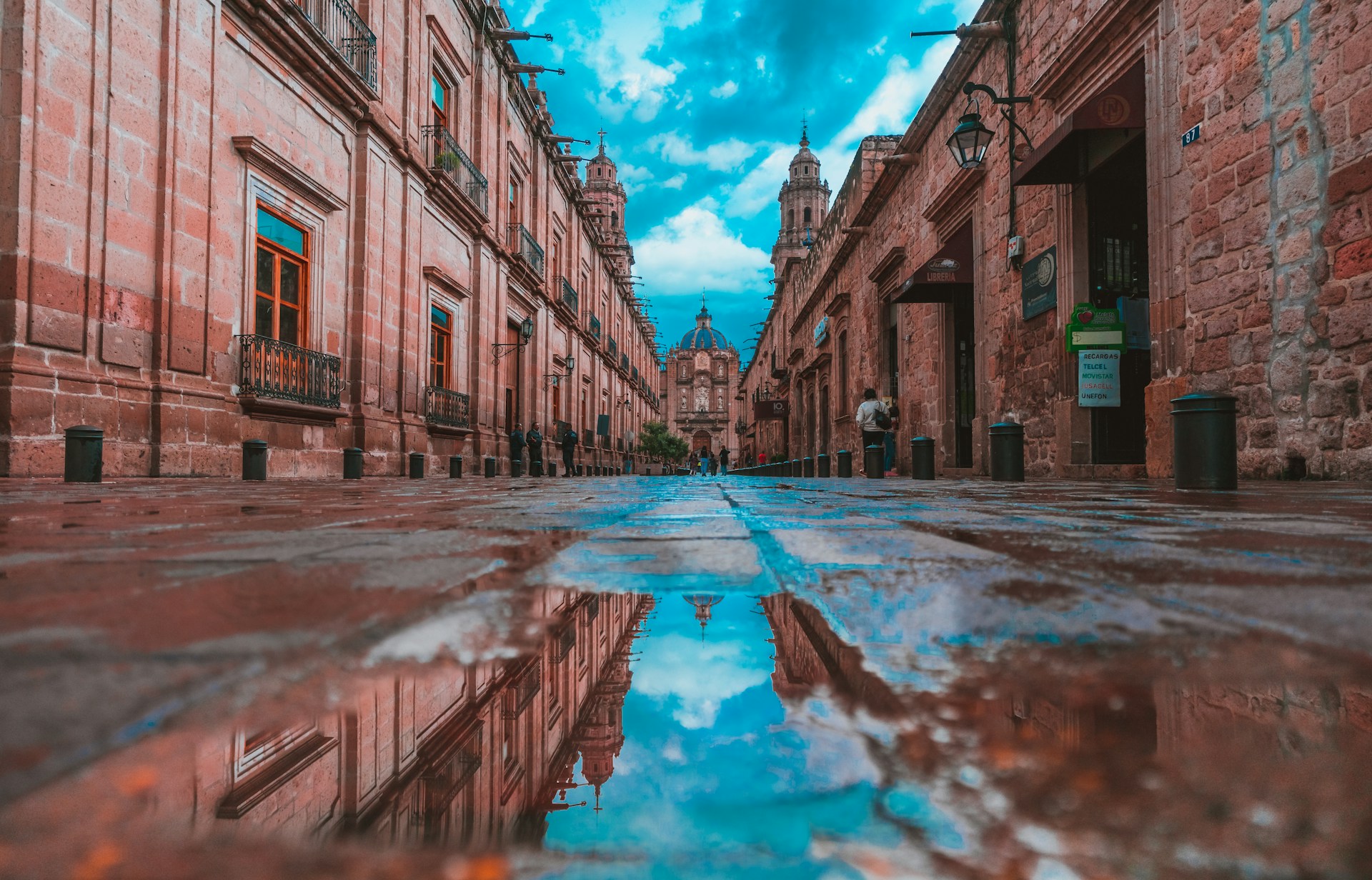
The greatest danger lies not in the fact of subsidence itself, but in its unevenness. A 2024 study conducted by remote sensing specialist Dario Solano-Rojas of the National Autonomous University of Mexico identified the phenomenon of “differential subsidence.” An analysis of decades of data has revealed a striking contrast: while some areas remain stable, others are sinking by a staggering 50 centimeters each year.
This asymmetry is evident not only at the neighborhood level, but also on a scale of just a few meters. If one end of a building or a railroad track settles faster than the other, the structure loses its stability. NASA’s findings confirm this grim picture: seemingly minor, millimeter-scale changes in elevation have accumulated over the years, slowly causing damage to water pipes, roads, and building foundations.
How NISAR works
To prevent disasters and develop effective rescue strategies, authorities need continuous monitoring. This is where NASA’s technology is making a real difference. Launched in July 2025, the satellite is capable of tracking changes in terrain in near real time.
Unlike optical sensors, radars are not affected by cloud cover or dense vegetation. This is the world’s first spacecraft equipped with two synthetic aperture radars (SAR) operating at different wavelengths. Thanks to its massive 12-meter cylindrical reflector antenna, the satellite scans the entire surface of the Earth’s land and glaciers twice every 12 days.
“Mexico City is a classic, well-known area prone to ground subsidence, and these images are just a warm-up for NISAR,” concludes David Bekert, project lead and researcher.
We previously reported on how NASA detected a rapidly expanding “dip” in Earth’s magnetic field.
According to The Guardian

