

On October 28, NASA successfully conducted the first test flight of its revolutionary quiet supersonic aircraft, the X-59 Quesst. The event, which lasted 1 hour and 7 minutes, began in Palmdale, California, and ended at Edwards Air Force Base. This historic flight, piloted by Nils Larson, marks the beginning of the practical phase of an ambitious project that aims to change the perception of supersonic flight.
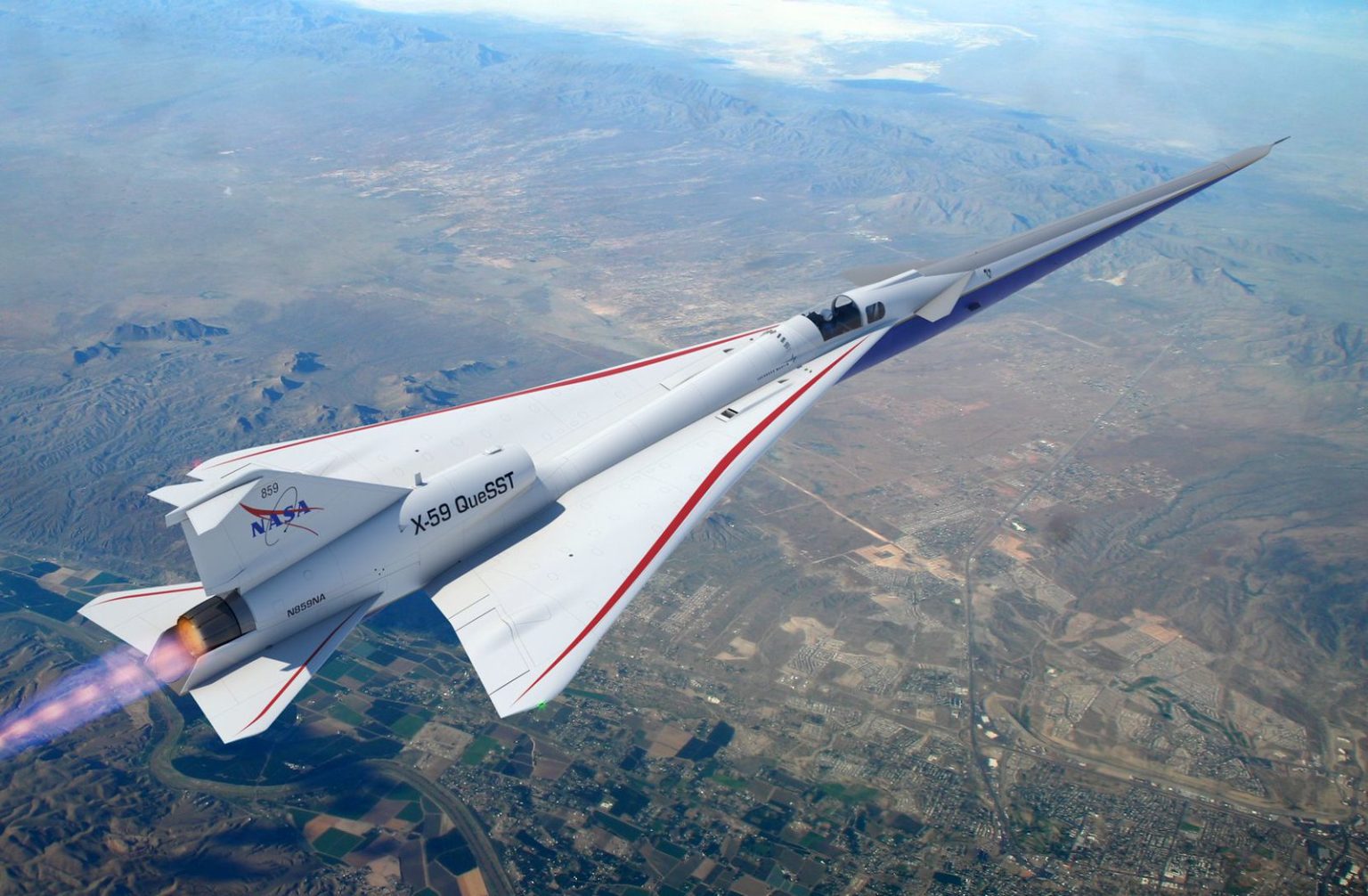
During the flight at an altitude of about 3,600 meters, the pilot conducted basic aircraft control tests at different speeds. The mission ended with a successful landing after a series of maneuvers, including an intermediate flyover of the NASA research center.
Quiet Boom Mission
The main task of the X-59 is not just to fly at supersonic speeds, but to do so as quietly as possible. The aircraft is designed to collect data on people’s reactions to the so-called quiet sonic boom. Unlike the loud explosions that accompany traditional supersonic aircraft, the X-59, thanks to its innovative design, should generate only a low-intensity rumble, similar to a distant jolt.
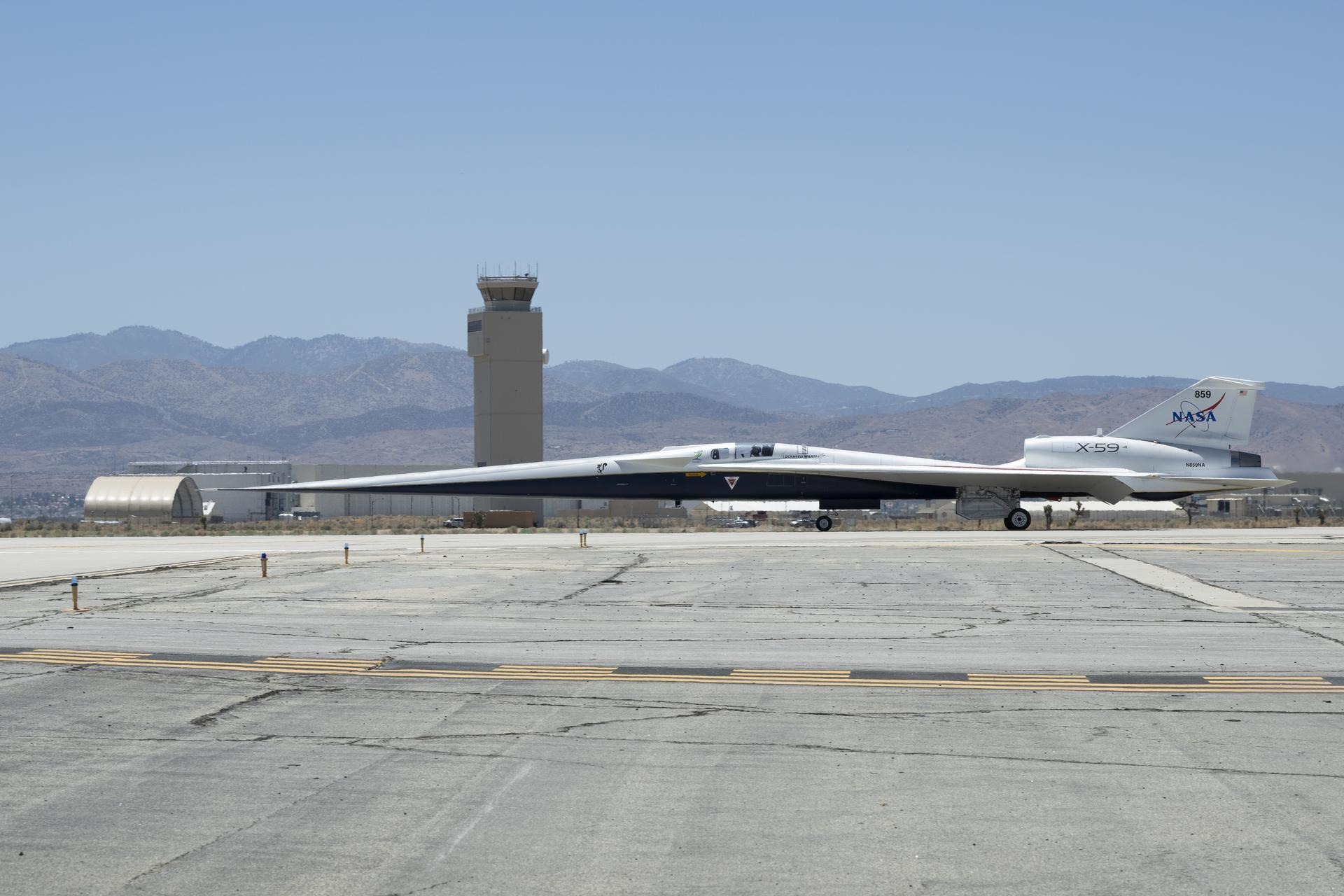
To achieve this, engineers equipped the aircraft with unique features:
- Sharp nose: the elongated nose prevents shock waves from merging, which creates a powerful sonic boom.
- Special fuselage shape: the aerodynamics of the fuselage are designed to disperse pressure waves.
- Upper engine placement, which allows residual shock waves to be directed upward rather than toward the ground.
Dawn of a new era
The first flight is just the beginning of a long testing program. The next step for NASA will be to gradually expand flight modes. Engineers plan to prepare the aircraft to reach supersonic speeds.
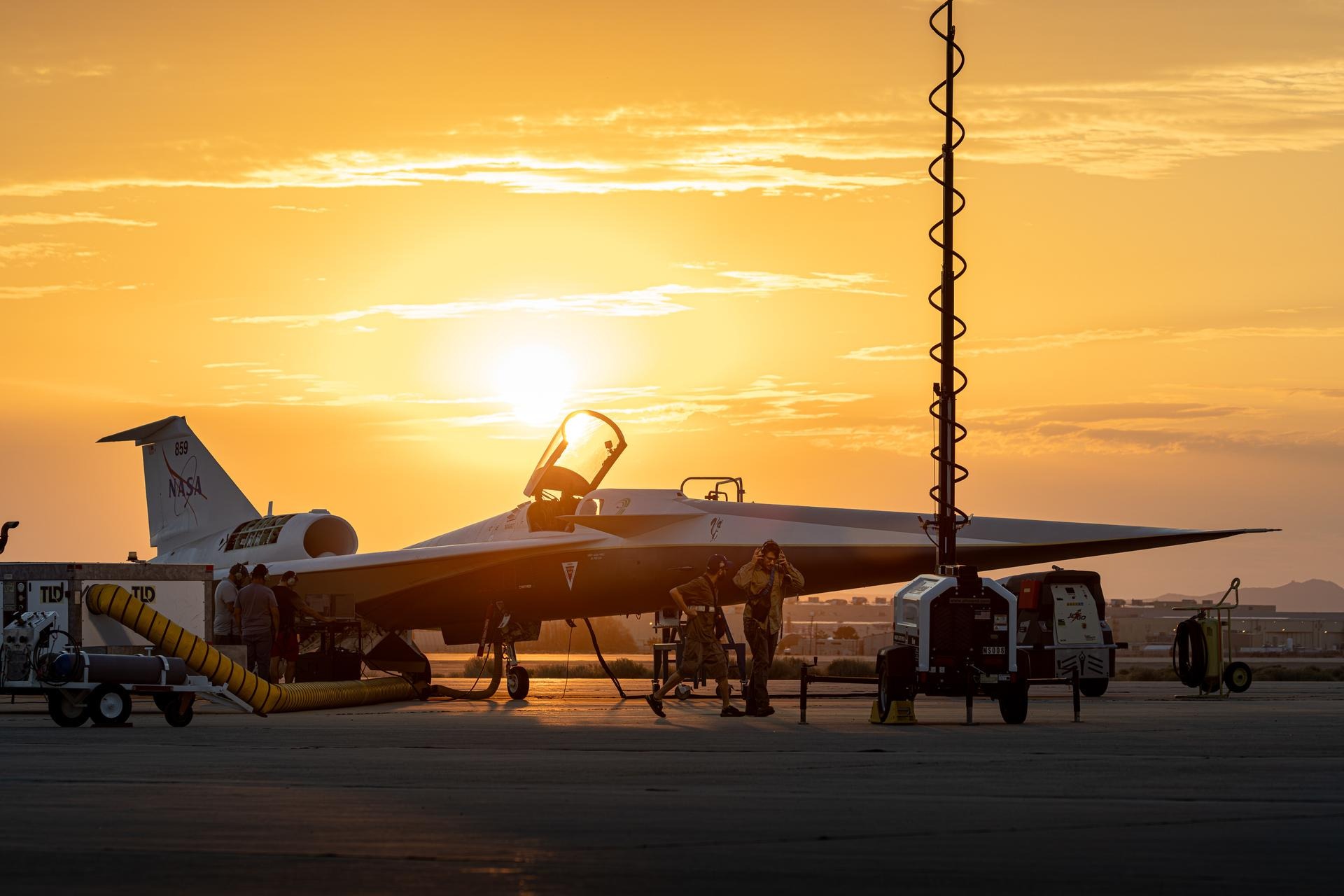
The Quesst mission is divided into three main phases:
- Flight tests: verification of flight characteristics and safety.
- Acoustic tests: confirmation of low noise levels during supersonic flights.
- Sociological studies: conducting flights over populated areas of the United States to assess public perception of “sonic booms.”
The data collected by the X-59 is expected to help international aviation authorities develop new regulations that will allow commercial supersonic flights over land. This could open a new era in aviation, significantly reducing travel times around the world.
We previously reported on how the US was preparing to return to commercial supersonic flights.
According to Reuters

