

Scientists have found two medieval texts describing supernova explosions. We are talking about the events of 1006 and 1181. Arab authors provided new important details to better understand what people witnessed at that time.
New evidence of supernovae
Supernovae are among the most powerful explosions in the Universe. They occur relatively regularly, but the last one in our galaxy was in 1604. Therefore, none of these events were observed using modern methods. This makes evidence of past observations, which have reached us from the depths of centuries, even more important. And recently, there has been a little more of it.
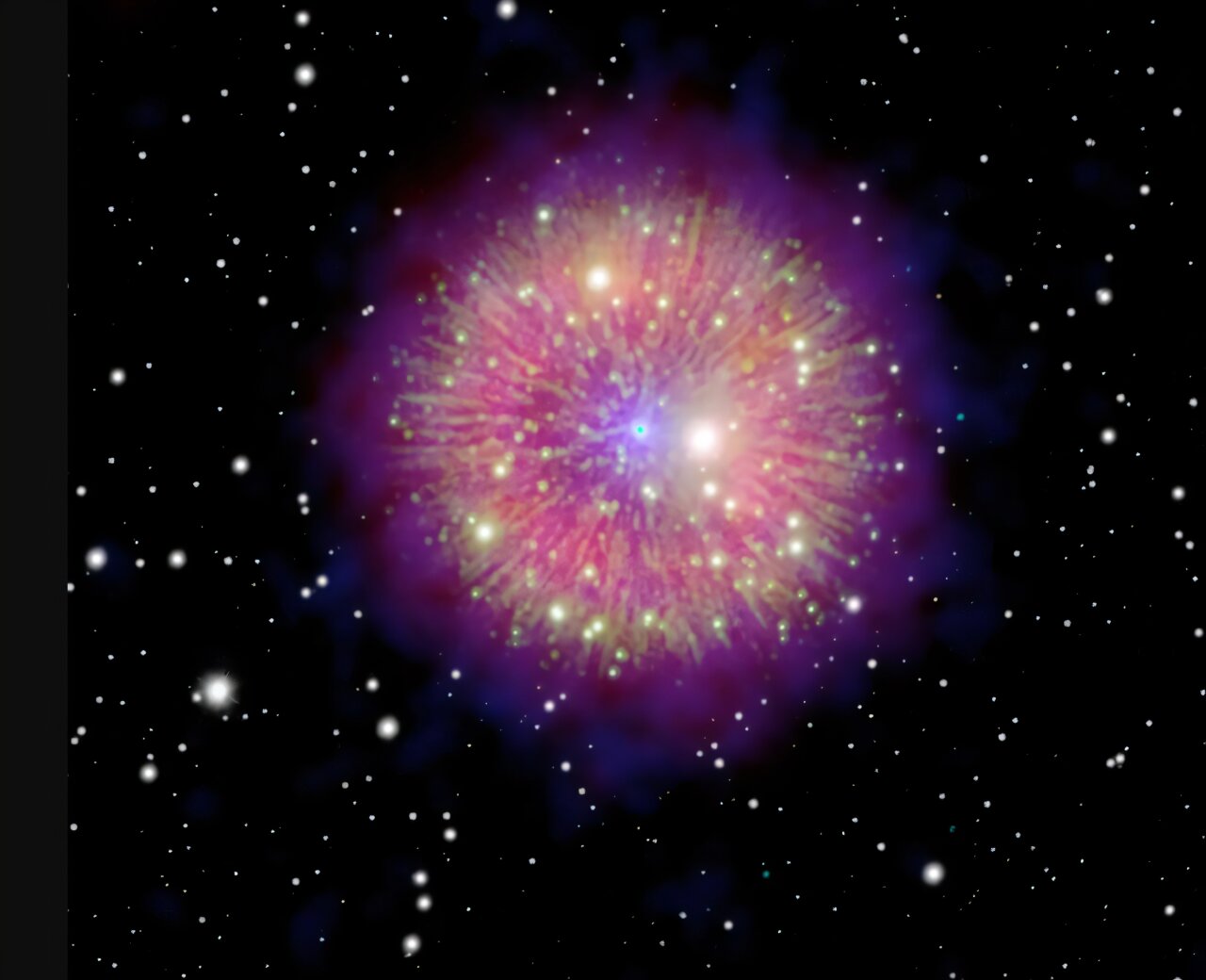
These are two Arabic texts describing previously known outbreaks in 1006 and 1181. Scientists were particularly interested in the report about the second of these supernovae. The fact is that previously it was known only from Chinese and Japanese chronicles, so its location in the sky was determined inaccurately.
The new text clearly mentioned that the star flared up in the constellation that the Arabs called “The Henna Painted Hand,” and we know as Cassiopeia. The text is a poem by the poet Ibn Sanā’ al-Mulk, in which he praises Sultan Saladin’s victory over the Crusaders in Jerusalem.
The second text is a historical chronicle compiled between 1364 and 1442. It describes events that took place several centuries earlier, including the appearance of an unusual star in 1006. It appeared where the border between the constellations Lupus and Hydra is now located.
Other possible evidence
Historical evidence about supernovae is unreliable and inaccurate. However, they are better than nothing, and together they give a good idea of what a particular outbreak was like. In particular, supernova 1006 is known to have been very bright, reaching a magnitude of -7. Therefore, it was clearly visible during the day. However, it flared up in the Southern Hemisphere, and it is almost certain that it was not seen in Europe.
The supernova of 1181 was not as bright. However, its apparent magnitude was about 0. Meaning it was about as bright as Vega. So people still saw it, and there should be some records left. It is of particular interest to scientists because it may have belonged to the rare Ia class, which leaves behind a zombie star.
So, the main question now is: how many more ancient texts that we don’t know about might contain descriptions of supernovae? After all, the flashes from these stars were visible across the entire Earth, but it seems that in some regions they simply went unnoticed.
According to phys.org

