

Spacecraft — from CubeSats to lunar rovers — constantly face the same limitation: energy has to be squeezed into a minimum volume and mass. Therefore, innovations from the world of consumer electronics often serve as an early indicator of where materials and battery technologies are headed. At MWC 2026, HONOR highlighted its new direction by showcasing its ultra-thin Silicon-carbon Blade Battery, which was literally presented as a “blade” in promotional materials.
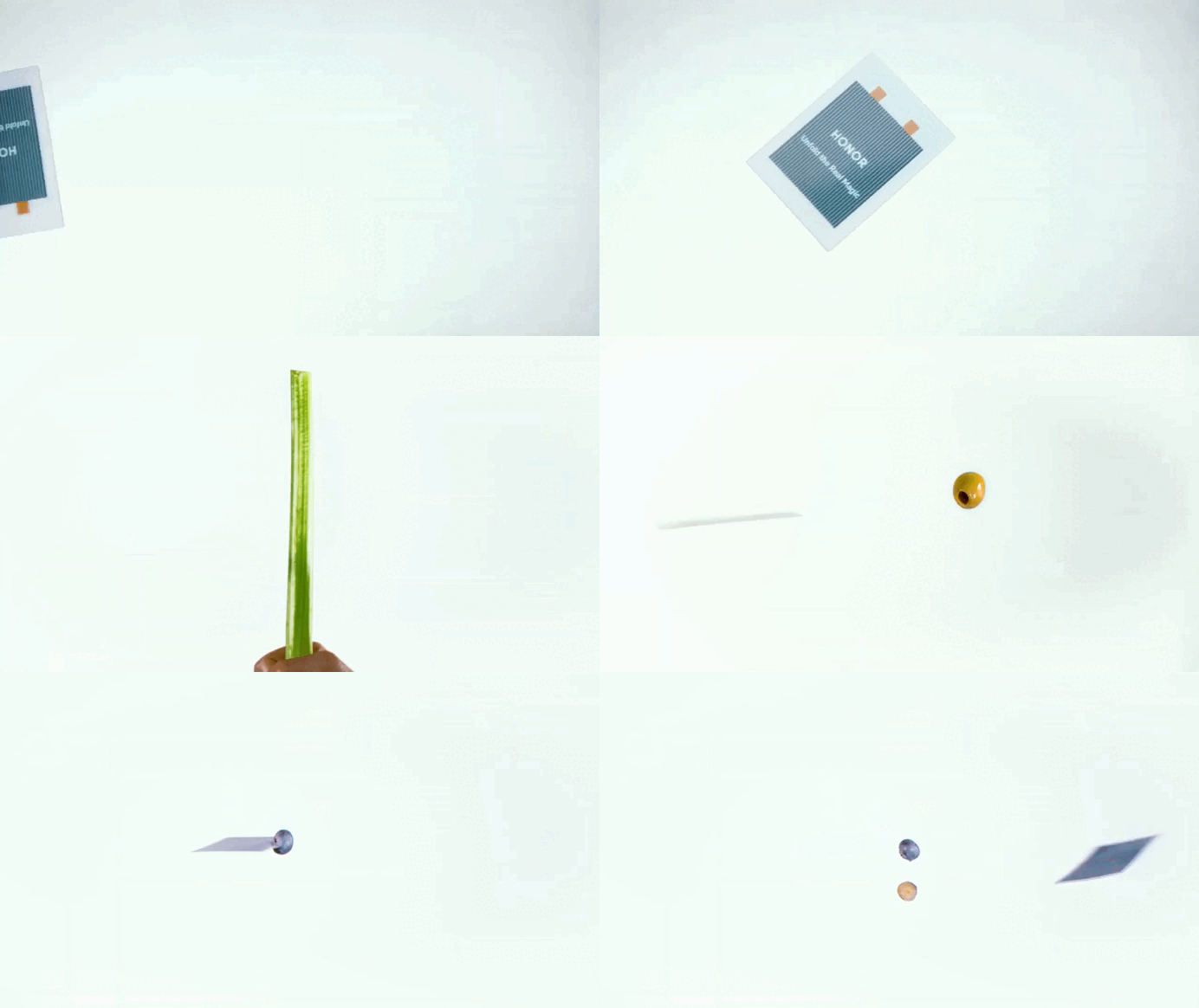
To demonstrate the thickness, HONOR invited Rick Smith Jr., a multiple Guinness World Record holder in juggling and card throwing. In the teasers, the battery cells look like a deck of cards, emphasizing the idea of maximally thin cells without loss of power.
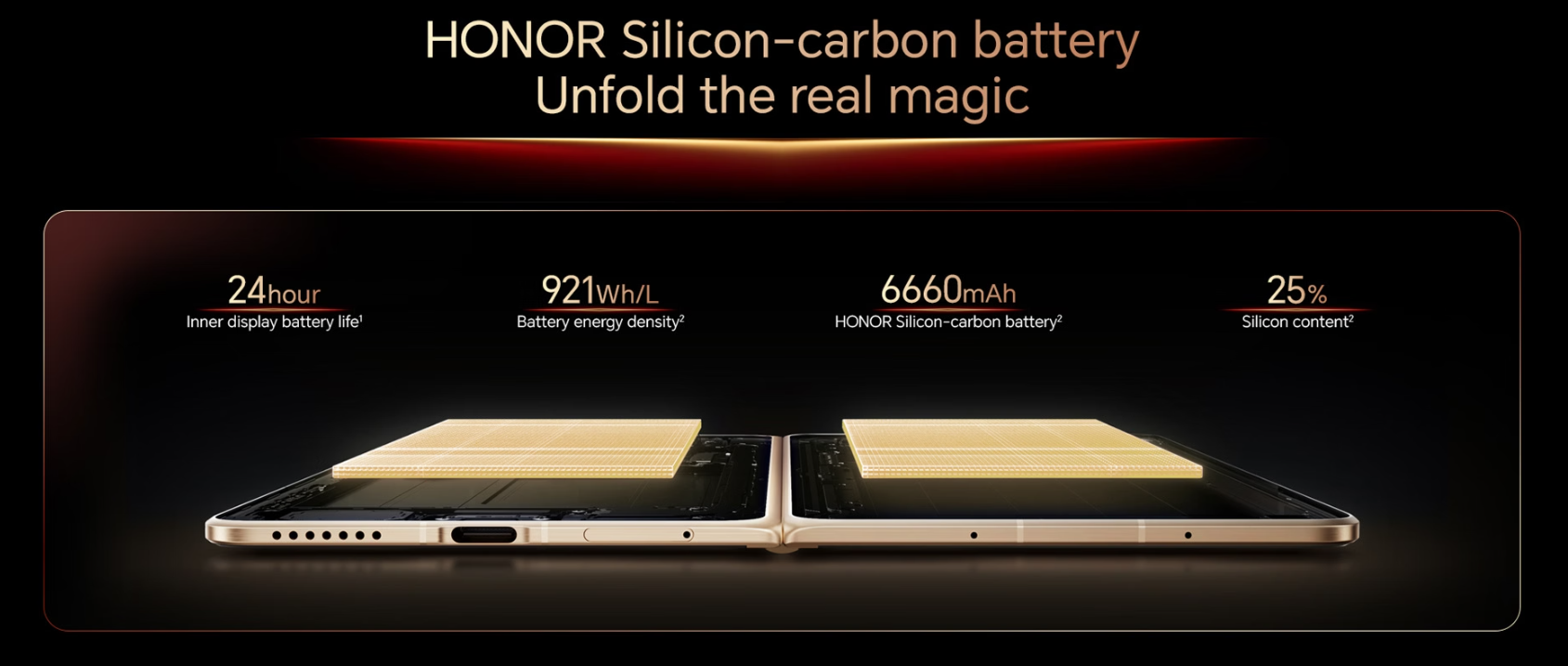
According to the company, Blade Battery has a silicon content of 32% and an energy density of over 900 Wh/L, and its goal is to bring sophisticated smartphones up to 7000 mAh without increasing their size. At the same time, HONOR has not yet disclosed key engineering parameters for assessing reliability — in particular, actual degradation and cycle life.
How does it work? In conventional lithium-ion batteries, the anode is often made of graphite. Silicon can hold more lithium, so it provides higher capacity, but it has a problem: during charging and discharging, silicon expands and contracts significantly, which destroys the structure and accelerates degradation. The idea behind the silicon-carbon approach is to embed silicon into a carbon matrix/composite in order to better resist deformation and maintain conductivity, thereby increasing capacity without a sharp drop in service life.
Why is this important? Higher volumetric energy density (Wh/L) is a direct benefit for satellites, landing platforms, and autonomous research stations: more power in the same case means longer device life, higher peak power for communication/computing, and fewer thermal and assembly compromises. If silicon-carbon anodes stabilize the resource, such approaches will potentially enhance compact power units for small spacecraft, where battery volume is critical.

