

In September 2025, the Solar System received a new, unexpected guest. Comet SWAN25B suddenly appeared from behind the Sun, where it was invisible to Earth observers. It was first discovered by Ukrainian amateur astronomer Volodymyr Bezuhlyi, who was carefully studying online archives of images obtained by the SWAN instrument aboard the SOHO space observatory. This device, designed to study solar wind, sometimes becomes the first to discover new comets. This is exactly what happened with SWAN25B.
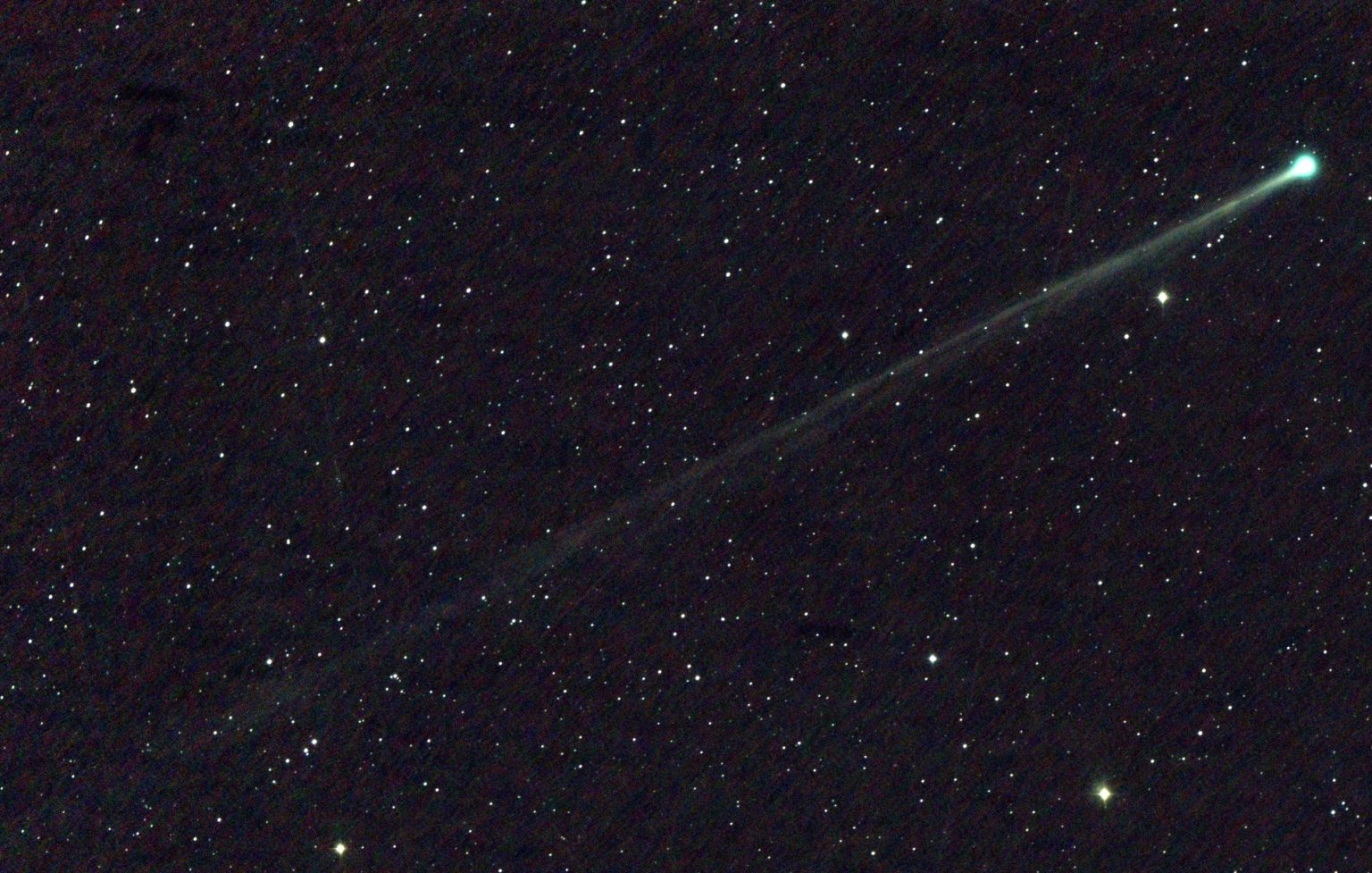
Quick confirmation from the community of amateur and professional scientists allowed the object to be added to the Minor Planet Center (MPC) catalog on September 12. This marks the official start of further research and observation of the new celestial body.
Initial assessments and observations
Attached is our confirmation image of new comet SWAN25B (PCCP designation) taken a couple of hours ago via @spacefluxHQ network (more details in the caption).
Obs. E. Guido, M. Rocchetto, J. Ferguson#astronomy #comets #swan #astronomia pic.twitter.com/tVKLYnYWWT
— Ernesto Guido (@comets77) September 12, 2025
According to preliminary data, the brightness of comet SWAN25B is estimated at 7.4-7.5 magnitude, which makes it an interesting object for observation with amateur telescopes. Official MPC calculations give a slightly less bright figure of 8.3″, which may be explained by measurement characteristics and a more extended coma recorded by amateurs.
The initial images already showed a dense coma – a cloud of gas and dust surrounding the comet’s nucleus – and even hints of an ion tail forming. The most amazing observation came from Michael Mattiazzo of South Australia, who photographed an ion tail approximately 2° long. This suggested that the comet had probably experienced an explosion after passing its perihelion (closest point to the Sun), exhibiting behavior similar to that of the well-known comet C/2004 H6.
The fate of the comet
Despite initial successes, the comet’s future remains uncertain. Due to the very short observation arc (less than half a day), its orbit is still unknown. Astronomers are not yet able to predict with certainty how far it will fly from Earth and how its brightness will change in the coming weeks.
Low elongation – the angular distance from the Sun – complicates observation, as the comet rises above the horizon in bright twilight. Numerous additional astrometric observations are needed to refine the orbit. Amateur astronomers and observatories around the world have already joined in collecting data. The MPC recommends that all observers check its website for updated ephemerides and submit their measurements to improve the calculations. It is these efforts that will determine whether SWAN25B will be a noticeable phenomenon in our sky.
Earlier, we explained where Halley’s Comet came from and when it will return.
Provided by watchers.news

