

The unusual comet 3I/ATLAS, which arrived in the Solar System from interstellar space, unexpectedly changed color to bright green. This amazing metamorphosis was captured during the unique conditions of a total lunar eclipse. Scientists have already put forward several theories to explain this rare phenomenon.
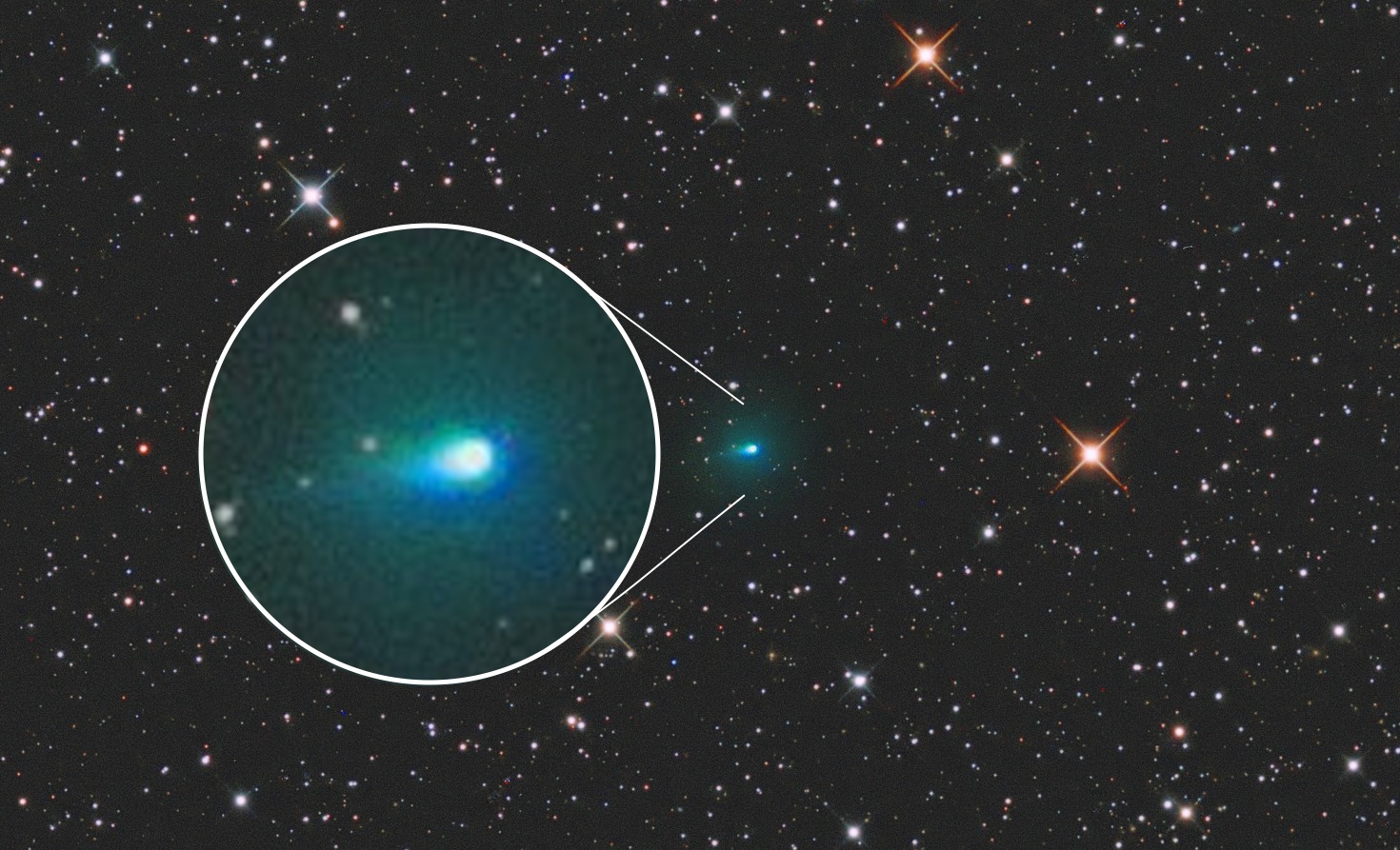
Comet 3I/ATLAS was discovered in early July. It is moving at an incredible speed of over 210,000 km/h. Astronomers immediately realized that this object does not belong to our solar system. It is an interstellar object that was probably ejected from another star system millions of years ago and is now flying past us, never to return.
Emerald glow
The observations that helped detect the color change were made on September 7 by astrophotographers Michael Jäger and Gerald Rhemann in Namibia. They were fortunate to be working during a total lunar eclipse, when the Moon’s natural light was virtually extinguished, providing a unique opportunity to observe dim objects. It was then that they obtained images in which the comet had a bright green hue.
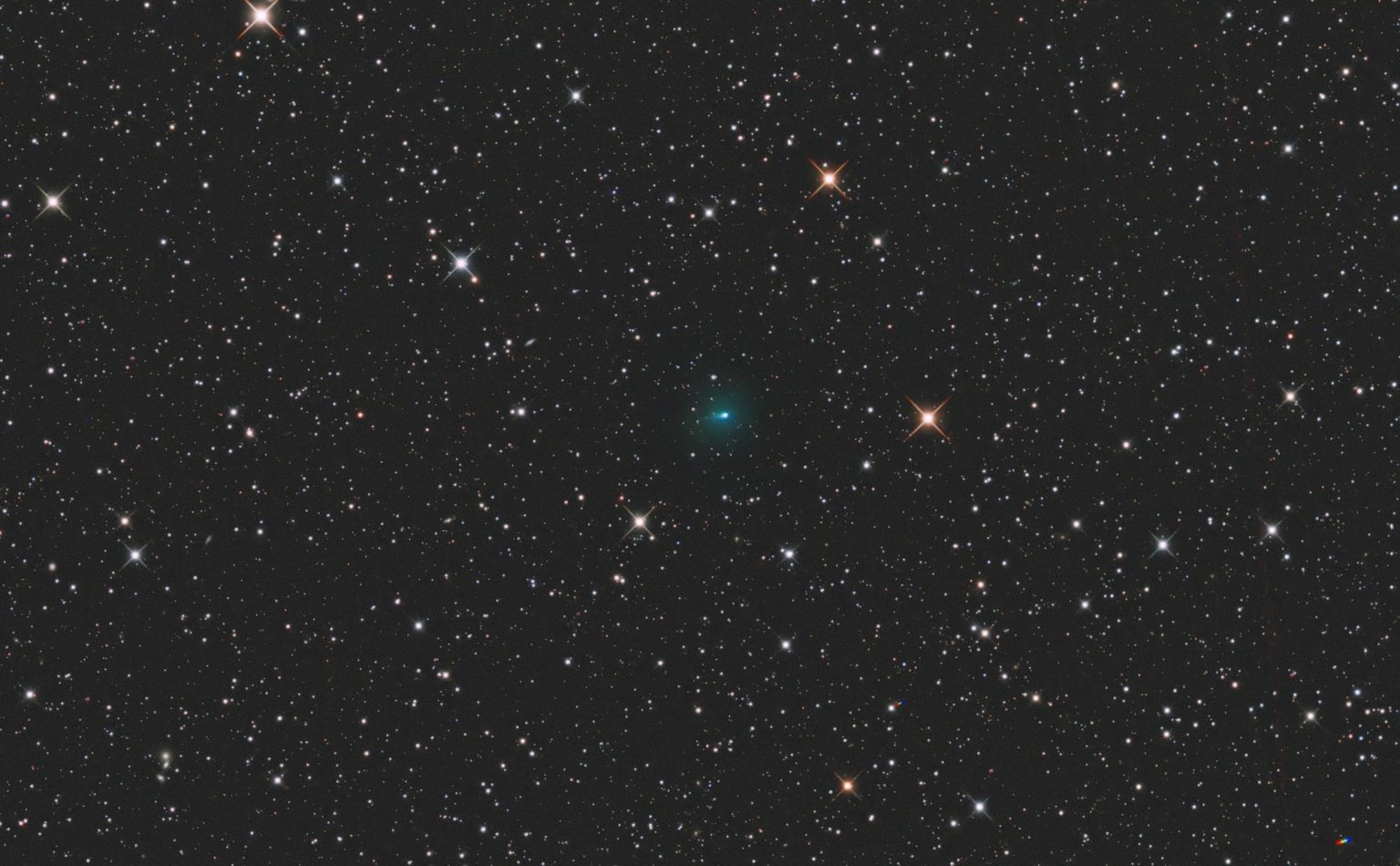
Scientists suggest that the color change may be the result of the comet being heated by the Sun. As it approaches our star, the ice in the comet’s nucleus begins to evaporate, releasing various gases. The classic explanation for the green coma is the presence of diatomic carbon, known as dicarbon. Under the influence of solar radiation, this molecule begins to glow in the green spectrum.
However, spectroscopic studies of comet 3I/ATLAS have not yet confirmed the presence of dicarbon. This opens up space for alternative theories. Harvard astronomer Avi Loeb suggests that the source of the green glow could be cyanide, which has also been previously detected in the comet’s coma. Perhaps we are dealing with a completely new, unknown chemical reaction.
The future of comet 3I/ATLAS
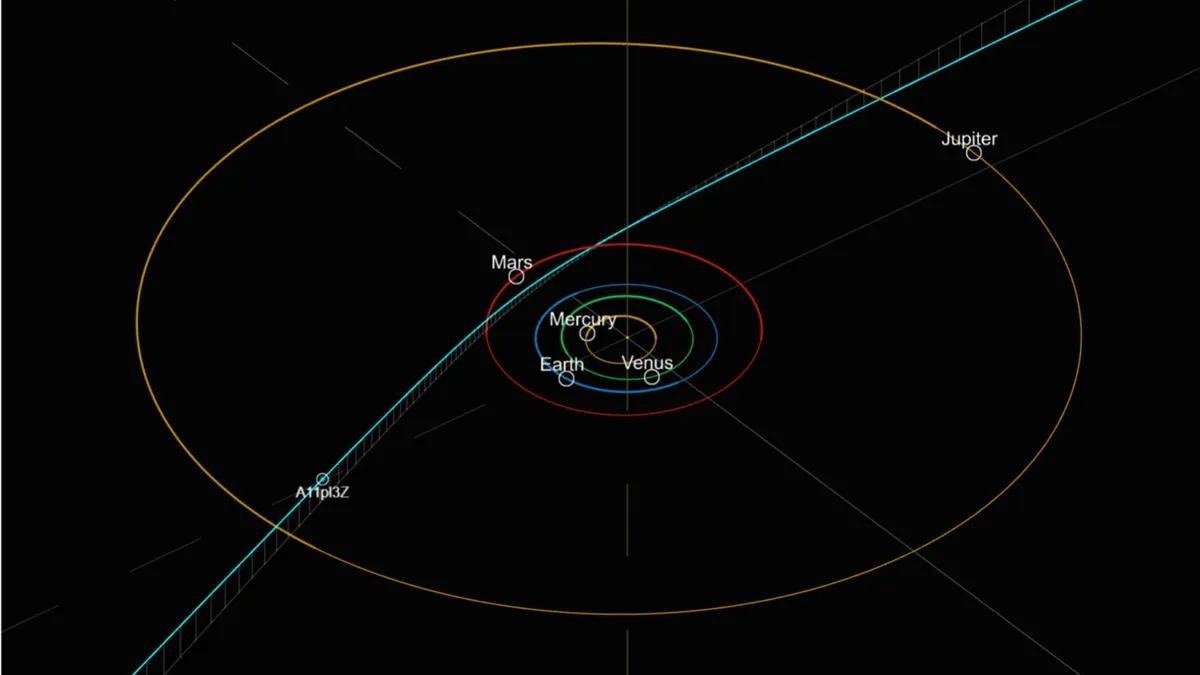
The comet is currently heading towards the Sun, passing Mars’ orbit. It will reach its closest point to our star on October 29. Unfortunately, shortly after that, it will disappear from the field of view of Earth observers, passing to the far side of the Sun. It should return to the field of view in a few months, approaching Earth in December, but at a very great distance.
To confirm its new color and determine the reasons for this phenomenon, astronomers need to conduct a series of additional observations. Each new image of this unique interstellar traveler may provide answers to questions about the formation of other star systems.
We previously reported on how 3I/ATLAS may collide with Mars.
Provided by livescience.com

