

In early 2025, astronomers spotted an unusual interstellar visitor — object 3I/ATLAS — heading toward our Solar System. Observations made using the James Webb Space Telescope have revealed strange anomalies: an extremely high ratio of carbon dioxide to water and a heavily irradiated icy core. Such characteristics are atypical for ordinary comets in our planetary system, which has given rise to a number of bold assumptions about its origin.
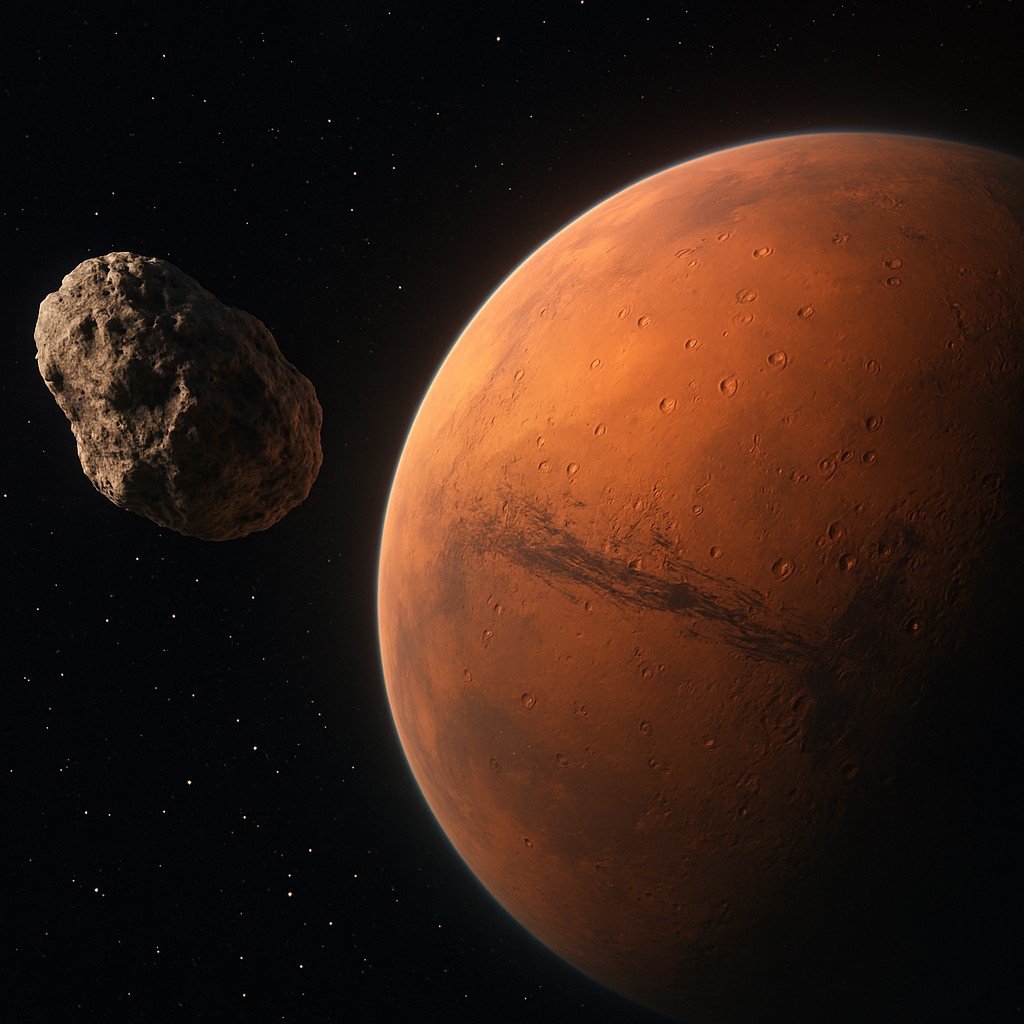
Professor Avi Loeb of Harvard University has hypothesized that this object may not be just a rock or ice, but a technological artifact of extraterrestrial origin, deliberately sent into the inner part of our system. The key argument in favor of this theory was the incredibly precise trajectory of 3I/ATLAS. Calculations show that it will approach Mars at a distance of only 2 million km, which indicates extreme precision.
Possible encounter with Mars
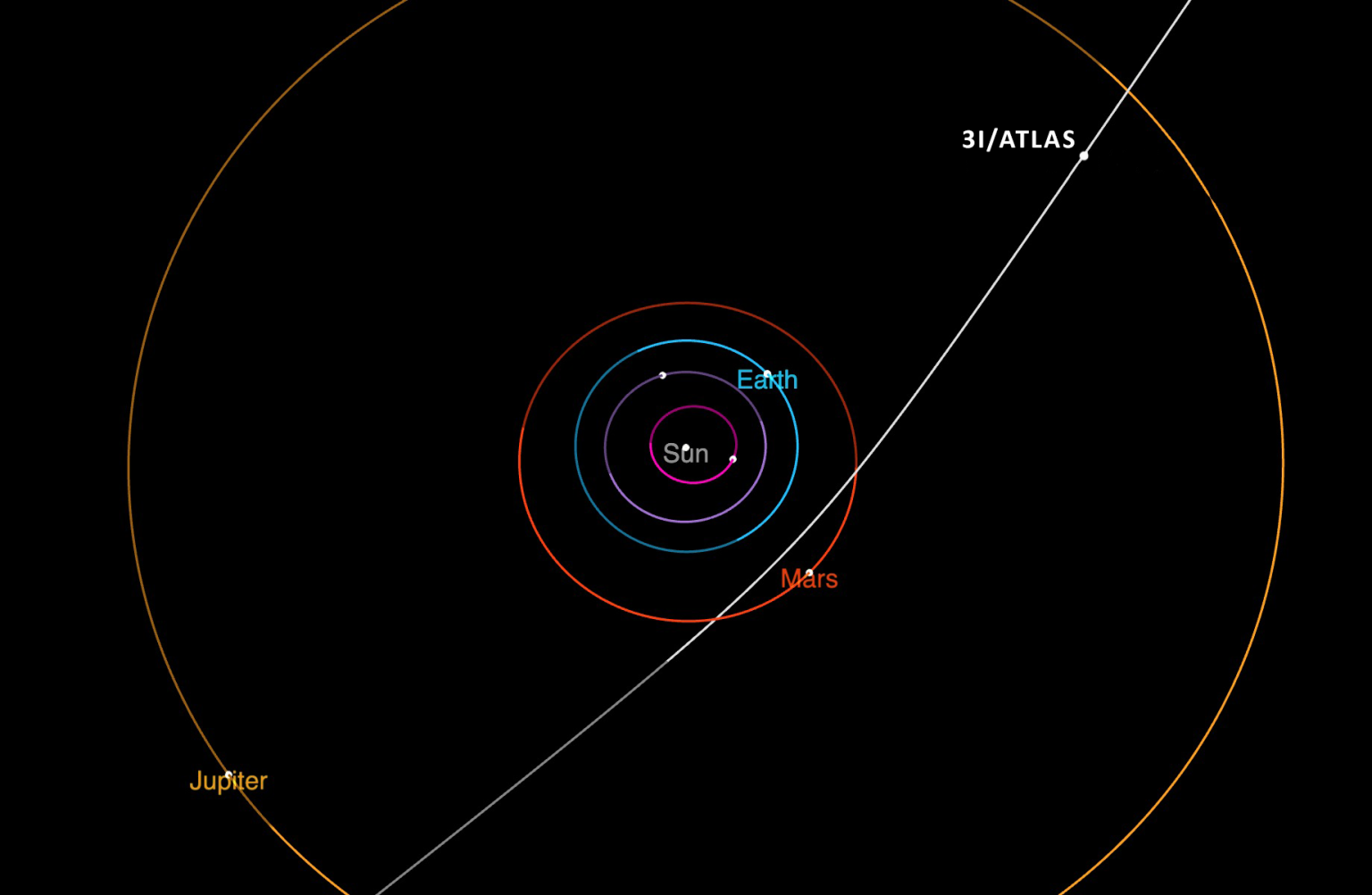
This unique trajectory opens up an exciting opportunity: to directly observe the object using NASA’s Mars Reconnaissance Orbiter (MRO). However, Loeb’s student, Adam Hibberd, calculated an even more impressive scenario. To collide with the Red Planet, the object only needs a slight course correction. If it receives an additional 10 km/s of momentum in September 2025, 3I/ATLAS could collide with Mars as early as October.
Natural processes, such as the ejection of ice debris, can only partially explain the energy required for the maneuver. This is precisely Loeb’s most important argument: if a collision occurs, it may not be a coincidence, but a potential sign of technology.

The astronomer also calls for analyzing MRO data for tiny objects that may have already reached the surface of Mars, remaining undetected by Earth-based telescopes. This mission could be the first search for alien artifacts in history.
Earlier, we reported on how the interstellar comet 3I/ATLAS sparked controversy in the scientific community.
According to medium.com

