

The Universe is challenging us once again. Interstellar object 3I/ATLAS, traveling through the galaxy, is currently passing through our Solar System and continues to surprise scientists. The new data only deepens the mystery of its origin, fueling scientific debate about whether we are dealing with a natural phenomenon or the creation of another civilization.
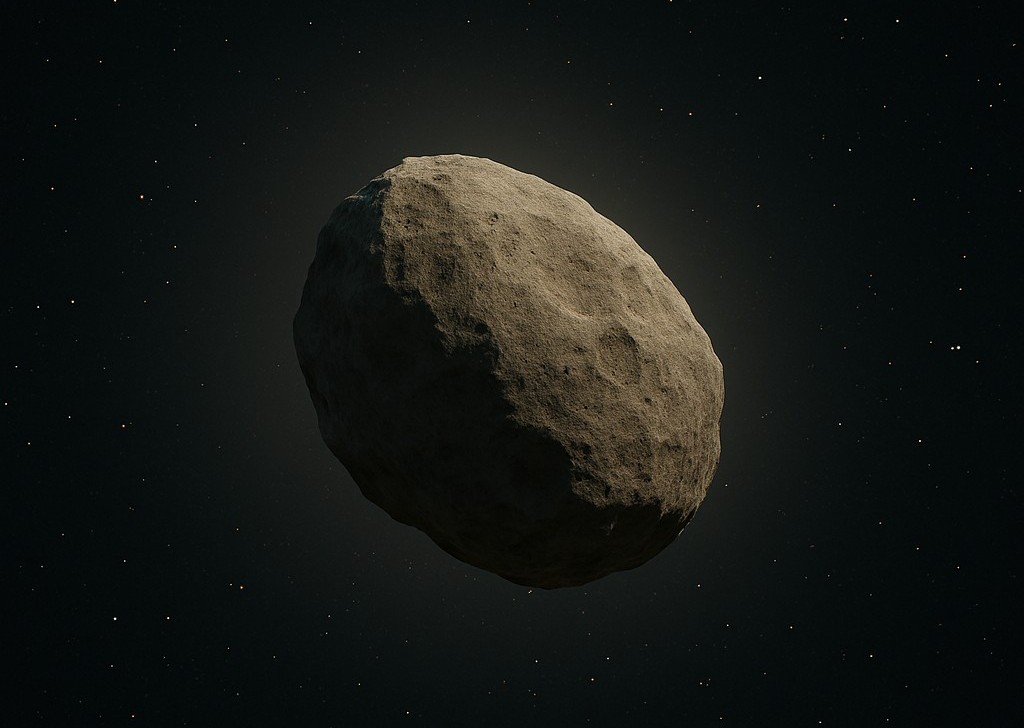
Pure nickel in 3I/ATLAS
The latest research using the powerful Very Large Telescope has discovered another strange anomaly. In the gas trail surrounding 3I/ATLAS, scientists found pure nickel — without the usual iron impurities found in nature. This phenomenon is extremely unusual for comets, as these two elements are usually formed together during supernova explosions and travel through space together.
However, pure nickel is a familiar phenomenon in terrestrial metallurgy, where it is obtained through refining. Although there is a rare natural explanation involving nickel carbonyls, the artificial technological process seems much more plausible. This raises a key question: is this object a product of space manufacturing?
A chain of strange anomalies
The discovery of nickel is not the only thing that surprises scientists. Previously, the SPHEREx and Webb space observatories showed that the object’s gas trail consisted of 95% CO2 and only 5% water. For a normal comet, this is a paradoxical ratio.
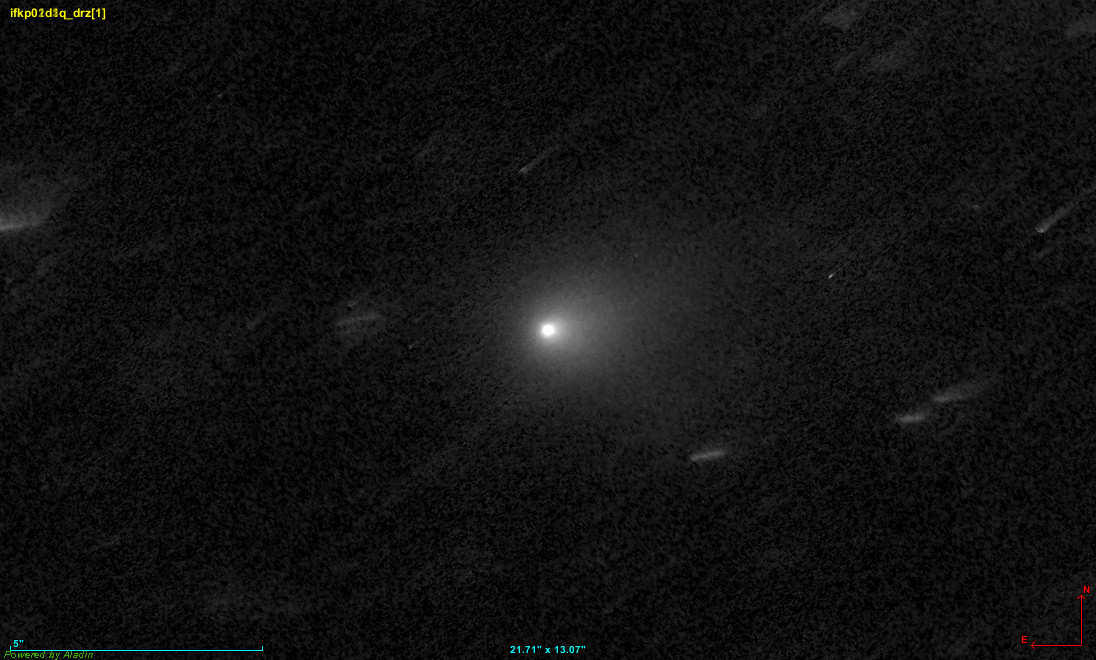
Furthermore, Hubble’s observations did not reveal a classic comet tail that would extend under the pressure of sunlight. This means that either the core of the object is incredibly massive — a million times larger than the previous interstellar visitor, 2I/Borisov. Or the surface of the interstellar traveler has unusual properties that prevent the formation of a tail. Its trajectory, perfectly aligned with the plane of the planets’ orbits, also raises suspicions that someone deliberately launched it into the inner part of our system.
Crucial observations of the future
October 3, 2025, will be a decisive moment: 3I/ATLAS will pass 29 million km from the HiRISE camera aboard the Mars Reconnaissance Orbiter. This will enable us to obtain images with sufficient resolution to finally determine the size and shape of its nucleus with certainty, separating it from a possible dust coma.
Nobel Prize winner David Gross suggested going even further and pointing radio telescopes at the object. The goal is to try to record any technological radio signals that may be coming from it. After a century of our own radio transmissions into space, we may finally have an answer.
On the edge of fiction and science
Some eagerly await confirmation of the object’s artificial origin, seeing it as an opportunity for humanity to unite for a common cause. Others hope that it is just a strange but perfectly natural comet, and that its properties are simply characteristic of an object from another star system. However, everyone agrees: 3I/ATLAS is already forcing us to take a fresh look at space and our place in it.
The discovery of such an object, regardless of its nature, gives us a sense of cosmic humility. It reminds us that we may not be the only intelligent beings in the Universe, and that our technologies, including artificial intelligence, may be only the first steps on a long path of development.
Earlier, we reported on how the mysterious glow of interstellar comet 3I/ATLAS was explained.
According to avi-loeb.medium.com

