

As interstellar visitor Comet 3I/ATLAS hurtles through the Solar System, scientists from around the world are taking advantage of this rare opportunity to actively study this visitor from distant worlds. The results of two new studies shed light on its remarkable properties, which challenge conventional wisdom about comet behavior.
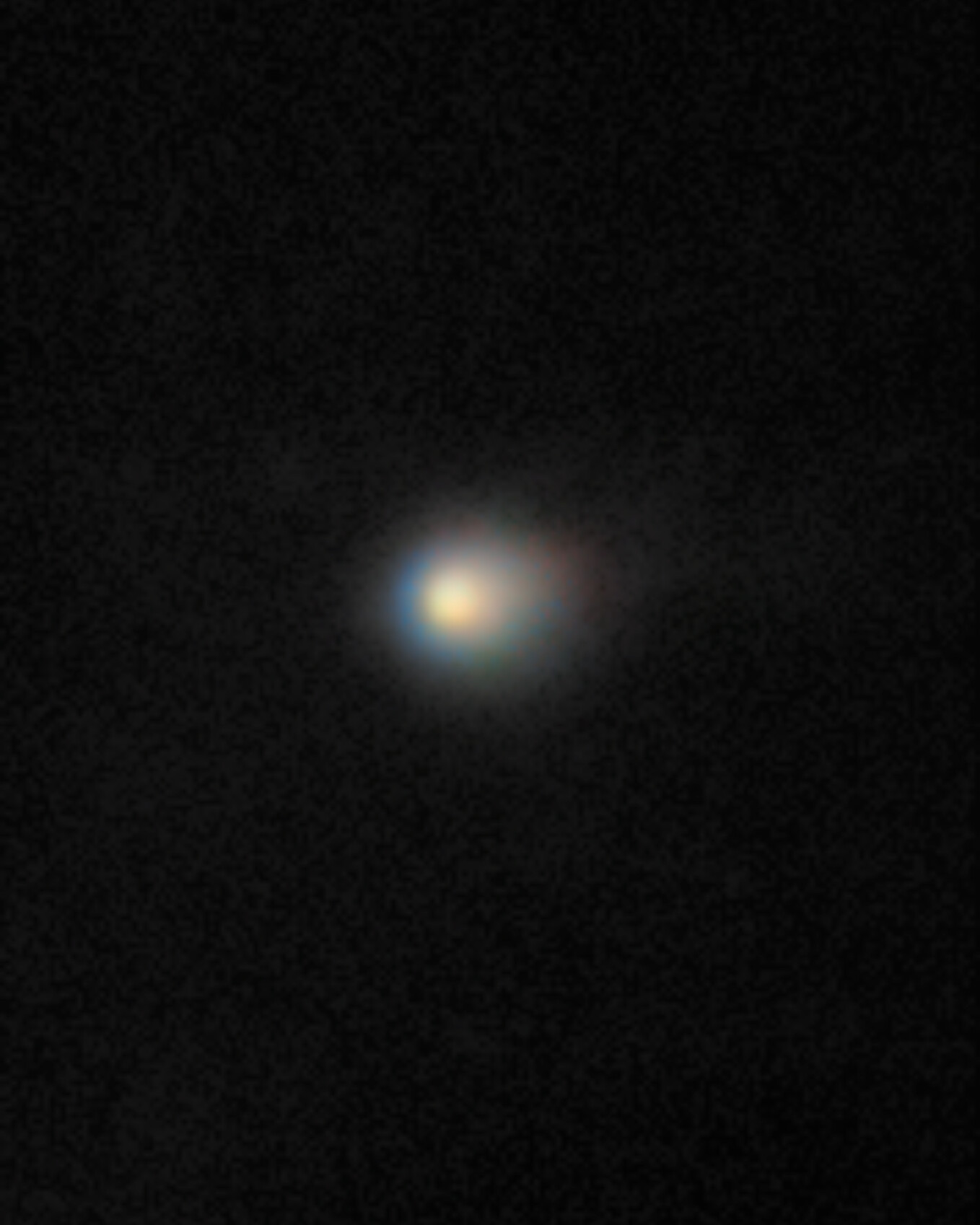
The spectrum obtained by the 4.1-meter SOAR telescope on July 3, 2025, when the comet was far from the Sun, revealed a red tint in the reflected light. However, no signs of radiation from typical cometary gases (CN, C3, C2, CO+) or atomic oxygen were detected. This creates a paradox: the comet became active early, but without the usual sublimation of ice. Scientists suggest that dust release may occur through a different, unusual mechanism characteristic of ancient interstellar “travelers.”
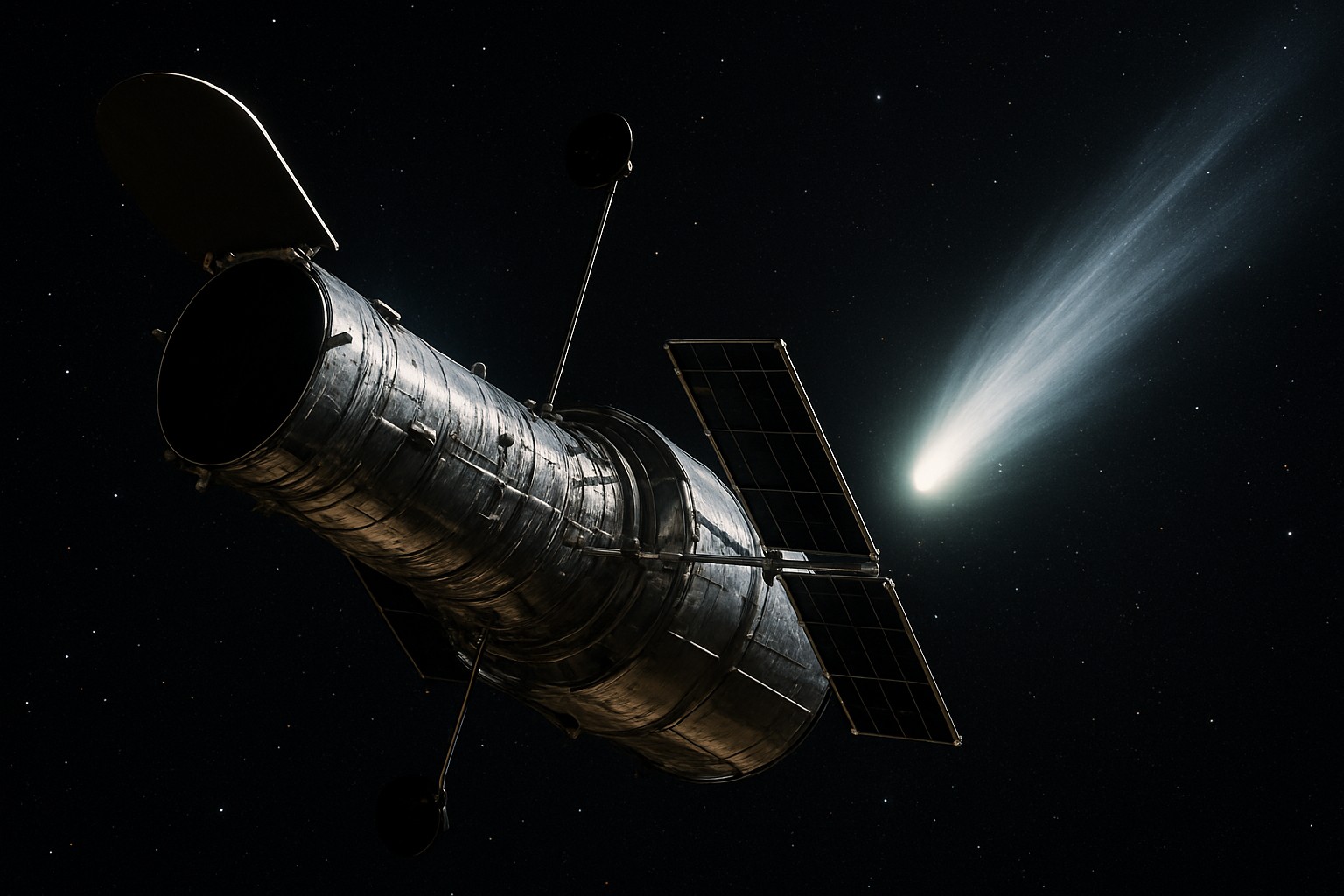
A second study conducted by David Jewitt’s team based on images from the Hubble Space Telescope between July 4 and 5 made it possible to estimate the size of the comet’s nucleus. It turned out to be very compact – only 0.32 to 5.6 kilometers in diameter. This is consistent with preliminary predictions based on the limited availability of durable material in the interstellar medium. However, this tiny nucleus is surrounded by an impressively large cloud of dust, which makes up the bulk of the visible object.
Amazing glow in an unusual place
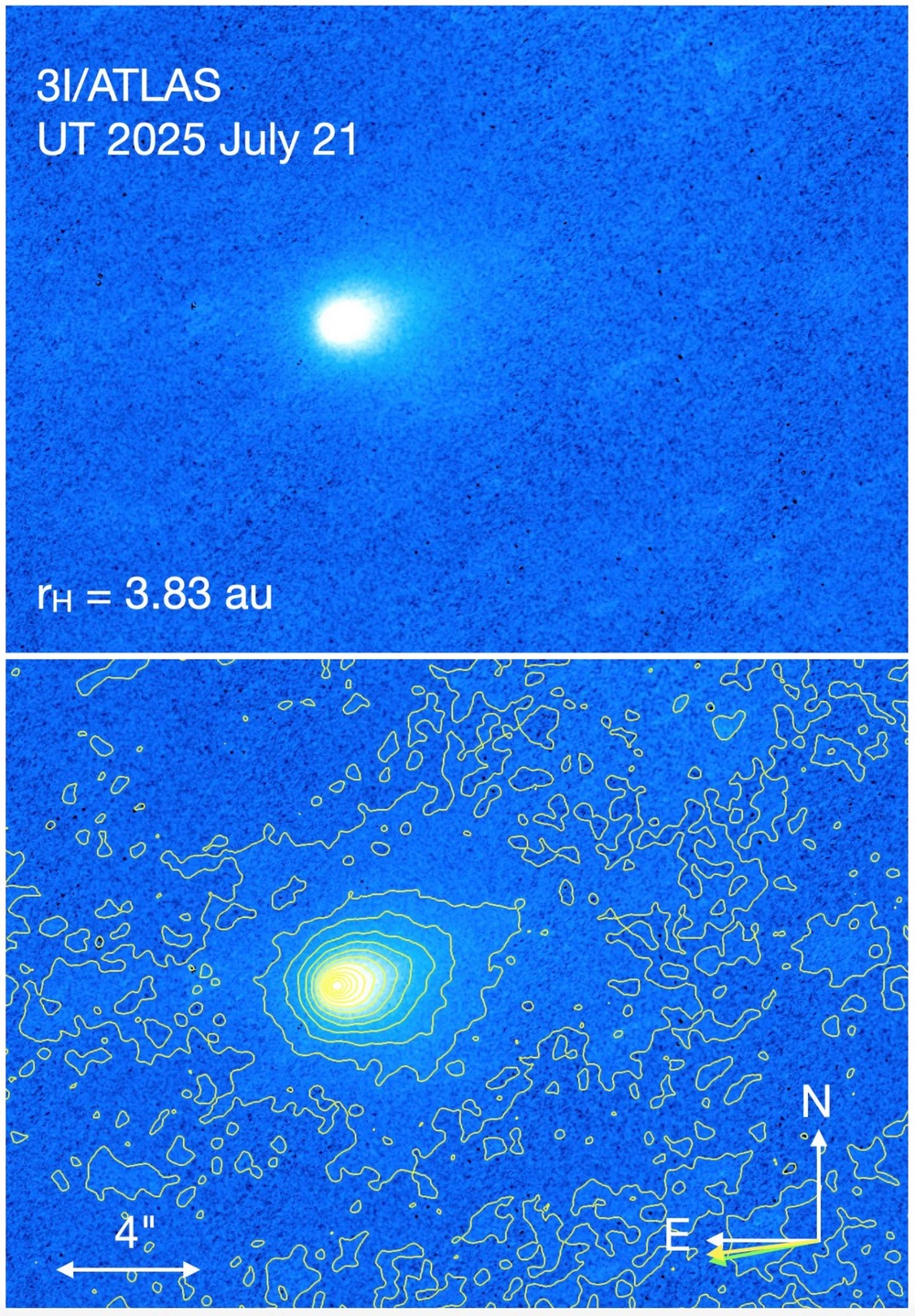
The most unexpected discovery made by Hubble was the structure of the coma of 3I/ATLAS. Instead of the classic tail extending from the Sun, the telescope detected a diffuse glow ahead of the comet’s movement toward our star. This contradicts the usual picture for comets.
An explanation for this phenomenon was proposed back in early August: the comet’s nucleus rotates very slowly. The sun heats only one side of it. The dust evaporation occurs precisely there. If the nucleus does not rotate fast enough, this hot daytime side does not have time to cool down significantly. Consequently, dust continues to be actively released from the “illuminated” part, creating a glowing effect in front. This hypothesis has been confirmed.
Remaining mystery
The latest ground-based observations complete the picture: the rotation period of 3I/ATLAS is 16.16 hours (±0.01 hours). This means that “night” and “day” on its surface last about 8 hours each. During these 8 hours, dust particles released from the day side are carried away from the nucleus to a distance of up to 10,000 km. In Hubble images, this corresponds to 0.35 arcseconds — the scale at which the elongated forward glow is observed.
The key point is that the surface of the nucleus has to cool down quickly after it goes into shadow, meaning in less than 8 hours. Otherwise, the release of dust would become more uniform and would not produce a clear frontal effect.
The main mystery that remains is the combination of intense dust release, visible by its glow, with the complete absence of any traces of gases that usually “carry” this dust in comets.
As it approaches the Sun, 3I/ATLAS will become brighter. The greatest hopes for unraveling its mystery are pinned on the James Webb Space Telescope. Its infrared vision will help analyze the comet’s thermal radiation and dust composition in greater detail, possibly finally answering questions about its true nature and the mechanism behind its unusual activity.
Earlier, we reported on how Juno, instead of dying, got a new chance at life by hunting 3I/ATLAS.
According to medium.com

