

Astronomers have obtained a color image of a rare visitor from deep space — comet 3I/ATLAS, which is hurtling through our Solar System at breakneck speed. This scientific photograph reveals the secrets of the formation of celestial bodies in distant star systems.
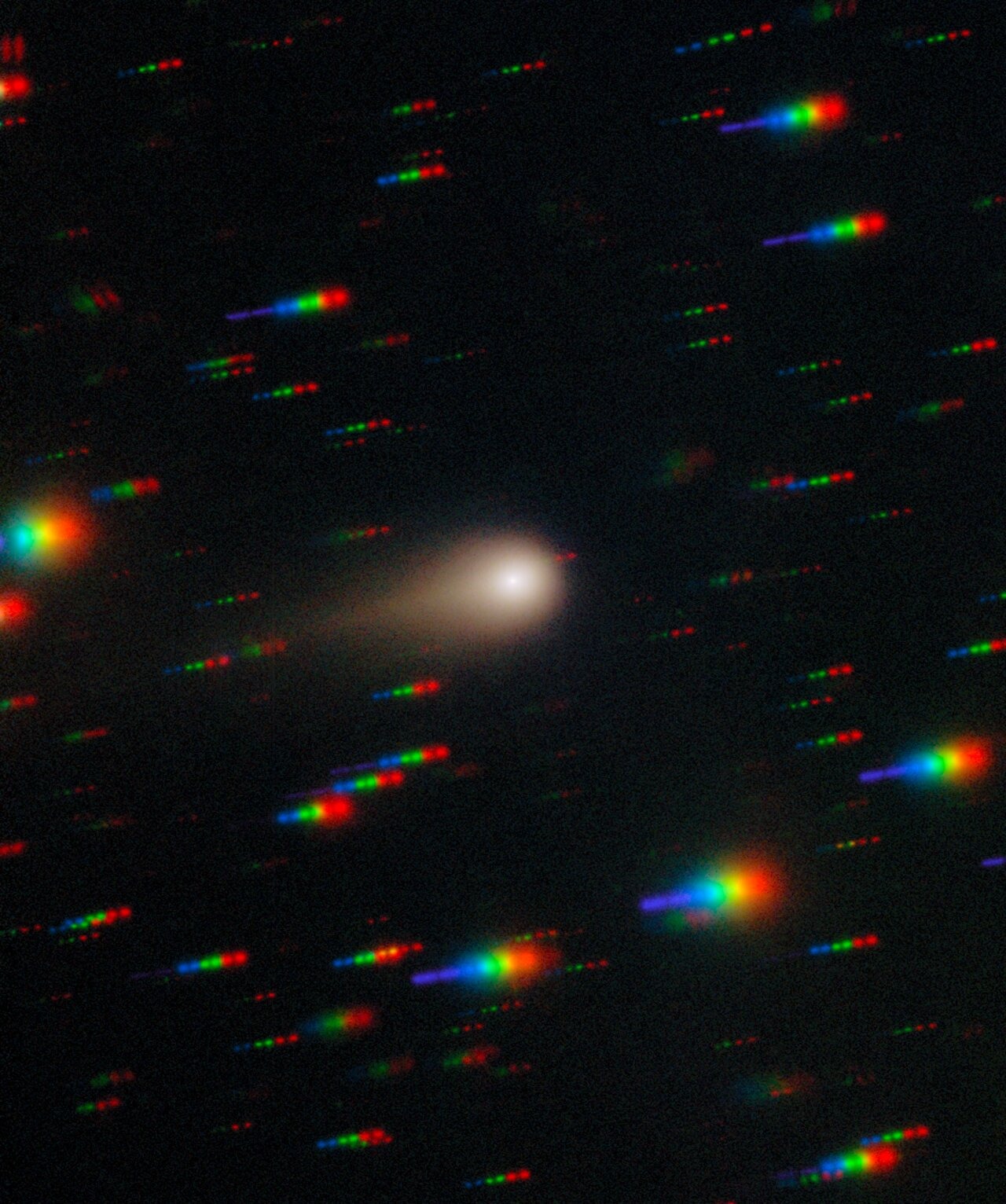
In August 2025, the GMOS spectrograph on the Gemini South telescope in Chile took a unique image of comet 3I/ATLAS. This object attracts the attention of scientists around the world because it is an interstellar traveler that has come to us from beyond our planetary system. Its incredible speed — over 200,000 km/h — undeniably confirms its origin in interstellar space.
Scientific value of the photograph
The magnificent color photograph clearly shows the coma — a cloud of gas and dust that surrounds the comet’s nucleus and expands as it approaches the Sun. Astronomers were particularly struck by the comet’s expressive tail, which had grown significantly longer compared to previous observations. Its length in the sky reaches 1/120 of a degree, which is comparable to the width of your pinky finger when you look at it with your arm outstretched.
In addition to its aesthetic appeal, this photograph has enormous scientific value. The main purpose of the observations was to study the colors of the comet and obtain its spectra. By analyzing the wavelengths of light emitted by the comet, scientists can accurately determine the chemical composition of dust particles in its coma and directly measure its chemical composition.
Discovery that brings worlds together
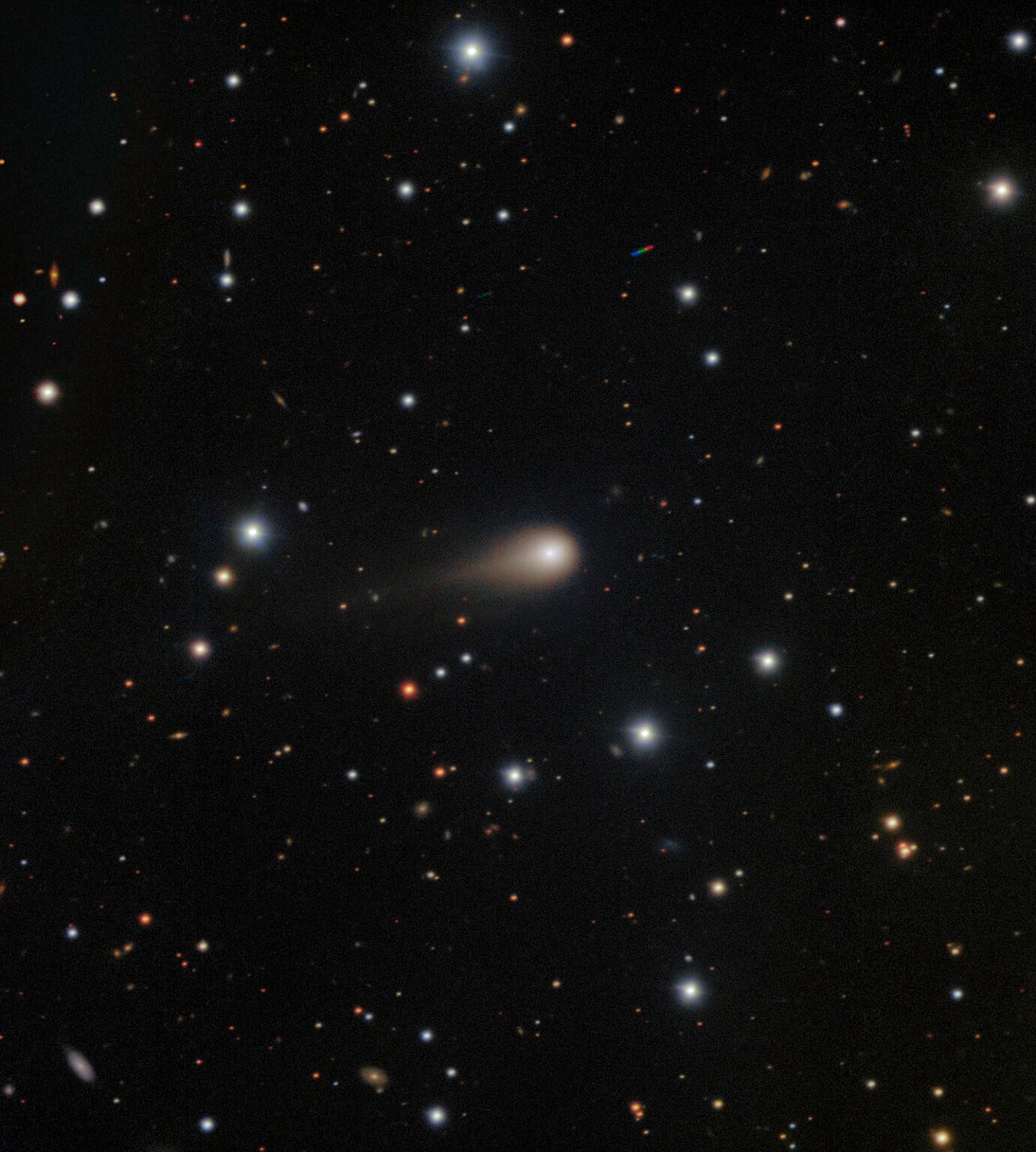
Despite its exotic origin, spectral analysis of comet 3I/ATLAS revealed something surprising: its composition is very similar to comets that originated in our own Solar System. This discovery leads to a revolutionary assumption: comets in different parts of our galaxy are formed from similar materials and according to the same laws, regardless of their star system.
Karen Meech, an astronomer at the University of Hawaii who led the observations, notes that scientists have for the first time been able to see the chemical composition of such a comet from its spectrum and track changes in its particles.
Space traveler
Comets like 3I/ATLAS are extremely rare. It is only the third confirmed interstellar comet in history, joining the famous comets discovered in 2017 and 2019.
Unlike ordinary comets, which often perish when they approach the Sun, this traveler has a hyperbolic orbit. This means that it has only visited us temporarily and will soon return to the abyss of interstellar space, taking with it new knowledge about the Universe.
Earlier, we reported on how to distinguish a natural object from an alien spacecraft.
According to noirlab.edu

