

Blue Origin has postponed its attempt to launch the New Glenn heavy-lift rocket. The reason was a powerful geomagnetic storm caused by solar activity.

On November 10–11, the Sun produced a series of powerful flares accompanied by coronal mass ejections. Upon reaching Earth, they caused a powerful geomagnetic storm accompanied by bright auroras, which were witnessed by residents of North America.
While the celestial show was a pleasant gift for ordinary people, the same cannot be said for the space industry. Increased solar activity causes the Earth’s atmosphere to “swell,” which in turn leads to spacecraft falling out of orbit more quickly. One example of this is when a powerful solar storm led to the loss of an entire batch of newly launched Starlink satellites.
Another risk factor is the increase in the number of charged particles that can damage the electronics of spacecraft outside the Earth’s magnetic field. It is because of this that NASA and Blue Origin decided to postpone the flight of the New Glenn rocket with a pair of ESCAPADE interplanetary probes.
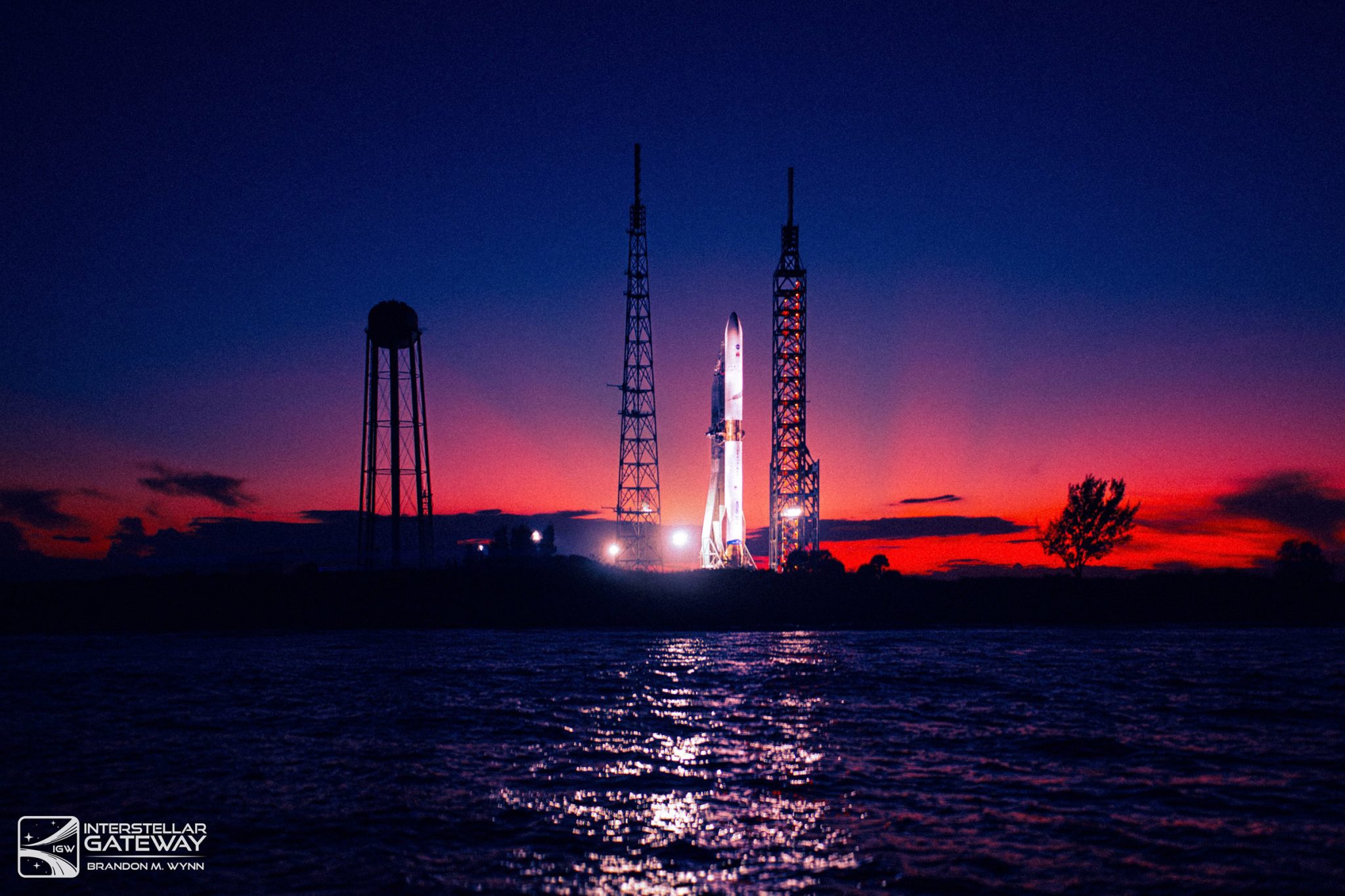
“New Glenn is ready for launch. However, due to high solar activity and its potential impact on ESCAPADE spacecraft, NASA is postponing the launch until space weather conditions improve. We are currently evaluating options for the next launch window based on space weather forecasts and range availability,” Blue Origin wrote on social media platform X.
After some time, Blue Origin announced a new launch date for New Glenn. It will take place on November 13 from 2:57 PM – 4:25 PM EST.
After launch, the ESCAPADE spacecraft will head to Lagrange point L2, where they will spend a year studying solar weather. They will then perform a gravitational maneuver that will send them toward Mars. You can learn more about the ESCAPADE mission in our article.

