

We’re used to seeing Mars as a static world, almost frozen in time. In most classic photographs, we see a monotonous desert—a rust-brown surface covered by a thick layer of dust and scattered rocks, through which jagged cliffs are visible. This landscape seems to have remained unchanged for millions of years. However, new data obtained by European researchers debunks this myth. Recent images of the Red Planet have revealed an astonishing sight: a vast “blanket” of volcanic ash that is rapidly spreading across the surface.
Viking vs. Mars Express

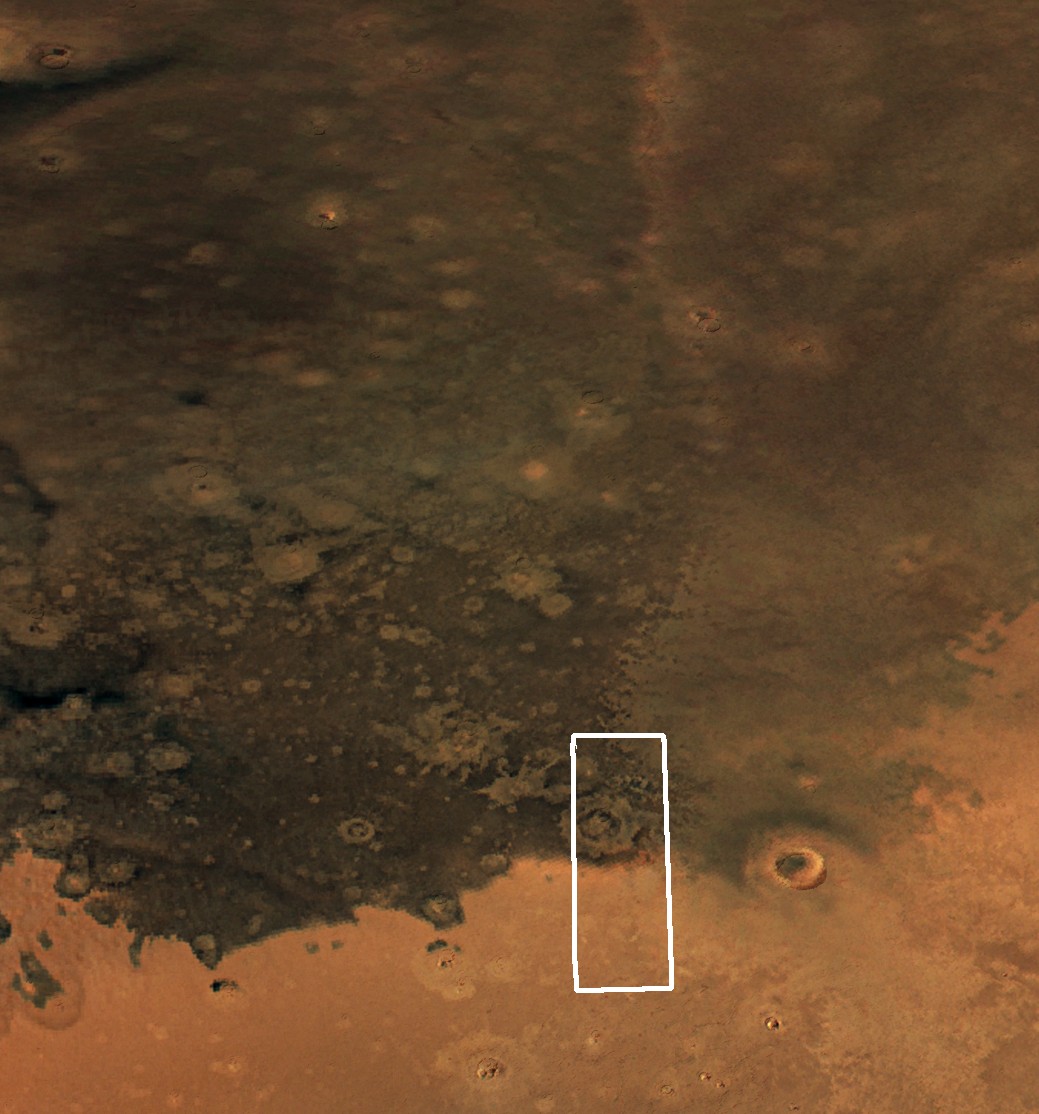
The comparison of modern photographs with archival images from 50 years ago caused quite a stir. When NASA’s Viking orbiters imaged the same region in 1976, they captured a classic scene: light, ochre-colored plains dotted with barely visible dark spots. However, in new detailed images sent by the European Space Agency’s (ESA) Mars Express spacecraft, the planet appears to be split in two.
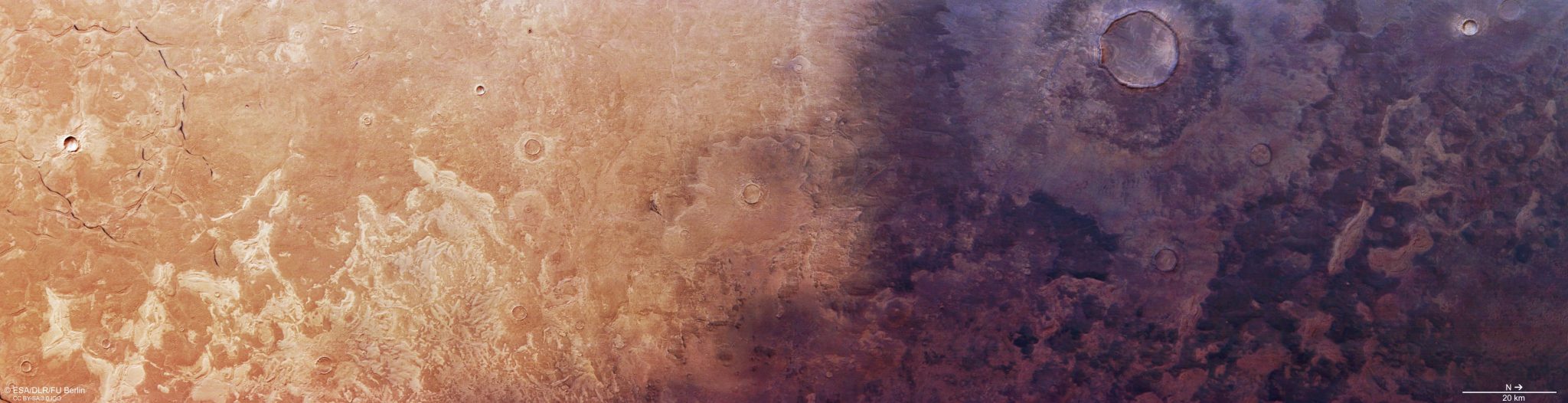
The dark cloud of ash now covers a much larger area than it did in the mid-1970s. This suggests that the geological “face” of Mars can change incredibly quickly by cosmic standards—literally in just a few decades. This trend underscores the fact that Mars is not a barren “dead rock,” but a planet where active atmospheric and, possibly, subsurface processes continue to shape its landscape.
Chemistry of Darkness
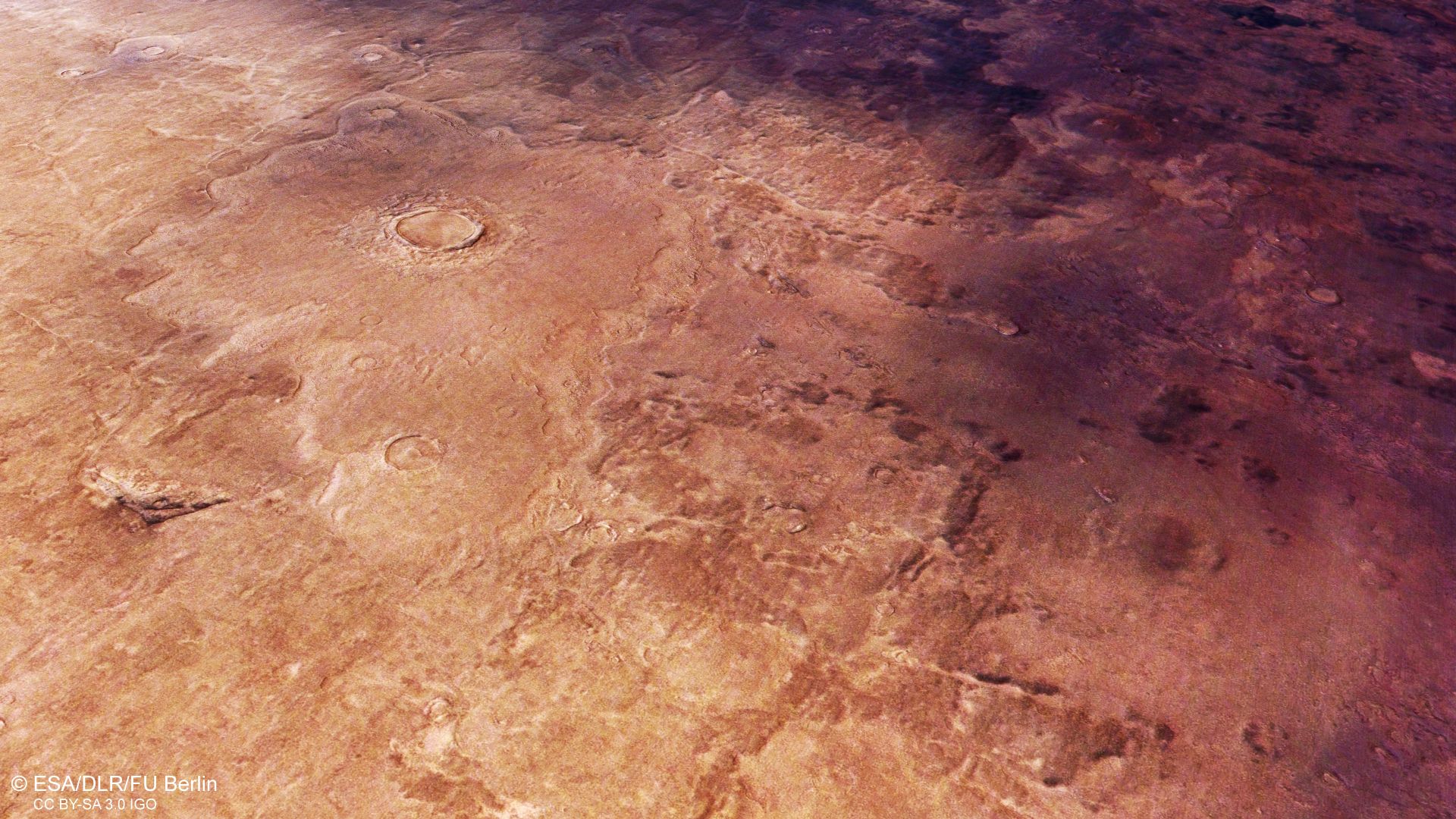
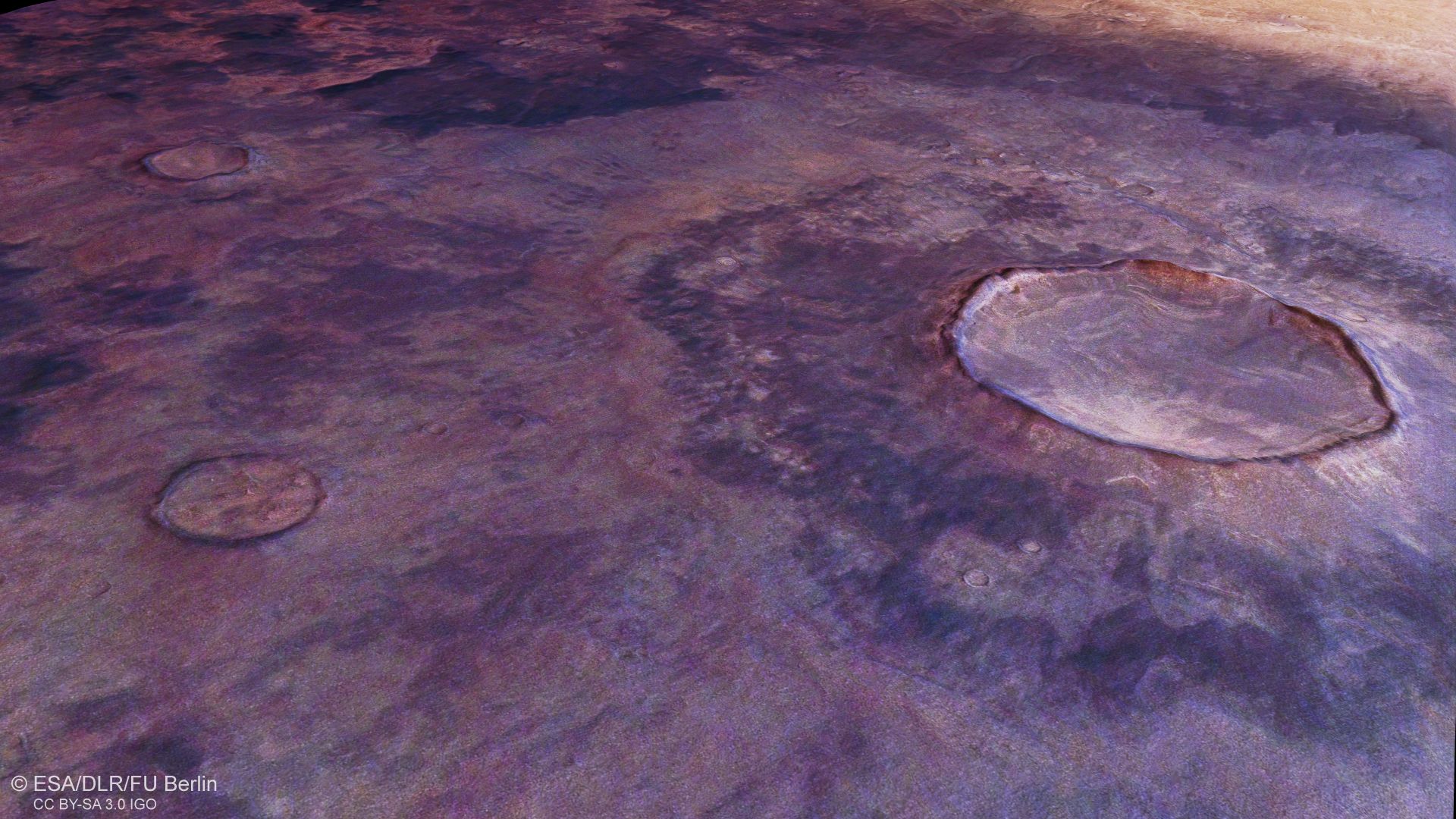
So what exactly is this dark layer? ESA scientists explain that the material is of volcanic origin. It is rich in so-called mafic minerals—compounds containing large amounts of magnesium and iron. It is these minerals that give the ash its characteristic dark color, which contrasts sharply with the surrounding light-colored terrain.
Mars is known for its turbulent volcanic history. It is home to Olympus Mons, the tallest volcano in the Solar System, standing 20 km high. Billions of years ago, the planet was undergoing an era of super-eruptions that spewed an incredible amount of ash and gases into the atmosphere. Over time, the activity subsided, giving way to a period of calm lava flows, but the remnants of those ancient eruptions did not disappear. They remained buried beneath layers of dust, biding their time.
Two theories of the same transformation
The scientific community is currently considering two main scenarios as to why the dark ash has become so noticeable right now.
The first theory attributes this to the famous Martian winds. It is possible that global or local dust storms picked up ancient ash deposits from craters or faults and carried them to new areas, “painting” the rust-colored surface in dark hues.
The second theory posits the opposite process: the ash has always been where we see it now, but it was previously hidden beneath a thin layer of golden dust. Strong air currents may have simply blown away this top layer, exposing the dark volcanic “substrate.” In any case, these changes demonstrate the immense power of the Martian atmosphere.
Mysteries of Utopia Planitia
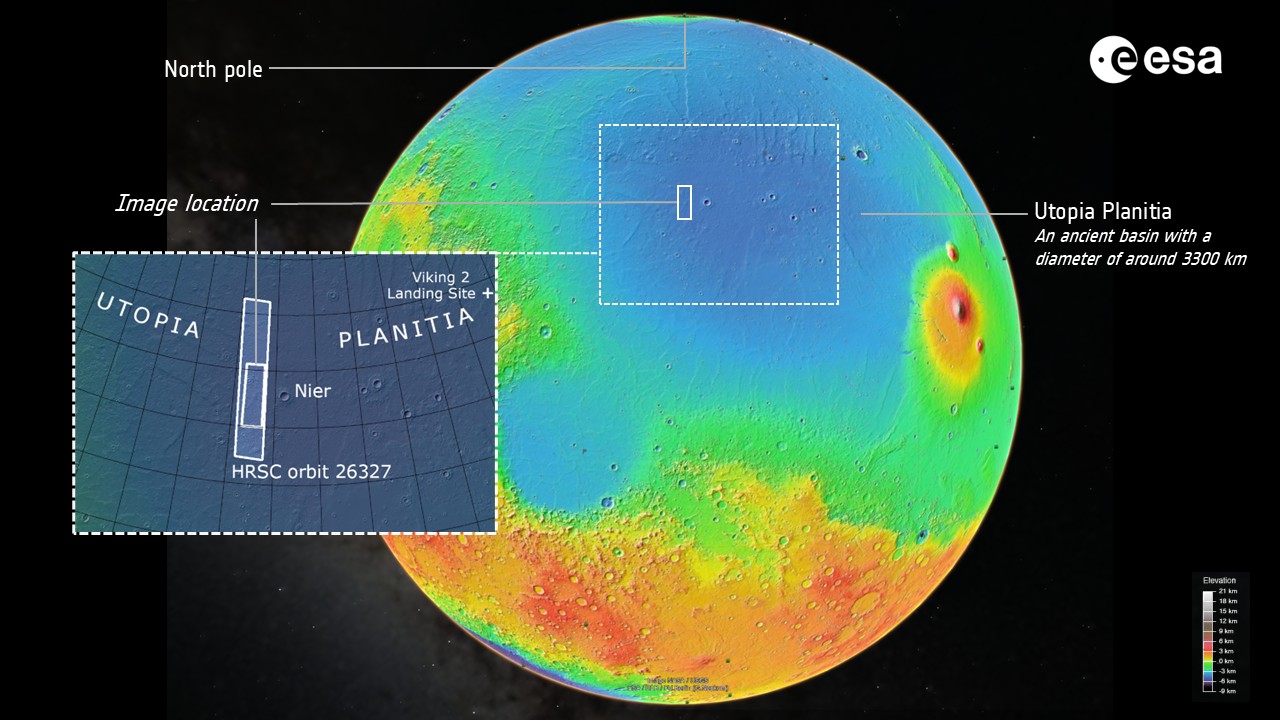
The main focus of the study was the region surrounding Utopia Planitia—a massive impact plain that is one of the oldest basins on the planet. It is believed that in the distant past, this low-lying area may have been the floor of a vast ocean or a network of lakes.
Mars Express images clearly show a large crater in this region, surrounded by a bright ring—the so-called “ejection veil.” This is material that was ejected from the planet’s interior during the meteorite impact. Although the surface of the basin appears dry and rocky, ESA data confirm that vast deposits of water ice still lie beneath the volcanic ash and sand.
Supporting this hypothesis are the “scalloped depressions” visible at the bottom of the images. These unusual, wavy depressions are a typical feature of a periglacial landscape. They form as a result of regular cycles of freezing and thawing (or sublimation) of ice beneath the surface. Thus, the dark ash not only changes the planet’s color but also helps scientists better understand how water is distributed in the Martian soil.
The mission continues
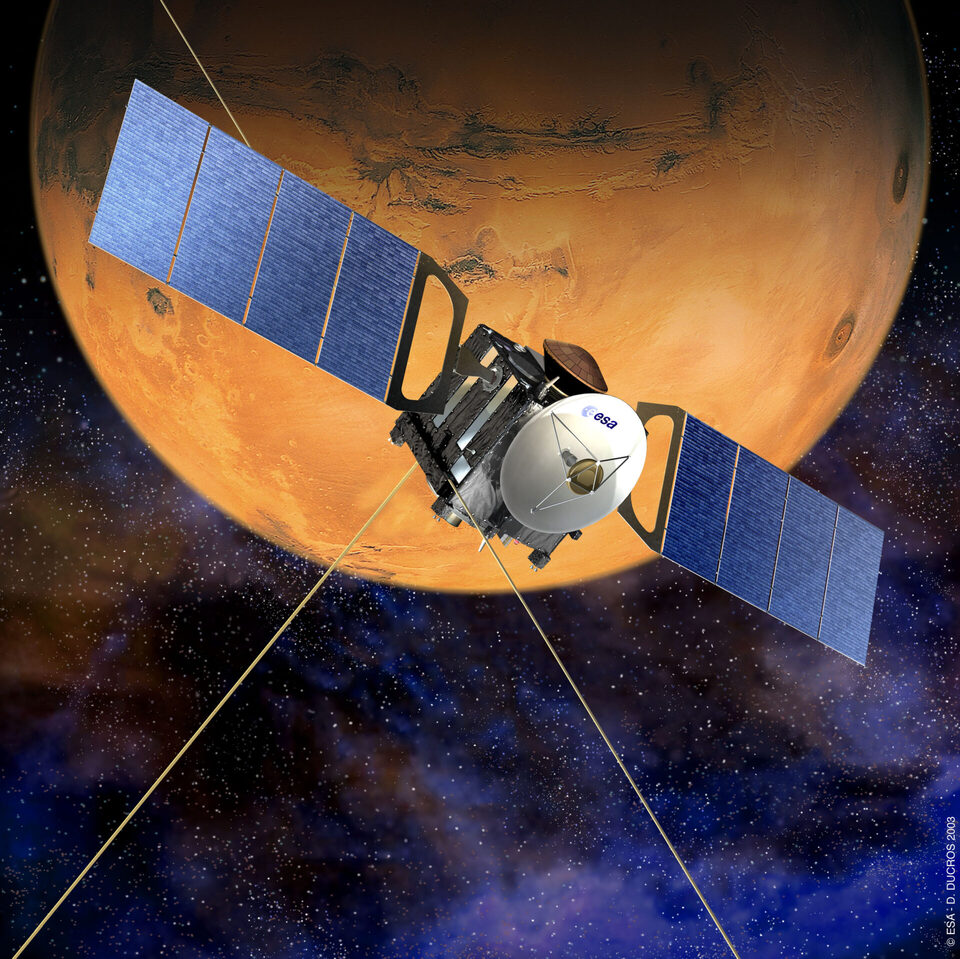
The Mars Express spacecraft has been in orbit around Mars since 2003. Over the course of more than twenty years of operation, it has created the most detailed map of the planet to date, with unprecedented resolution. Each of these photos is not just a beautiful landscape, but an important piece of the puzzle in the history of our neighbor’s geological and climatic evolution. As we watch ash and dust wage their eternal battle on the plains of Utopia Planitia, humanity has the chance to learn what Mars was once like and what it will become in the future, when the first human sets foot on its surface.
We previously discussed the changes experienced by the Martian Sphinx since it was first photographed.
According to ESA

