

SpaceX carried out its eleventh Starship launch. It ended in success, marking the end of the current version of the super-heavy rocket’s service life.
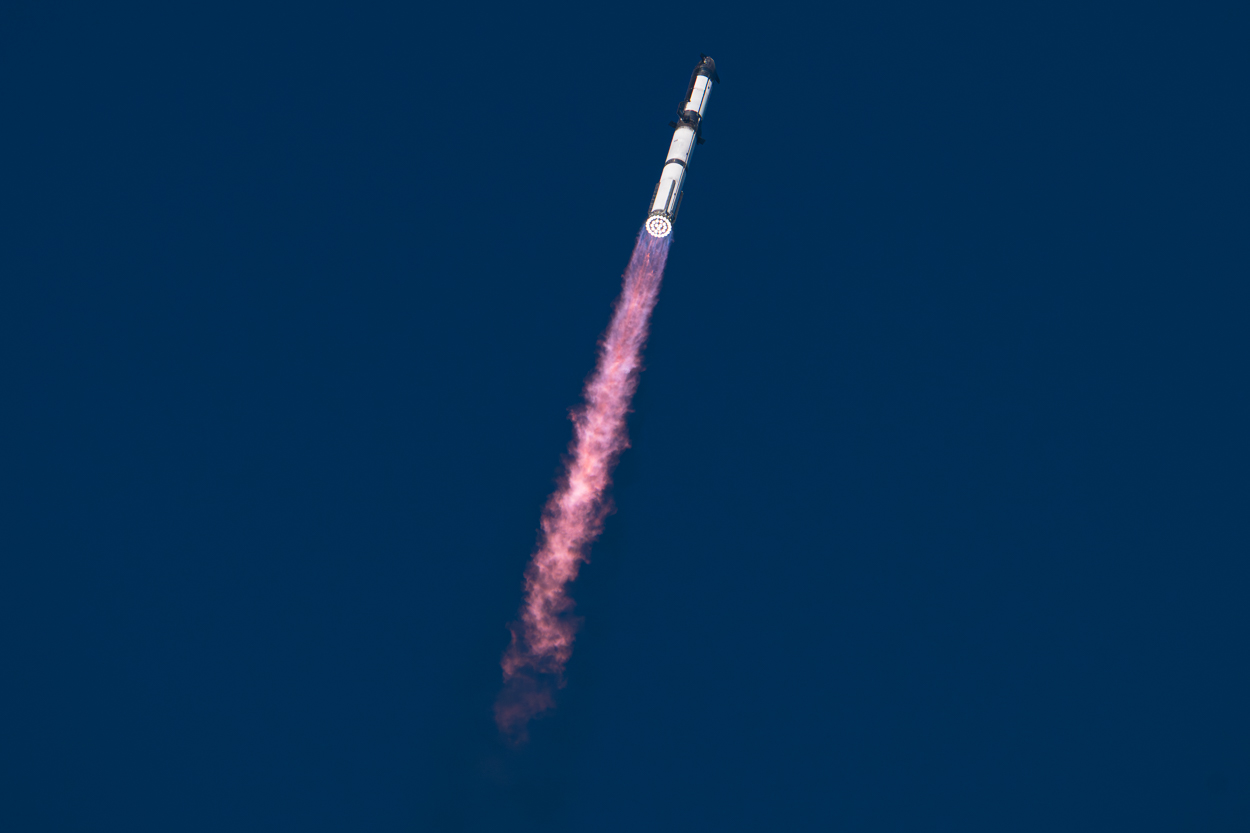
The last flight was the final one for the Starship modification designated Block 2. It turned out to be quite problematic. The first three Block 2 flights ended in accidents, and another Starship of this modification exploded on the test stand during a fire. However, SpaceX specialists did not give up and made a number of changes to the Block 2 design. Its fourth flight was successful, paving the way for the final mission.
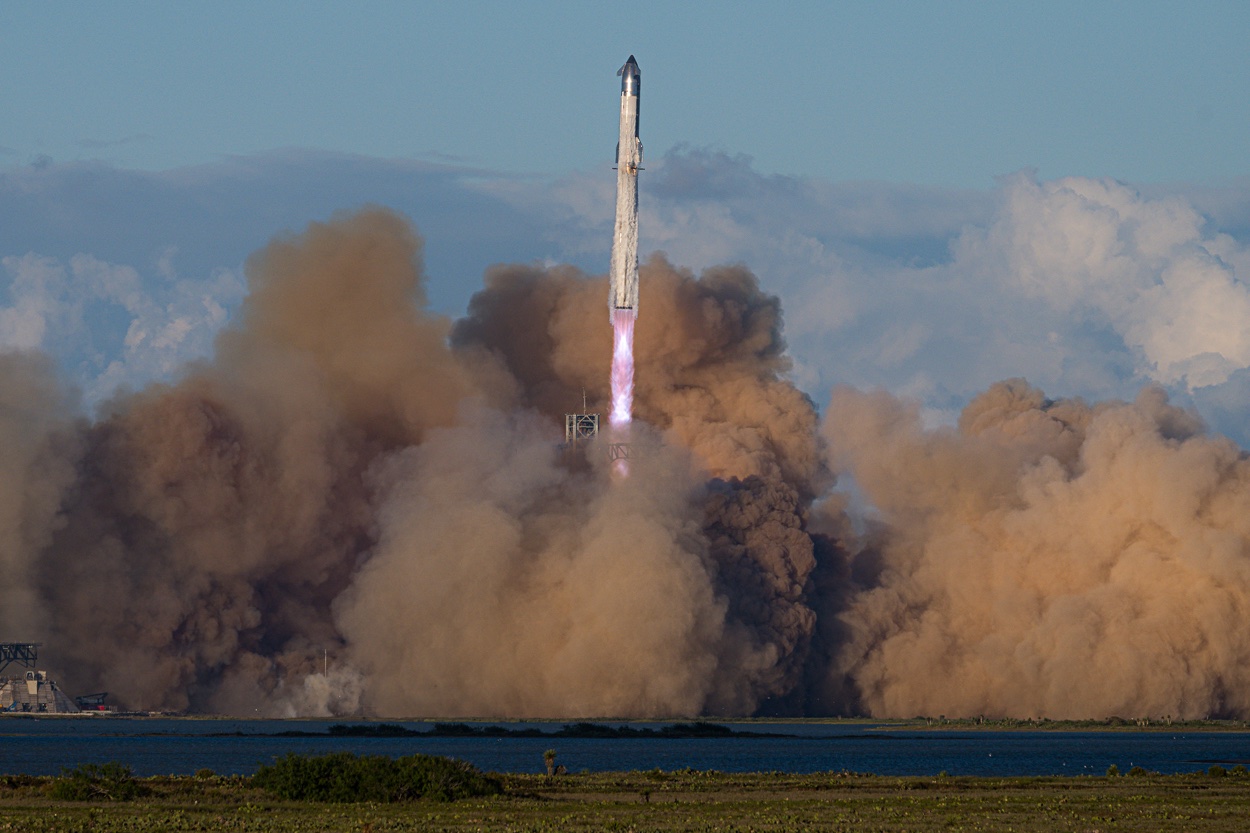
The last launch of Starship Block 2 took place on October 13. The Super Heavy booster successfully completed its part of the flight. After separation, despite the temporary shutdown of one of the power units, it performed a return maneuver. During the descent, engineers conducted an experiment simulating the operating mode of the engines that would be used on next-generation boosters. It was a success, and Super Heavy splashed down in the waters of the Gulf of Mexico/Gulf of America.
As for Starship, the spacecraft was launched onto a predetermined suborbital trajectory. During the flight, it successfully deployed eight mock-ups of the new generation of Starlink satellites and restarted one of the Raptor engines.
But the main challenge was entering the atmosphere. As in the previous test, SpaceX engineers deliberately removed a number of heat shield tiles from the spacecraft and tested it in the most severe conditions, seeking to determine the spacecraft’s strength limits. Despite a number of heat shield damages that could be seen during the live broadcast, Starship safely completed this stage and splashed down in the Indian Ocean at the same point as its predecessor.
This marked the end of the Starship Block 2 story. SpaceX engineers are already busy preparing the next, even more powerful Block 3 modification. It is expected that SpaceX will use it to test Starship’s landing on the ground and orbital refueling of the spacecraft, which is a key element necessary for both the Artemis III mission and Elon Musk’s ambitious plans to conquer Mars.

