

From November 30 to December 17, the Sun is in the constellation Ophiuchus. Theoretically, this should mean that it is the thirteenth zodiac constellation. However, astrologers have not recognized it as such. But astronomers really have something to talk about.
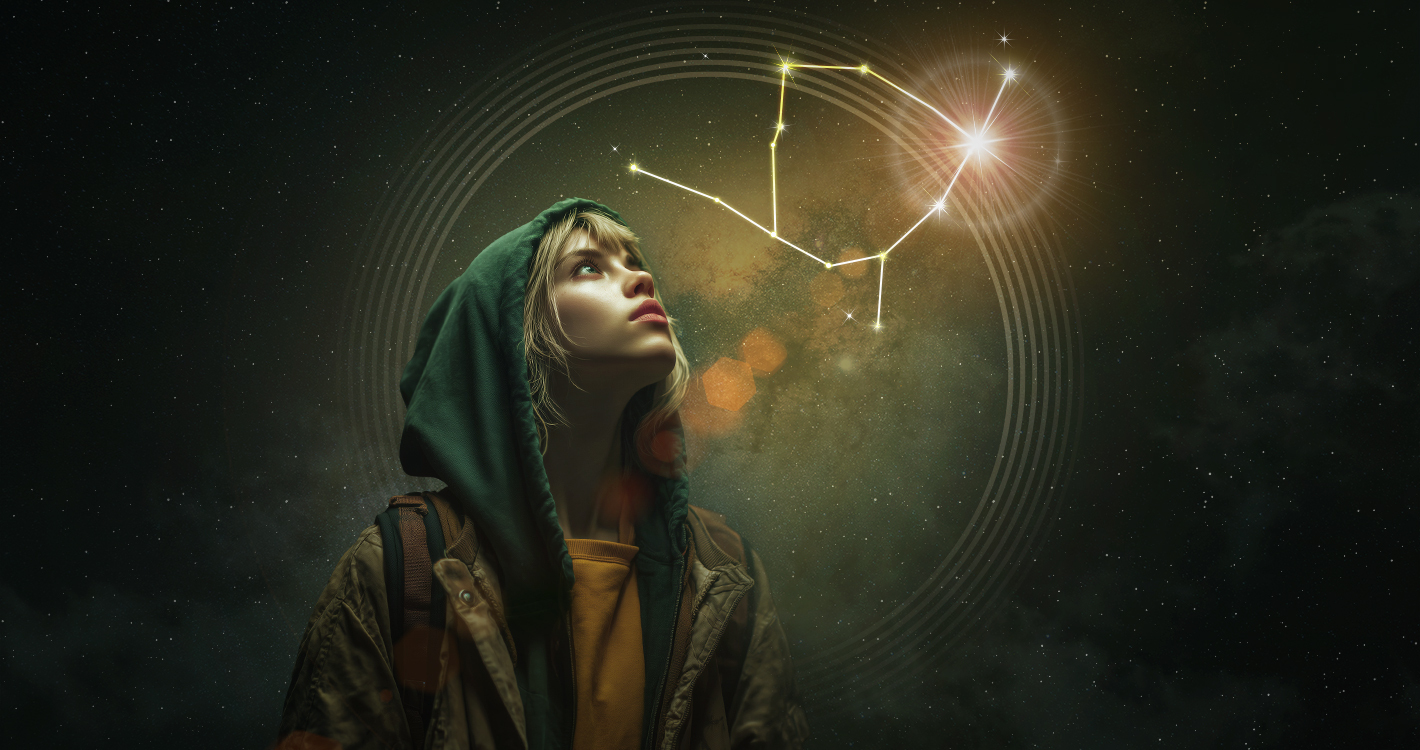
The thirteenth sign of the zodiac
Astrologers claim that on November 22, the Sun left the sign of Scorpius and entered Sagittarius, and on December 22, it will leave Sagittarius and enter Capricornus. However, if we use real astronomical data, it turns out that, in fact, it is in Scorpius from November 23 to 29, and in Sagittarius from December 18 to January 18.
The question arises: what happens between November 30 and December 17? The answer is simple: the Sun is located in the constellation Ophiuchus. It is generally believed that if our sun passes through a certain constellation in its annual motion, then the latter is a zodiacal constellation. But this is not the case with Ophiuchus, because, despite all of the above, the vast majority of astrologers do not recognize it as such, although from an astronomical point of view, it is indeed a zodiacal constellation.
Why did this happen? For most of human history, including a couple of thousand years ago when the tradition of creating horoscopes was established, the boundaries of the constellations were not yet clearly defined. And when they were finally defined at the beginning of the 20th century, it turned out that in November and December, the Sun spends more time in Ophiuchus than in Scorpius. And even then, it was not such big news, because astronomers knew several centuries earlier that our star moves through it.
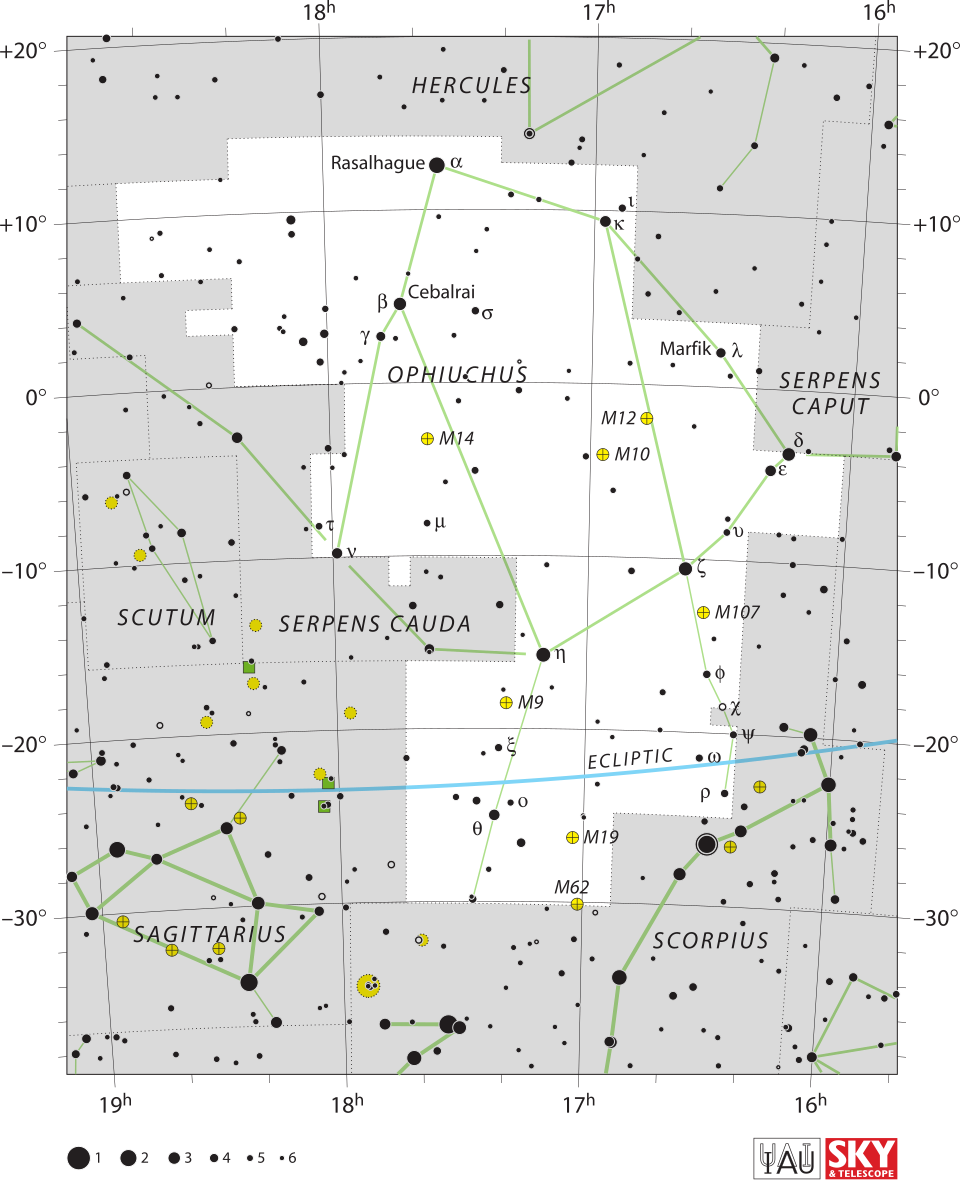
As with other zodiacal constellations, it is almost impossible to observe it now, when the Sun is in Ophiuchus, because it rises and sets with it. To observe it, it is better to wait until the end of spring or the beginning of summer. Then it rises high enough above the horizon and is easy to find.
It is best to orient yourself by one of the brightest stars in the sky – Antares in Scorpius. Ophiuchus is located directly above it. There are no bright stars in it, but it is worth looking more closely.
Myths and stellar neighbors
The constellation Ophiuchus was known to the ancient Greeks. They associated it with Asclepius, the god of medicine. His indispensable attribute was a staff entwined by a snake. Today, this same staff is the international symbol of medicine.
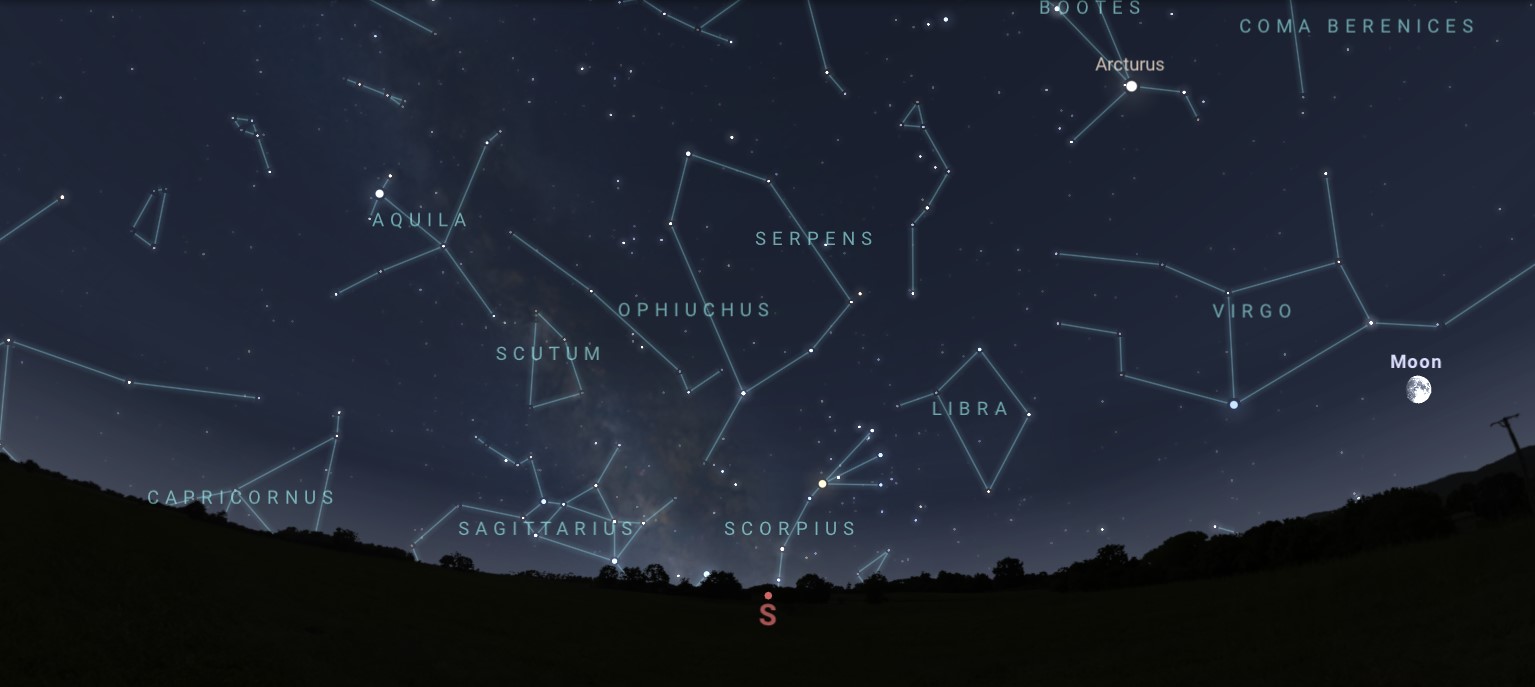
Accordingly, Asclepius in the sky was also depicted with a snake. For some time, it was considered part of Ophiuchus, but then it was separated into a separate constellation, which is the strangest in the sky because it consists of two separate parts divided by Ophiuchus.
In addition, in modern times, the part of Ophiuchus located near Aquila became a separate constellation called Taurus Poniatowski. In this way, Polish astronomer Marcin Odlanicki Poczobutt attempted to glorify King Stanisław August Poniatowski. However, his idea did not find support among other astronomers.
Bright stars
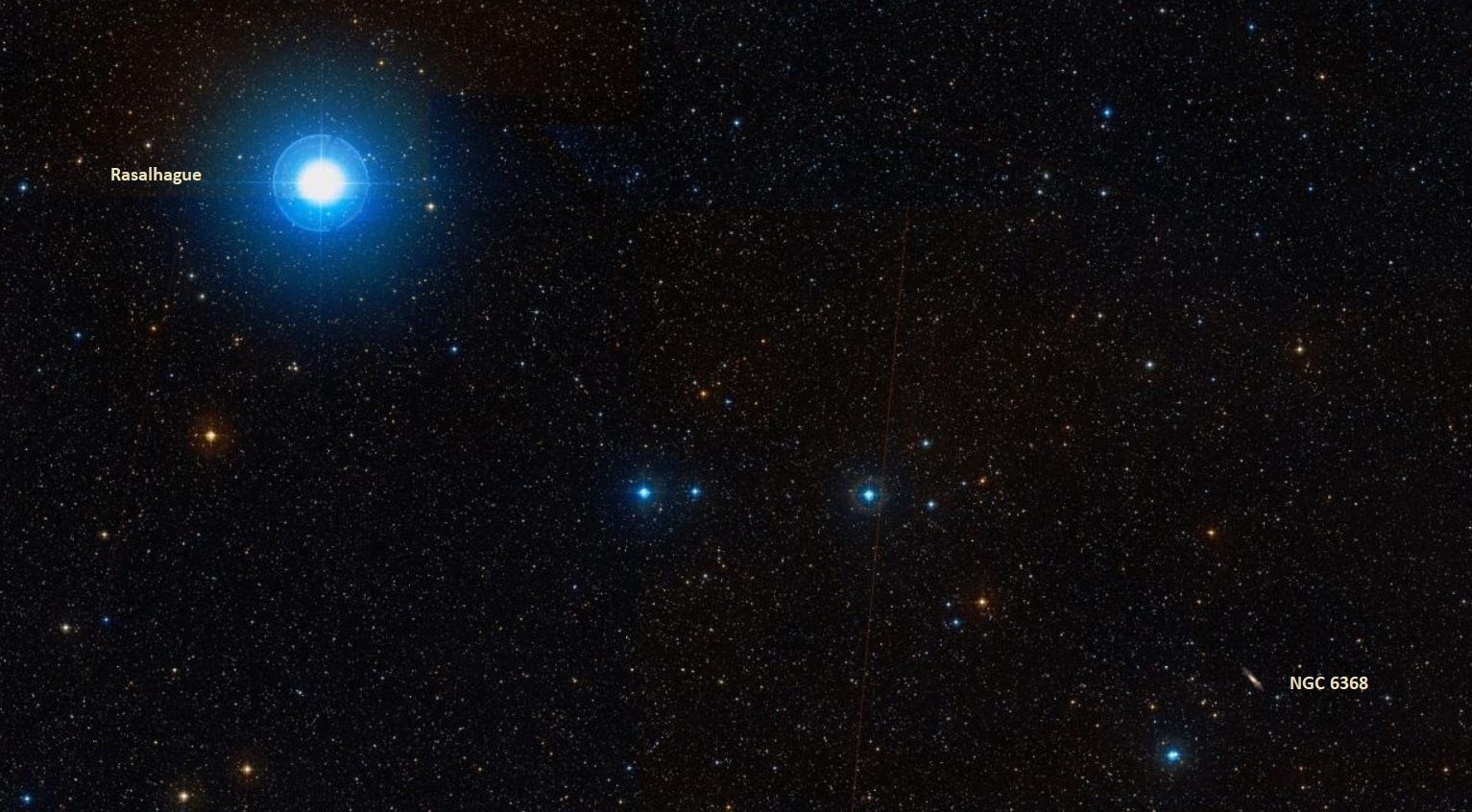
The brightest star in the constellation Ophiuchus is its Alpha, Rasalhague. It is located where the head of the imaginary figure of a man with snakes should be. In fact, its name translates from Arabic as “the head of Ophiuchus.” Its apparent magnitude is about 2.07, which means it is about as bright as Polaris.

In fact, it is a double system located 48.6 light-years away from us. The larger of the two components is a white star, which is 2.8 times larger than the Sun in radius and 2.2 times larger in mass. More precisely, the equatorial radius of Rasalhague is 2.8 times that of the Sun, and the polar radius is 2.3 times that of the Sun, meaning that the star is strongly compressed at the poles and rotates rapidly around its axis.
The smaller star is an orange dwarf, with a mass of 82% that of the Sun. It orbits the main star once every 8.6 Earth years. The system is relatively young, at 770 million years old.
The second brightest star is Eta Ophiuchi, or Sabik. It is also a binary system located 88 light-years away from us. It consists of a pair of white stars, one of which is 2.25 times and the other 2.03 times more massive than the Sun.
The average distance between them is 31 AU, slightly less than that between the Sun and Neptune. However, its eccentricity is 0.93. This means that at perihelion, the bodies are only 2 AU apart (roughly the distance between Mars and the Sun), while at aphelion, they are 65 AU apart.
The third brightest star in Ophiuchus is Zeta. This giant blue star is located 366 light-years away from us. It is 20 times more massive than the Sun and 74,100 times more luminous. Like the main component of Alpha Ophiuchi, this star is flattened. Its polar radius is 7.5 times greater than the Sun’s, and its equatorial radius is 9.4 times greater.
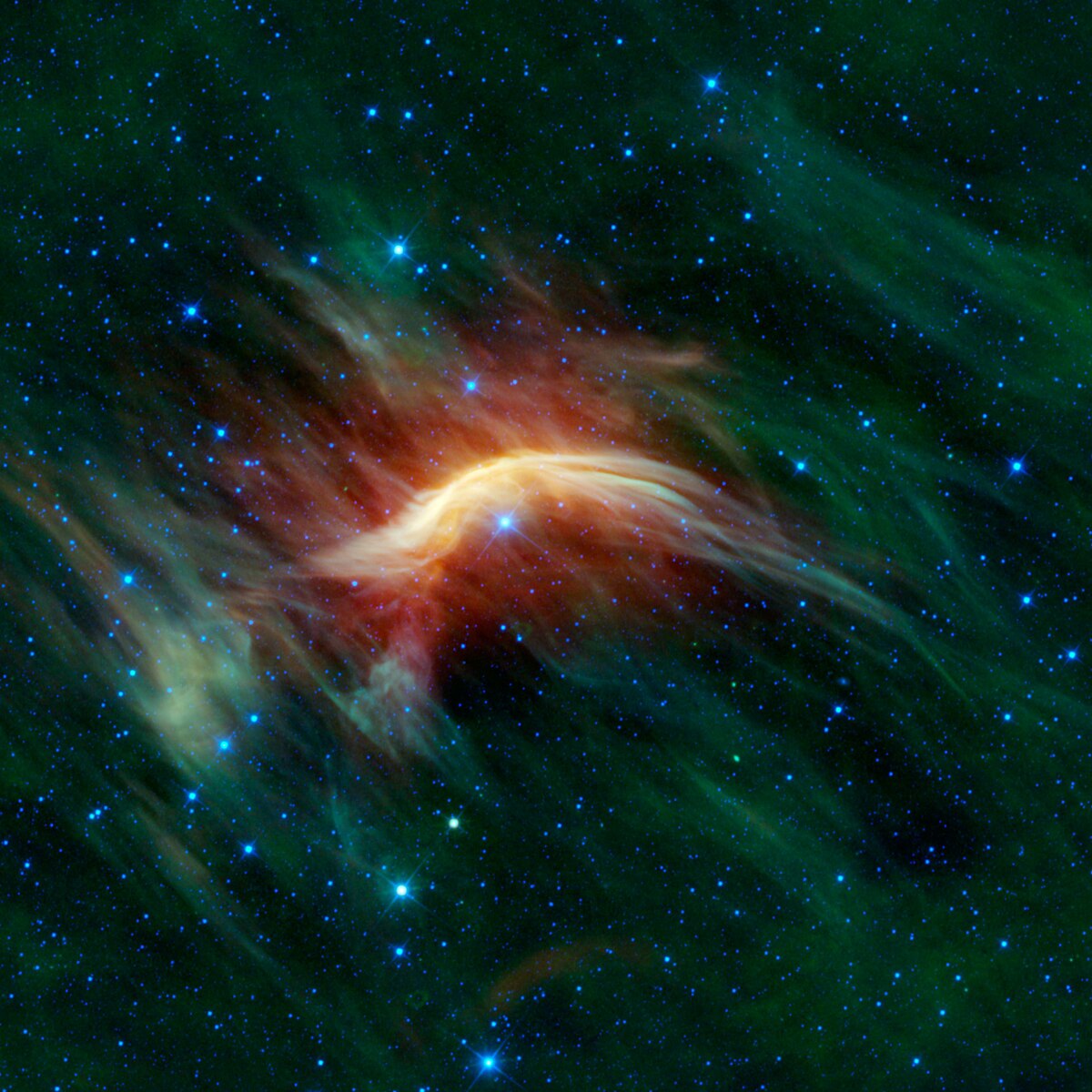
At the same time, Zeta Ophiuchi moves through space at incredible speed, creating a shock wave in the surrounding gas. It is believed that it was previously part of a binary star system, the other component of which exploded as a supernova, and the force of the explosion pushed Zeta Ophiuchi away.
The closest stars to Earth
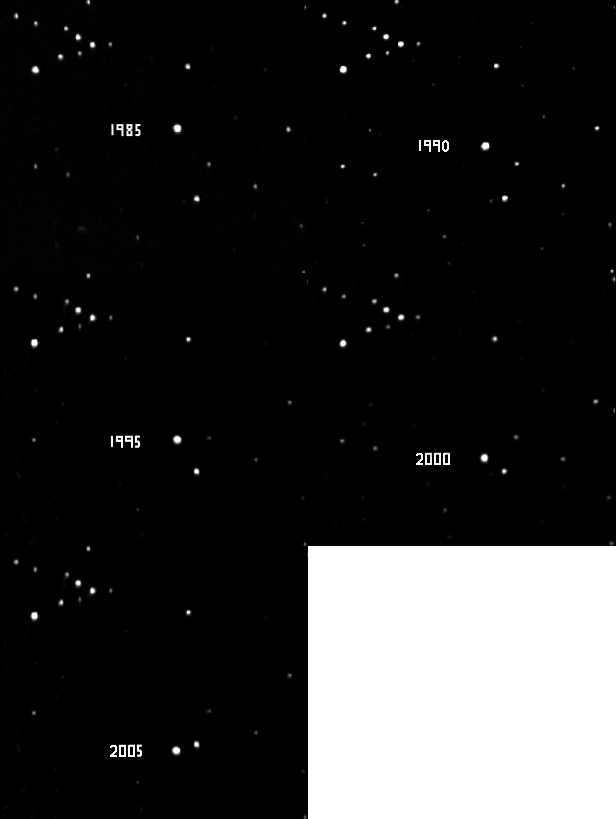
As for the stars closest to the Solar System in Ophiuchus, Barnard’s Star is the most notable. This red dwarf attracted the attention of astronomers at the beginning of the 20th century due to its enormous proper motion. Compared to other stars, its position in the sky changes the most from year to year. Because of this, the star is called the “flying Barnard’s Star.”
The reason for this behavior is quite simple – Barnard’s Star is located only 5.96 light-years from the Sun. Only the triple system Alpha Centauri is closer to us than it is. The mass of this star is only 17% of the Sun’s, and its radius is 20%.
Almost since its discovery, astronomers have been searching for planets in Barnard’s Star and even occasionally reporting their discovery. However, each time these reports turned out to be false, until in 2024 the planet was finally confirmed.
Currently, four planets are known in the system. The closest to the star is Barnard’s Star d, with a mass of 26% of Earth’s, which orbits the star in 2.3 Earth days, followed by Barnard’s Star b with 30% of Earth’s mass and a period of 3 days, Barnard’s Star c (34% of Earth’s mass, orbital period of 4 days), and Barnard’s Star e with only 19% of Earth’s mass and an orbital period of 6.7 days. All of them are small, hot worlds that most likely resemble either an enlarged Mercury or a reduced Venus.
The second most distant star in the constellation Ophiuchus is Wolf 1061. The distance to this red dwarf is 13.4 light-years. Its mass is 25% and its radius is 30% of the Sun’s. Three planets have already been discovered in the system.
The first of these, Wolf 1061 b, has a mass 91% greater than Earth’s and a radius 20% larger. Theoretically, it could be habitable, but it orbits its red dwarf star in just five Earth days and is clearly a scorching inferno.
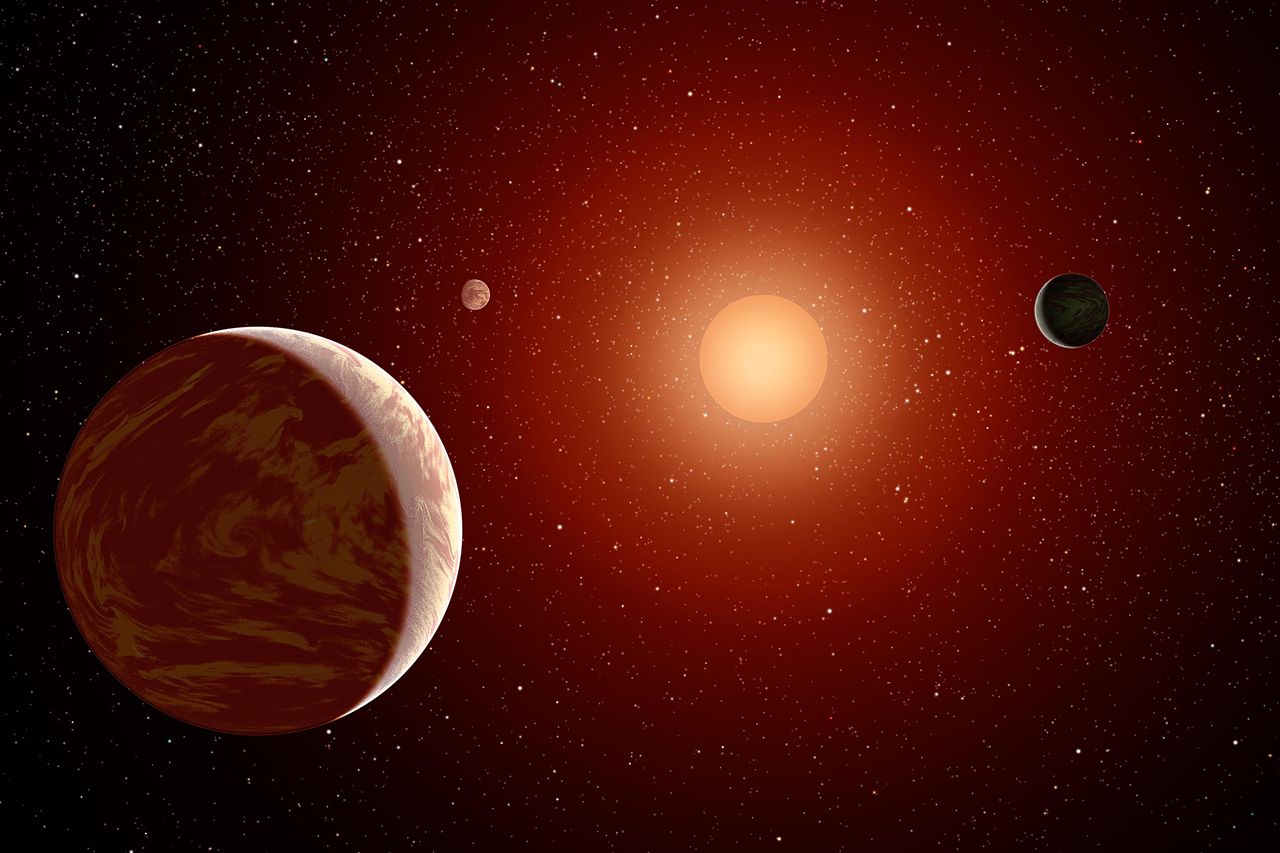
The second planet, Wolf 1061 c, has a mass 3.4 times greater than Earth’s and a radius 66% larger. It completes one orbit around the star in 17.9 Earth days. Calculations show that the equilibrium temperature on the surface should be around -50°C. However, given its size, the planet must have a dense atmosphere and hydrosphere, so it is likely to be warmer there, and it is quite possible to assume the existence of life.
The third planet in the system, Wolf 1061 c, has a mass of 7.7 Earth masses. This means that it is either a cold mini-Neptune or a super-Earth that is just as cold. We still do not know where the boundary between these two types of worlds lies. It completes one orbit around its star in 217 Earth days.
The third star in this constellation, in terms of distance from us, is 70 Ophiuchi. It is a pair of orange dwarfs located 16.6 light-years away from us. The larger of the two has a mass of 92% of the Sun, while the smaller has a mass of 70%. They orbit each other once every 88 Earth years.
Other interesting objects
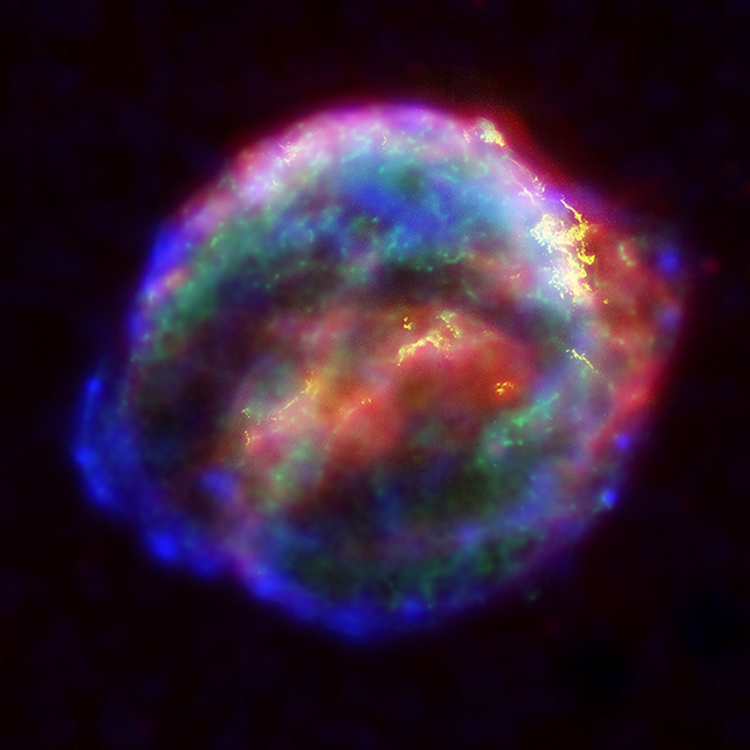
In addition to the above, there are several other extremely interesting objects in the constellation Ophiuchus. For example, there is a small nebula, which is the remnant of a supernova whose light reached Earth in 1604. It is known as Kepler’s Supernova and is considered to be the last one to have exploded in the Milky Way to date. The distance to the place where it happened is about 20,000 light-years.
Another interesting object is the reborn RS Ophiuchi. It is a binary system consisting of a white dwarf and a red giant orbiting each other in a very close orbit. Matter flows from the second to the first. It forms a shell around the dead star, which at a certain point reaches critical parameters, and a thermonuclear explosion occurs.
It does not destroy the star completely, but within a few dozen hours, it becomes several magnitudes brighter to an observer on Earth. After that, the process repeats itself. Similar flares on RS Ophiuchi occurred in 1898, 1933, 1958, 1967, 1985, 2006, and 2021. Most likely, they will continue in the future.
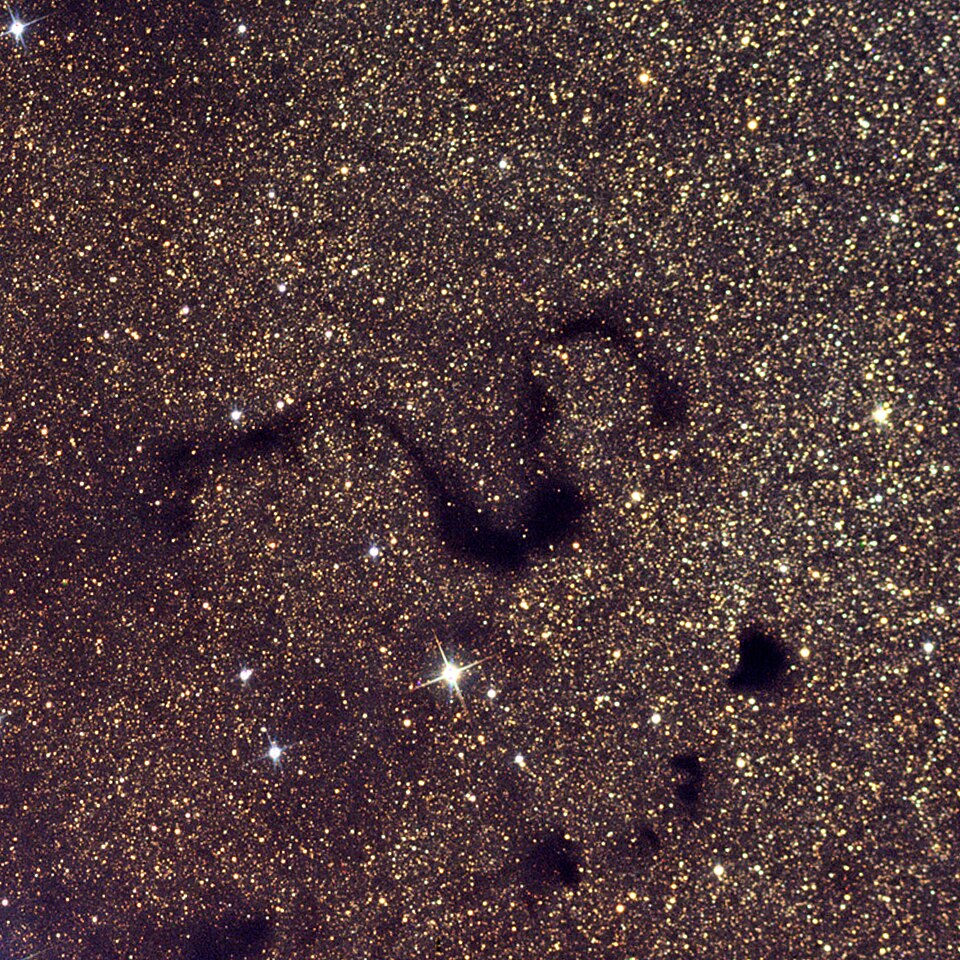
There are also several interesting nebulae in the constellation. For example, Barnard 72, known as the Snake Nebula. It has an elongated shape and seems to twist between the stars. Next to it is a whole complex of dark nebulae known as the Pipe Nebula. It was also named for its shape.
Clusters and galaxies
Ophiuchus is extremely rich in globular clusters. There are six of the brightest ones: M9, M10, M12, M14, M19, and M62. All of them are huge complexes, where several hundred thousand stars are squeezed into a radius of several tens of light-years.
The most interesting of these is the M9 cluster, which may have entered the Milky Way from another galaxy. M10 is one of the closest globular clusters to us.
There are also many galaxies in Ophiuchus. One of the most interesting of them is NGC 6240. It is located 400 million light-years away from us and is characterized by extremely high rates of star formation.
The reason for this is that NGC 6240 has two cores. And each one contains a supermassive black hole. Apparently, this star system was once two separate galaxies that merged. However, the merger process, which triggered the star formation, is not yet complete. In time, both black holes will merge into one.

