

The 2024 Oscars once again demonstrated their relevance in the context of the global political agenda. The Grand Prix went to Oppenheimer, a film about the invention of nuclear weapons, while the award for best documentary went to 20 Days in Mariupol, a film about the suffering of the Ukrainian people. Cinema and reality became dangerously intertwined.
By honoring these films, the film academy seemed to emphasize the global nuclear threat. It was no coincidence that a month before the awards ceremony, the US was rocked by a major scandal related to the latest data on Russia’s military space capabilities. The bits and pieces of information that were made public indicated that Moscow had a new “destabilizing weapon” that could threaten the US and its allies.
Journalists from several influential American publications, citing anonymous sources in Congress, suggested that Russia may have anti-satellite weapons (ASAT) that could be used against American military satellites.
The evolution of anti-satellite weapons?
Direct-ascent ASATs have existed since the early days of human space exploration. The first test dates back to 1959, when the US destroyed the first artificial satellite with a rocket using a kinetic impact. The arithmetic of kinetic ASAT weapons was quite simple: 1 rocket = 1 satellite.
Subsequently, other methods of counter-space warfare were added to the first ASAT missiles: cyberattacks, radio-electronic jamming, and, with the development of optical technologies, laser blinding of satellites.
But the rules of this game changed when humanity decided to use the first inter-level space networks – satellite constellations capable of performing joint tasks. They proved to be more resistant to targeted attacks, primarily due to the mass nature of their deployment. Kinetic ASAT missiles simultaneously lost several indicators of effectiveness.
In addition, the more crowded the orbit became, the more threatening the physical destruction of satellites became in the context of so-called friendly fire – hundreds and even thousands of debris from the destruction of a satellite remained in orbit, posing a danger to other spacecraft.
The new practice of deploying numerous satellite constellations (especially for military purposes) has triggered further development of anti-satellite weapons. A powerful electromagnetic pulse could cope with the task of mass satellite destruction – the flash would disable the electronic equipment of satellites in a multi-kilometer zone of destruction, turning them into pieces of space debris.
And Mr. Oppenheimer will not let us lie: since 1945, there has been only one way to generate an electromagnetic pulse of such power on our planet – a nuclear explosion. It is a cheap, primitive method, and much more devastating than high-precision blinding lasers or satellite electronic warfare systems. It is unfortunate, but not surprising, that during the “First Satellite War” (which is what the Russian-Ukrainian war is currently), it was the Kremlin that decided to acquire such weapons.
Triple danger
The new life of nuclear ASAT weapons was marked by three powerful threats at once. The greatest concern was the environmental consequences of a nuclear explosion in orbit.
It is known that the Earth’s atmosphere protects us from harmful cosmic radiation – a stream of powerful ionizing particles (mainly photons and nuclei of other atoms with detached electrons). Created by star explosions, gamma-ray bursts, black hole activity, etc., they travel through the universe at the speed of light, penetrating any matter that happens to be in their path.
Ionizing cosmic radiation is radioactive and harmful to organic life forms. Fortunately, when these rays enter the upper layers of Earth’s magnetosphere, they encounter energy resistance. When cosmic rays collide with the atmosphere, cosmic nuclei decay into secondary particles (mostly unstable albedo neutrons) that no longer contain significant radioactivity.
So, is our atmosphere capable of protecting us from radiation generated by an explosion in orbit?
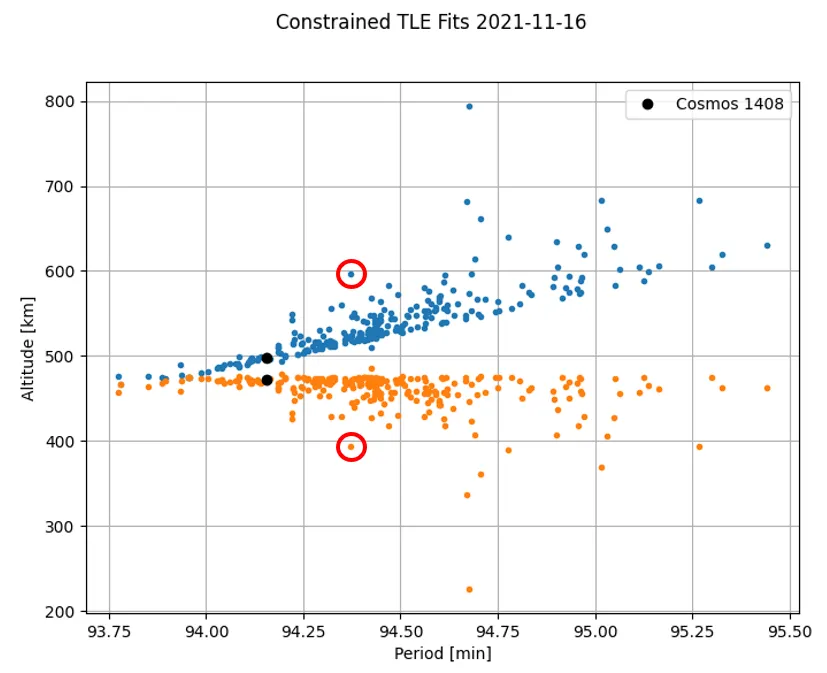
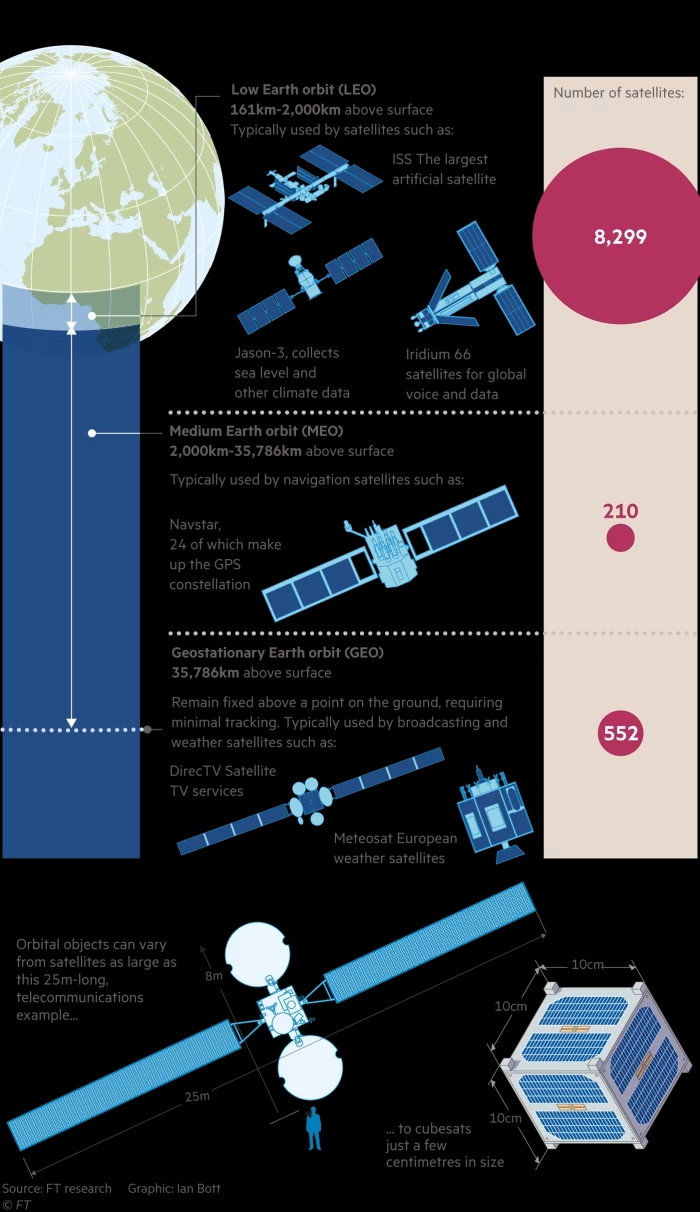
A nuclear explosion in space would not actually be that harmful to life on Earth in terms of radioactivity, as most of the gamma radiation would be absorbed by the Earth’s atmosphere. However, much depends on the power of the nuclear charges and the altitude at which they are used. And modern satellite constellations significantly lower this altitude threshold.
Orbital contamination caused by a nuclear explosion will also have long-term consequences: the release of heavy isotopes will lead to radioactive contamination and further degradation of satellite electronics located in the affected area, even if they are not destroyed by the initial electromagnetic pulse.
Another threat posed by such weapons is to security. The modern military space doctrines of the world’s superpowers (primarily the US) rely entirely on military satellites. They are the foundation of the American military space doctrine, Joint All Domain Command and Control (JADC2), which provides for the creation of a unified command and control network for military operations. It is easy to guess that such military constellations are a priority target for Russian nuclear ASAT weapons, largely due to Moscow’s lag in the development of this area.
The experience of the war in Ukraine has demonstrated the extraordinary resilience of satellite architecture, which is achieved by encouraging a number of private satellite companies to perform military tasks. Most often, this involvement takes place through the conclusion of contracts on behalf of the Ministry of Defense. In a similar way, for example, there are plans to expand the US military constellation from 20 tactical-level satellites for command and control on the battlefield – the Transport Layer from the Space Development Agency (SDA).
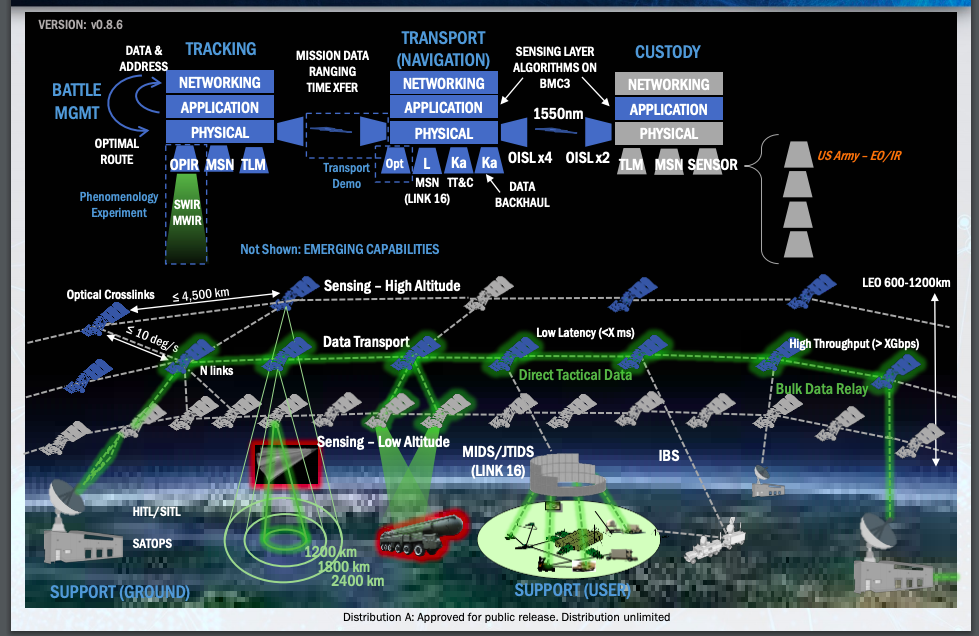
The SDA offers private players a previously unusual approach, which consists of leasing commercial satellites to use their resources for national defense purposes, primarily as signal relay points and for optical reconnaissance. This approach significantly enhances the resilience and diversity of the space data transmission network. On the other hand, it makes commercial satellites potential targets for attack.
The third serious challenge is the devastating impact on public infrastructure. In modern life, the loss of satellites threatens to completely block any area of state or institutional management: the banking system, healthcare systems, communications, logistics, and navigation. The electromagnetic pulse from a nuclear explosion in space is predicted to disable a wide range of ground-based computing and communications infrastructure.
The relative “radioactive safety” of a nuclear explosion in orbit is completely illusory, as thousands of lives on Earth could be lost because rescue services would be unable to reach the site due to a critical failure in GPS.
The inclusion of civilian satellites in military satellite constellations creates another problem –it potentially makes them targets for attack. Russia is skillfully exploiting this circumstance on the international stage, effectively holding large satellite companies hostage, which can be used for military purposes. Why do you think Elon Musk is so eager to appease this three-headed dragon?
Potential delivery methods
The main potential delivery vehicle for direct-ascent nuclear ASAT missiles is the high-altitude multi-role MiG-31 (NATO classification: FoxHound). Currently, the Russian Air Force has at least 250 aircraft of this design in service, represented in several modifications. In the context of this story, we are interested in the MiG-31D modification, which is equipped with the 79M6 Kontakt anti-satellite missile for destroying low-orbit space objects.
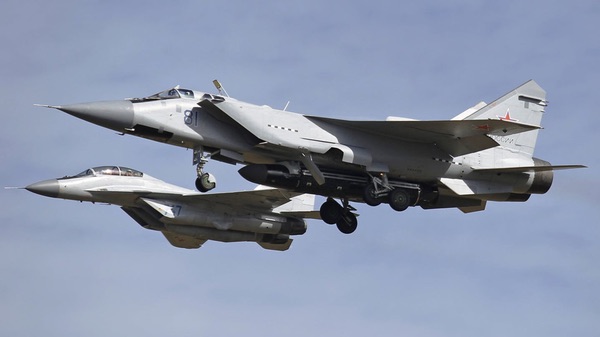
The 79M6 Kontakt was used as the basis for the development of the Kh-47M2 Kinzhal hypersonic missiles, which have demonstrated low vulnerability to anti-missile interception due to their ability to maneuver in flight. The Kh-47M2 can also be equipped with a nuclear warhead, making it a potential candidate for nuclear ASAT missiles.
The use of ground-based missile systems such as the Nudol, equipped with A-235 and A-135 Amur anti-satellite missiles, cannot be ruled out. Nudol can also use ABM-4 GORGON 51T6 anti-ballistic missiles, capable of hitting targets at an altitude of 50-1000 km with a coverage radius of 1500 km.
The satellite threat posed by ground-based missile systems lies primarily in the possibility of their mass deployment and simultaneous use. The purely financial aspect of this issue also has its advantages: maintaining ground-based systems is significantly cheaper than maintaining MiG-31 squadrons.
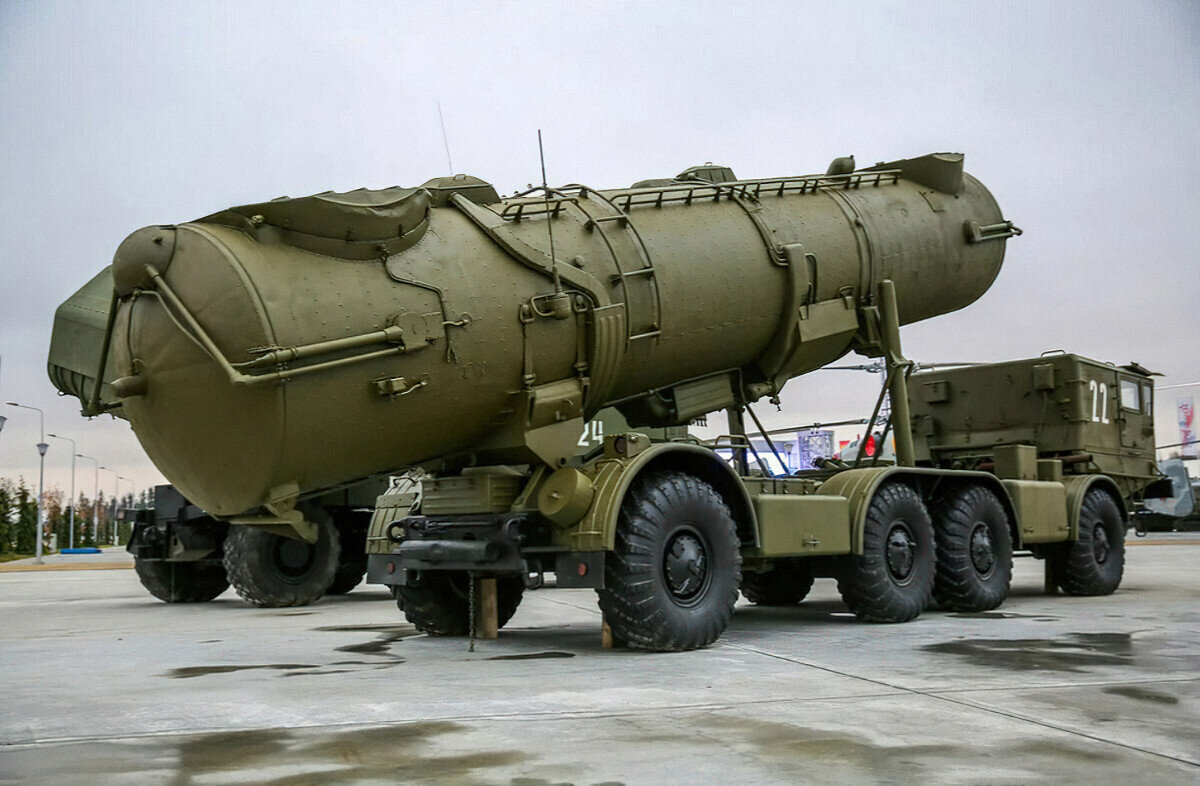
Russian co-orbital ASAT systems remain the least studied. Theoretically, such maneuverable satellites are capable of approaching other spacecraft in orbit, using various methods to intercept and destroy targets. Potentially, they can also be equipped with nuclear warheads.
Claims that Russia is developing a new program of co-orbital satellites called Burevestnik (also known as Project 14K168) were first made in 2018 and are confirmed by data from the Space Threat Assessment 2019 report presented by the Center for Strategic and International Studies (CSIS). However, despite the potential level of danger, Russia’s use of co-orbital satellites for nuclear strikes remains highly questionable due to their cost and complexity.
The final collapse of the 20th-century security system?
As experience from previous years shows, diplomatic and sanctions pressure have a limited impact on Russia, especially when it comes to the development of new types of weapons. The latest attempt to impose a moratorium on anti-satellite weapons testing at the UN level was made on December 7, 2022. At that time, a US resolution entitled “Testing of a Direct-Ascent Anti-Satellite Missile” (DA-ASAT) was adopted by 155 votes in favor. Only nine countries from the openly anti-Western bloc – Iran, Belarus, Russia, Syria, China, Bolivia, Cuba, Nicaragua, and South Africa – voted against the text of the resolution.
International obligations regarding behavior in space are also ineffective. Although one of the key provisions of the 1967 Outer Space Treaty (OST) prohibits the placement of weapons of mass destruction in orbit, there are exceptions to this rule. The Trojan horse lies in the fact that the OST does not prohibit the use of nuclear weapons launched by direct-ascent ballistic missiles, meaning that nuclear ASAT missiles in this context fall very tangentially under a clear ban, which Moscow is manipulating.
It should be noted that today there is no reliable legal mechanism to prevent such attacks, and the policy of confrontation between strategic rivals suggests that such norms will not be formed in the near future.
The relative guarantee of non-use of nuclear ASAT weapons remains their exceptional indiscriminateness. So far, this remains a rather optimistic “deterrent factor” for Moscow, as it threatens both its own spacecraft and the satellites of very influential allies; here, the Kremlin is very dependent on China’s opinion. However, it should not be ruled out that Moscow and Beijing may resolve the issue of navigation of their own spacecraft behind closed doors.
The Pentagon is also concerned with quickly eliminating the consequences of a possible nuclear strike in space. Increasing the resilience of American military satellites in space is the first (but not the last) step in this direction. Another possible response should be the consolidation of US military allies and the start of joint efforts to predict, track, and respond to this type of nuclear threat.
One thing remains certain: Russia’s actual possession of nuclear weapons in space symbolizes the final collapse of the global security system of the last century. In recent years, we have seen the collapse of almost all security agreements of the past (the Treaty on the Elimination of Intermediate-Range and Shorter-Range Missiles, the provisions of the Open Skies Treaty, and the new Strategic Arms Reduction Treaty).
In the near future, this could threaten to extend the policy of nuclear deterrence to Earth’s orbit and nearby celestial bodies. One of the predicted strategies along this path could be the US’s openly stated commitment to use nuclear weapons against Russian satellites if Moscow takes the first step. And today, it no longer seems impossible to us. Another of Oppenheimer’s nightmares is threatening to become a reality.
Author: Oleksii Zhirov, journalist
This article was published in issue No. 1 (190) of Universe Space Tech magazine in 2024. You can purchase this issue in print or electronic format from our store.

