

China’s updated manufacturing strategy aims to catch up with — and in some cases surpass — SpaceX in terms of launch rates. The country’s state space sector plans to transition to a mass production automotive model known as the final assembly pull system: final assembly orders components in exactly the right quantities and at the right time, reducing inventory, schedule disruptions, and defects. This “pull” model is contrasted with the traditional “push” approach, where components were manufactured for stock based on forecasts. The goal is consistent quality, lower costs, and rapid scaling of rockets and satellites.
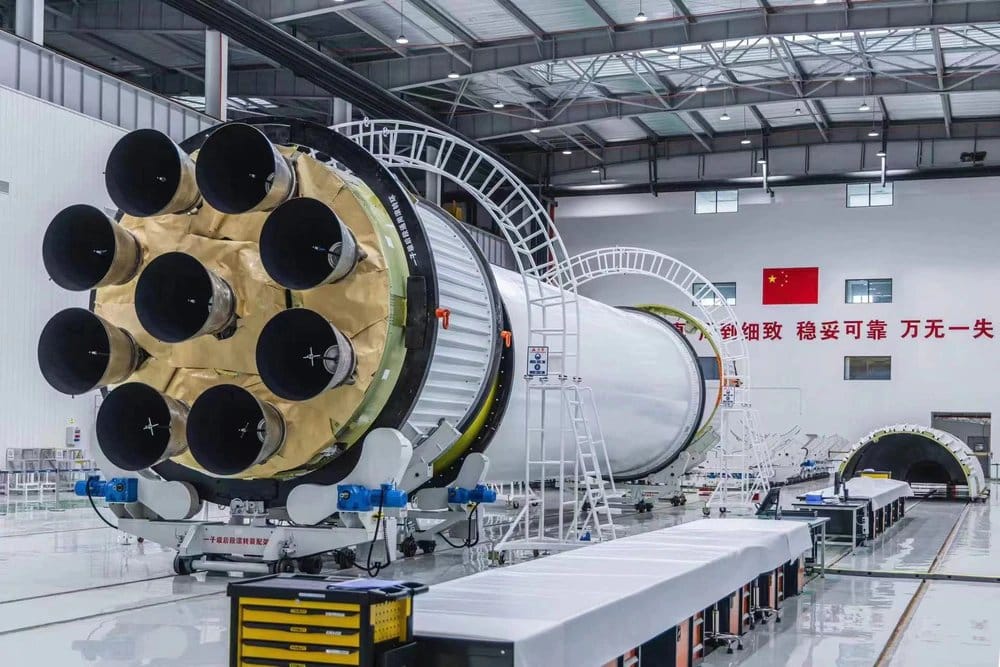
The reform is described as quiet but potentially groundbreaking for Chinese space engineering. Researchers expect that by 2045, the global volume of cargo in orbit could reach 170,000 tons, and whoever masters large-scale production will gain an advantage. The Chinese model directly borrows lean manufacturing principles from the automotive industry and restructures supply chains to match the fast pace of assembly.
Private Chinese players are already catching up with reusability. In May, LandSpace launched the upgraded Zhuque-2E methane rocket with six satellites, and in the summer, it prepared the first stage of the reusable Zhuque-3 for testing, indicating that the automotive approach will also fuel the private sector.
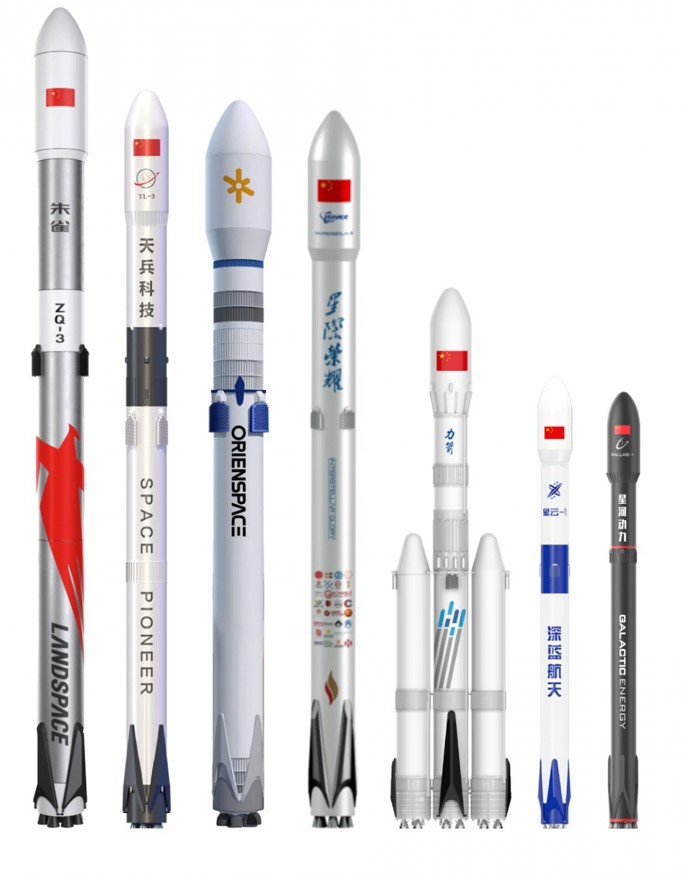
How does it work? Imagine that a rocket is assembled like a car on a conveyor belt. The final assembly shop operates rhythmically: when a specific rocket reaches the line, it orders exactly the components that are needed at that moment — the engine, fuel tank, and electronics. Suppliers prepare these modules in advance according to uniform standards and with universal connectors, so they can be installed in place like LEGO pieces. Quality is checked not at the end, but at every stage using automated test stands, and a digital model suggests where and what to put so that there are no surprises. The secret lies in three things: unification of parts, synchronization of deliveries with the assembly rhythm, and maximum automation.
Why is this important? Standardized assembly line production means more affordable launch vehicles and faster deployment of serial scientific platforms into orbit. For astronomy, this means rapid replenishment of telescope and detector arrays, regular instrument upgrades without long gaps between batches, and lower payload delivery costs. As a result, sky mapping missions, monitoring, and joint satellite+ground observatory campaigns, which require a large number of identical devices, are accelerating.
Want to not only read about manufacturing, but also see the sky for which we launch rockets? In October 2025, we can expect to see a bright comet, shooting stars, and an unusually rich pre-dawn sky. Make your own observation plan: when to go out onto the balcony, which direction to look, what not to miss, and how to photograph the phenomena even with a smartphone. Go to our article “Astronomical events in October 2025: a bright comet, meteor showers, and a magnificent pre-dawn sky.”
According to scmp, interestingengineering

