

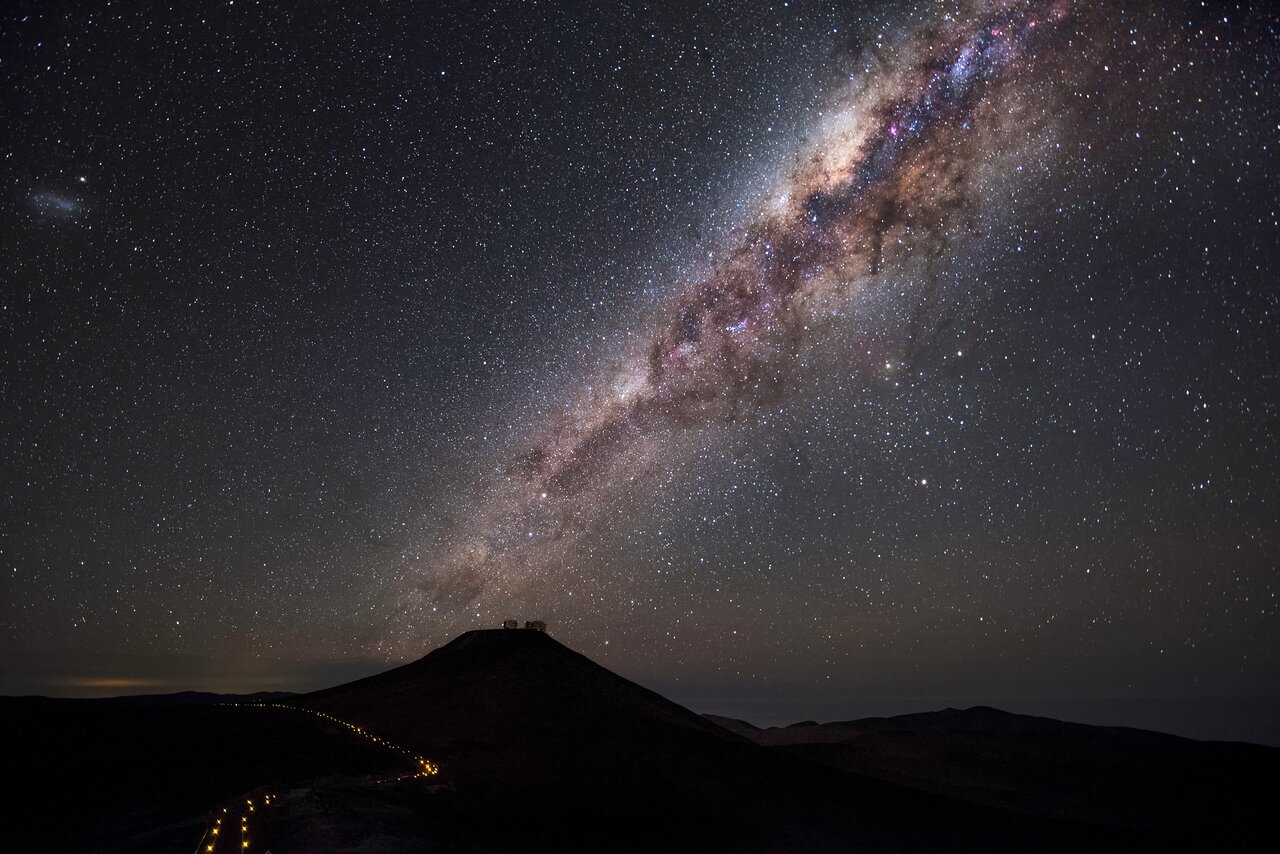
Our galaxy does not form new stars throughout its entire span, but only within a relatively compact inner disk—this has been confirmed for the first time by an international team of researchers, who determined the exact radius of star formation. According to their data, active star formation ceases as early as 40,000 light-years from the galactic center, even though the Milky Way extends at least twice that distance.
How was this discovered?
Researchers analyzed the ages of more than 100,000 bright giant stars in the Milky Way’s spiral disk using data from three instruments: the Chinese LAMOST (Large Sky Area Multi-Object Fiber Spectroscopic Telescope), the American APOGEE (Apache Point Observatory Galactic Evolution Experiment) project, part of the Sloan Digital Sky Survey (SDSS), and the European Space Agency’s (ESA) Gaia space observatory.
The team compared the spectroscopic data on the temperatures and ages of the stars with computer simulations of galaxy evolution to determine which physical mechanisms account for the observed pattern. Simulations have confirmed that it is stellar migration—the gradual movement of stars from the inner regions of the disk outward under the influence of gravitational disturbances—that determines the characteristic distribution of age groups and allows us to precisely define the boundary of star formation.
U-shaped profile
The pattern was clear: the farther away from the center of the Galaxy, the younger the stars—after all, the Milky Way, like most galaxies, evolves from the inside out. But at around 35,000–40,000 light-years, this trend suddenly reverses: the stars become older again.
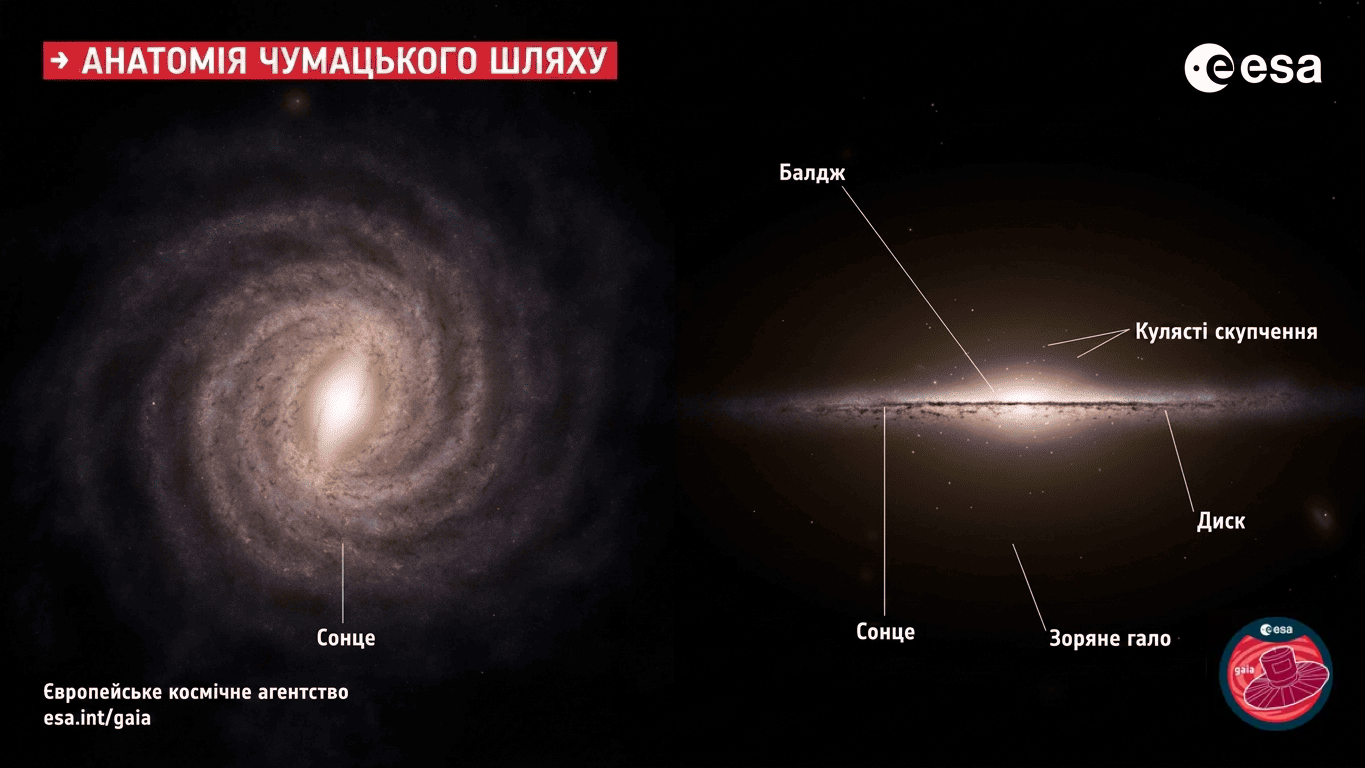
The image resembles the Latin letter U—the youngest objects are concentrated in the central region of the disk, while the oldest are found both in the core and at the periphery. Our Sun is located 26,000 light-years from the center—well within the active zone.
Why does the formation of stars stop?
Simulations have shown that there is enough cold gas in the inner disk to continuously fuel the formation of new stars. Beyond a distance of 40,000 light-years, the efficiency of this process drops sharply—and virtually no new stars are formed. Where, then, do these ancient objects on the outskirts come from? Researchers suggest that they migrated there from the inner regions under the influence of gravitational disturbances. However, the exact physical mechanisms that determine this boundary remain an open question.
The article was published in the journal Astronomy & Astrophysics. The authors expect that future sky surveys—in particular the 4MOST and WEAVE projects—will provide even more detailed data and help determine exactly which processes shape the star-forming boundary in our galaxy.
According to space.com

