

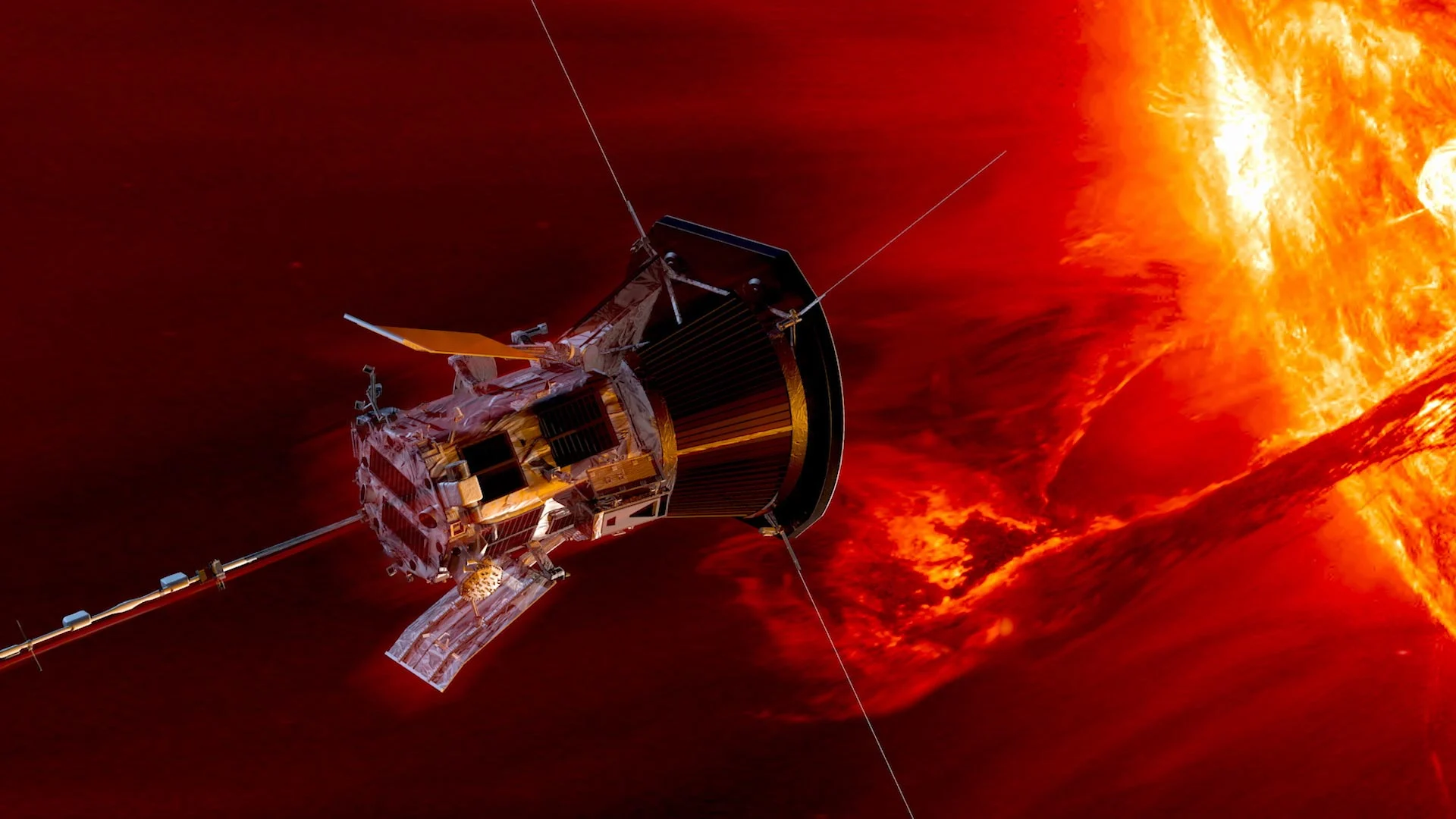
In December 2024, NASA’s Parker Solar Probe set a new record by flying just 6.1 million km from the surface of the Sun. From this incredible proximity, directly from the corona—the superheated outer atmosphere of our star—it transmitted unique images and data. This information helps scientists understand, as never before, the mechanisms that shape space weather, which affects the entire Solar System, including our Earth.
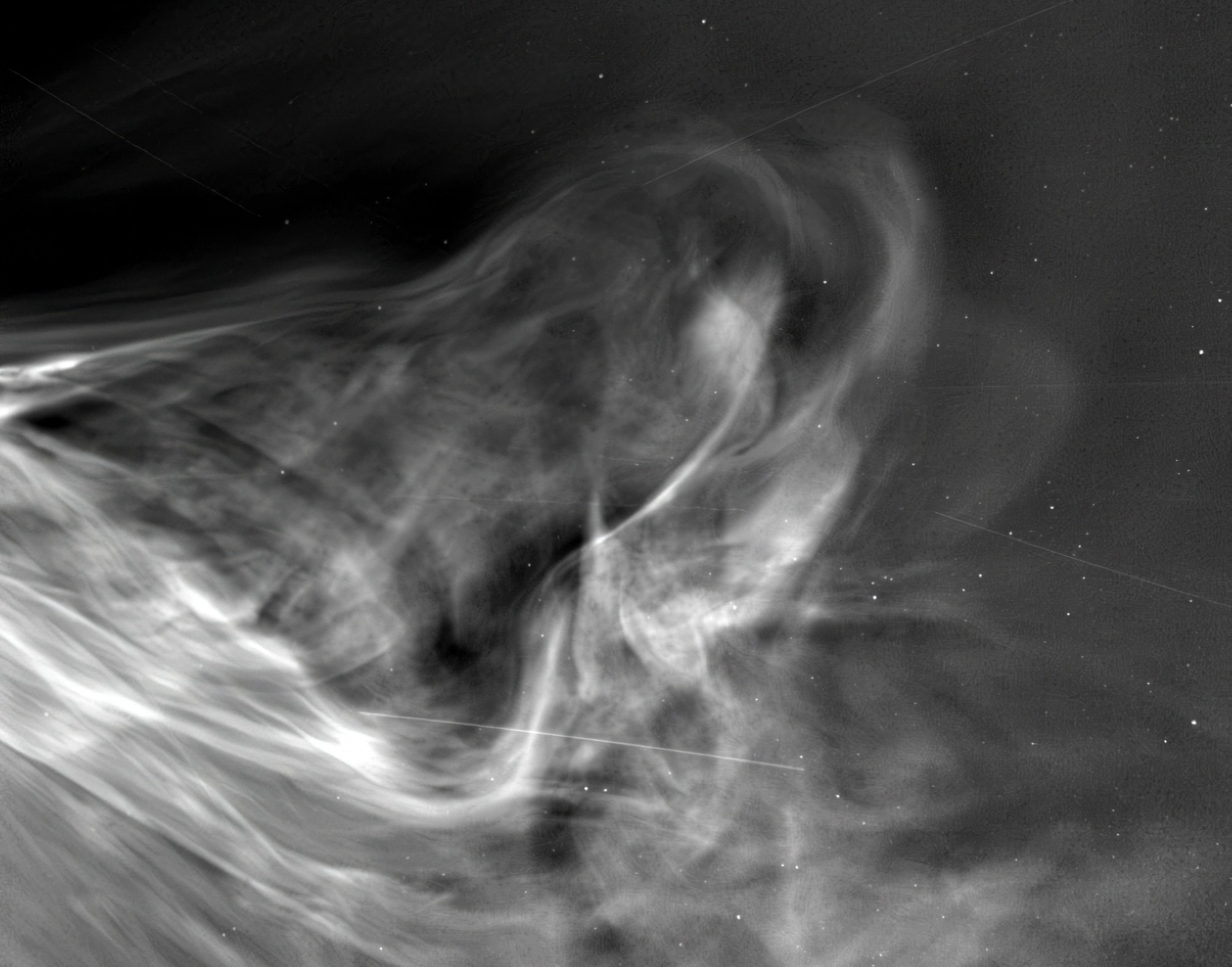
During its historic approach last year, the probe, protected by a special heat shield, operated under the most extreme conditions. Its Wide-Field Imager for Solar Probe, or WISPR, camera has taken the most detailed images to date of the corona and solar wind — a stream of charged particles constantly emitted by the Sun. This wind shapes the space environment, affecting planets and causing auroras, and sometimes causing disruptions to Earth’s satellites and power grids.
“The Parker Solar Probe has once again transported us into the dynamic atmosphere of the Sun. We can literally see the birthplace of space weather threats,” emphasized Nicky Fox of NASA.
Magnetic riddles
WISPR images provided an unprecedented view of key phenomena. They clearly showed the heliospheric current sheet — an important boundary where the Sun’s magnetic field abruptly changes direction. Even more important was the first high-detail observation of the collision of several coronal mass ejections (CMEs) — powerful clouds of plasma ejected by the Sun.
“In these images, we’re seeing the CMEs basically piling up on top of one another,” explains Angelos Vourlidas, a WISPR scientist. “This is critically important for understanding how they merge, which makes it much more difficult to predict their dangerous trajectory and impact.”
Unraveling a 50-year-old mystery
One of the main objectives of Parker Solar Probe is to study the mysterious “slow” solar wind, which moves at a speed of about 350 km/s, which is twice slower than the usual flow. It is twice as dense and more unpredictable. The interaction of these two types of wind can generate powerful solar storms.
The probe data confirm that there are two different types of slow wind, differing in magnetic field behavior: “Alfvénic” (with small magnetic loops) and “non-Alfvénic.” Scientists believe that their sources on the Sun are different: non-Alfvénic wind may originate from giant magnetic loops above active zones, while Alfvénic wind may originate from regions near coronal holes.
“Determining the origin of this wind, especially the slow one, is a major challenge. But thanks to the Parker Solar Probe, we are closer to solving the mystery than ever before,” said project scientist Nour Rawafi.
Next step
Further flybys of the Parker Solar Probe through the corona, the next of which is scheduled for September 15, 2025, should help to finally confirm hypotheses about the origin of the slow solar wind and continue monitoring the dynamics of the corona. Each such approach provides scientists with unique data that makes a decisive contribution to our ability to predict and mitigate the effects of solar activity on vulnerable technologies on Earth and space exploration.
Earlier, we reported on how Parker Solar Probe called home after setting a record.
According to NASA

