
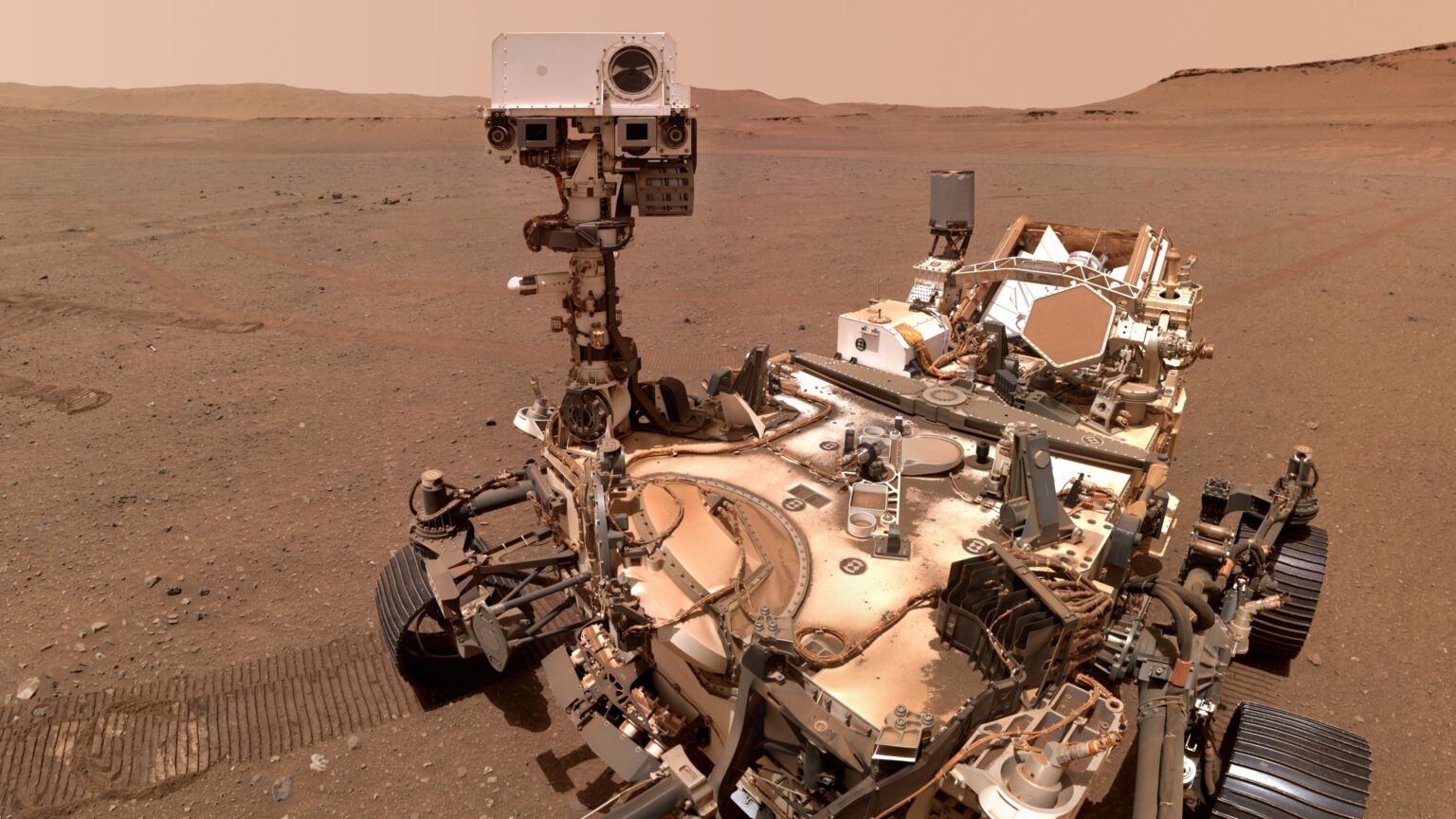
NASA’s Perseverance rover can now determine its location on the Red Planet independently, using its own “brain” and cameras. This saved it from having to “call” Earth every time to find out where it was. Engineers at the Jet Propulsion Laboratory (JPL) have essentially created a local navigation system for it that operates in real time.
Imagine you find yourself in the middle of a vast desert with no landmarks or maps, and you are only allowed one phone call per day to ask, “Where am I?” This is how JPL robotics expert Vandi Verma describes the many years of work done by rovers.
Blind navigation
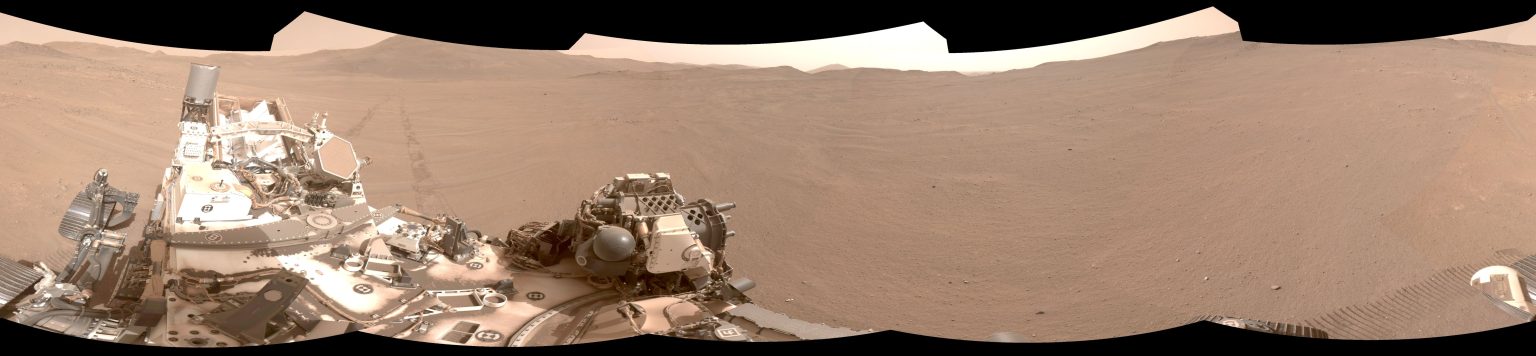
Until recently, Perseverance, which has been exploring Jezero Crater for five years, relied on a combination of data: it analyzed images from its own cameras, measured wheel slip in dust, and cross-referenced satellite photos sent from Earth. However, due to the enormous distance of approximately 225 million kilometers, the signal took too long to arrive, so it took an entire Martian day to correct the route. If the rover was unsure of its position, it would simply stop and wait for “permission” from Earth. Over time, navigation errors accumulated and could reach more than 35 meters.
Space Google Maps
To solve this problem, engineers led by Jeremy Nash and Vandy Verma developed the Mars Global Localization system. It’s a kind of “space Google Maps” for the Mars rover.
How does it work? Perseverance is now taking pictures of the surrounding area, and a built-in algorithm compares them with detailed maps obtained from orbital spacecraft such as the Mars Reconnaissance Orbiter in just two minutes. The system automatically finds common features in the landscape — rocks, craters, sand dunes — and determines the rover’s coordinates with an accuracy of 25 cm. Human intervention in this process is no longer necessary.
Breakthrough that has been decades in the making
Development of the technology began in 2023. Archival images from 264 rover stops were used to test the algorithm — the system never made a mistake. In early February 2024, the function was successfully applied in practice for the first time in real conditions on Mars.
“We have given the Mars rover a new ability. This has been an open problem in robotics for decades, and it is incredibly exciting to finally see it solved in space,” said Jeremy Nash.
This update came shortly after Perseverance learned to plan routes using generative artificial intelligence. The AI independently assesses the terrain for hazards — boulders, steep slopes — and plots a safe route.
The future of autonomous missions
Now that the rover knows its exact location online, it can move much faster and cover greater distances every day. As scientists note, it was uncertainty about coordinates, rather than the dangers of the landscape, that was the main limitation on its travels.
This technology opens up a new era in the exploration of the Solar System. According to Vandy Verma, this algorithm is universal: “It can be used by almost any other rover that moves quickly and far.” This means that future missions to Mars and other planets will be able to work more efficiently, spending their time on real scientific discoveries rather than waiting for instructions from Earth.
Earlier, we explained what GPS is and how it has changed the world.
According to NASA

