
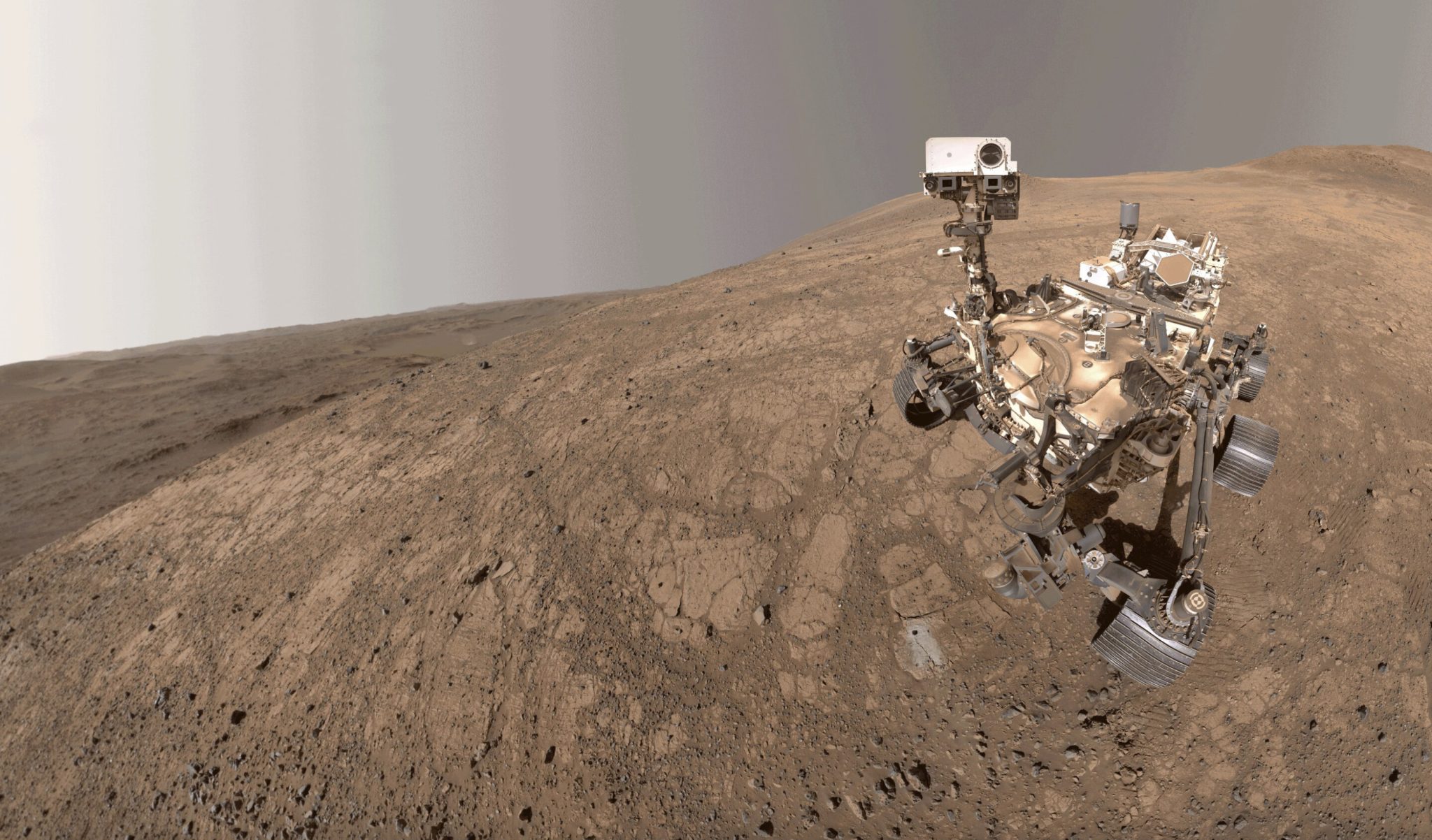
NASA used AI for the first time to plan the route for the Perseverance rover. The Mars rover completed two successful trips, demonstrating the capabilities of the new technology.
Mars is located at an average distance of about 225 million km from Earth. This creates a significant delay in communication, making it impossible to remotely control the rover in real time. Instead, over the past 28 years, during several missions, the rovers’ routes have been planned and executed by human drivers. They analyzed data on the terrain and conditions of the area to map out a route using waypoints, which are typically located no more than 100 meters apart, to avoid potential hazards. After that, they send the plans through NASA’s Deep Space Network to the rover, which then carries them out.
However, new technologies have provided new opportunities that make it possible to do without people. On December 8 and 10, the Perseverance rover traveled for the first time along a route constructed by AI.
The initiative was implemented under the leadership of the Rover Control Center in collaboration with Anthropic, which provided the Claude artificial intelligence model. It is a type of generative AI called “vision-language” models.
The AI analyzed orbital images obtained using the HiRISE camera installed on the MRO spacecraft, as well as digital terrain models. After identifying critical terrain features — bedrock, outcrops, hazardous rock fields, sand ripples, etc. — it generated a continuous route with control points.
To ensure that the AI instructions were fully compatible with the rover’s flight software, the engineering team also processed the movement commands through a “digital twin” (a virtual copy of the rover), checking more than 500,000 telemetry variables before sending the commands to Mars. On December 8, with the waypoints generated by AI in mind, Perseverance traveled 210 meters. Two days later, it traveled another 246 meters.
“This demonstration shows how far our capabilities have advanced and expands our ability to explore other worlds,” commented NASA Administrator Jared Isaacman on the results of the demonstration. “Such autonomous technologies can help missions operate more efficiently, respond to challenging terrain, and increase scientific returns as they travel farther from Earth. This is a prime example of how teams are carefully and responsibly applying new technologies in real-world operations.”
Earlier, we reported on how AI found 7,000 candidate exoplanets.
According to NASA

