

A team of Chinese scientists has announced the discovery of a new type of cave on Mars, created by water flows. They could have been home to life.
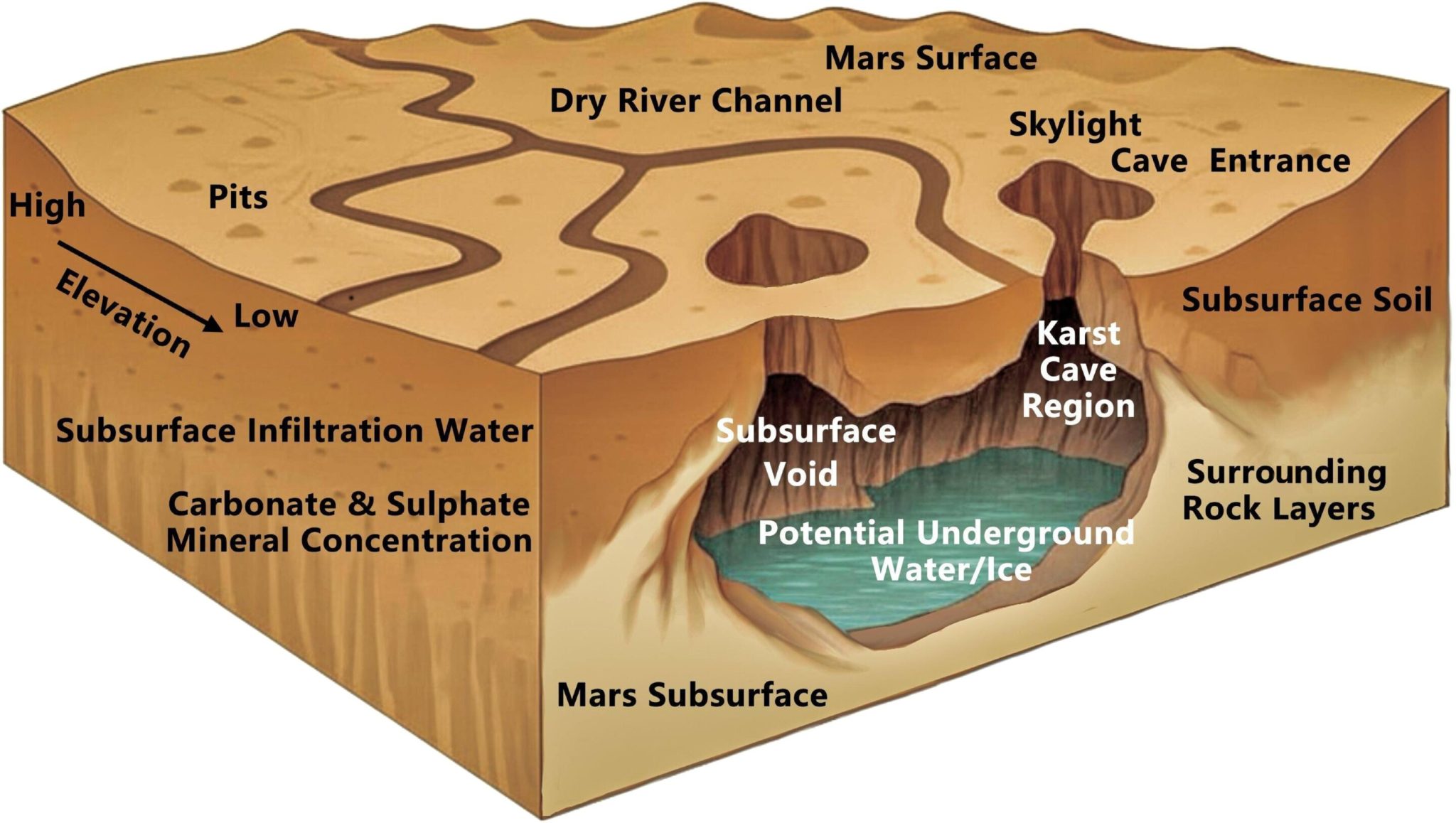
If there is or ever was life on Mars, it most likely existed in caves, protected from severe dust storms, extreme temperature fluctuations, and high levels of radiation on the planet’s surface. However, until recently, most of the Martian caves found were lava tubes (cavities in solidified lava flows), which could hardly claim to be an oasis of life.
However, it appears that there are other types of caves on Mars. In an article published in The Astrophysical Journal Letters, a team of Chinese scientists presented the first evidence of karstic caves on the Red Planet.
On Earth, karstic caves usually form when water dissolves rocks such as limestone or gypsum, creating and enlarging underground cracks and fissures that become large enough to become caves. Scientists believe that similar processes occurred on ancient Mars, where water dissolved carbonate- and sulfate-rich rocks.
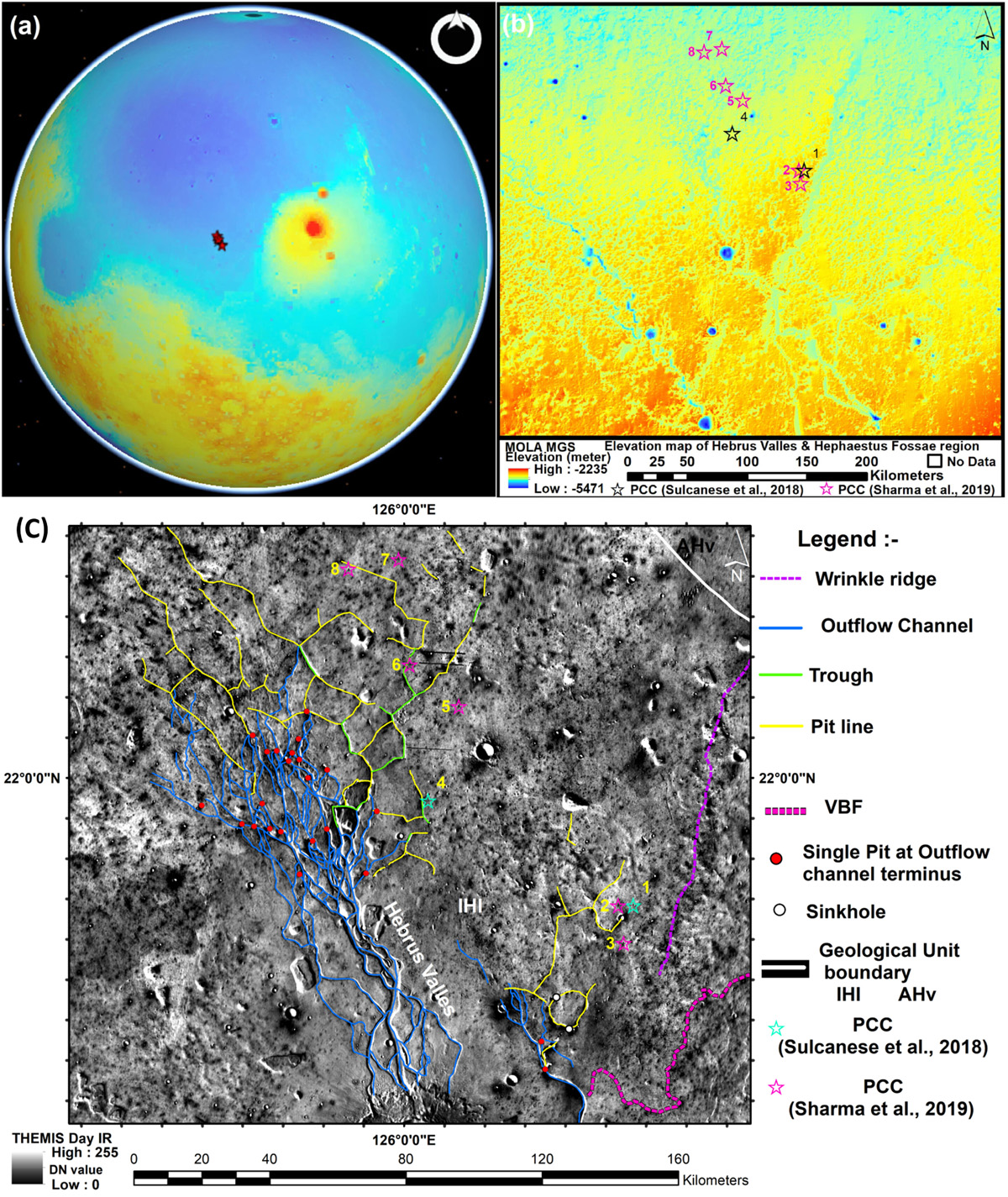
The caves we are talking about are located in a region called Hebrus Valles. It is a system of ancient valleys and drainage channels in the Northern Hemisphere of Mars. After studying images from spacecraft, scientists discovered eight pits. These are deep and mostly circular depressions, rather than impact craters, which usually have raised edges and debris scattered around them.
Data collected by the Mars Global Surveyor’s thermal emission spectrometer indicate that the rocks around the pits are rich in carbonates and sulfates. These are types of rocks that water can easily dissolve. The team also used high-resolution images to create three-dimensional structural models, which showed that the shapes of the pits correspond to collapse caused by water, rather than volcanic or tectonic activity.
According to the authors of the discovery, eight potential karstic caves should be priority targets for future Mars missions. Even if there is no life there, they could serve as natural shelters for astronauts and a place to set up their base.
We previously reported on the existence of a habitable ocean on Enceladus.
According to Phys.org

