

Modern galaxies, including our Milky Way, are complex cosmic metropolises consisting of stars, gas, and supermassive black holes at their centers. All this baryonic matter is immersed in an invisible halo of dark matter. Unraveling how these components formed after the Big Bang is the main goal of modern cosmology. One of the most daring theories suggests that the key to this mystery may lie in primordial black holes (PBHs) — mysterious objects born in the first moments of the Universe’s existence. This hypothesis proposes that they not only constitute dark matter, but also acted as a “catalyst” that accelerated the birth of the first stars.
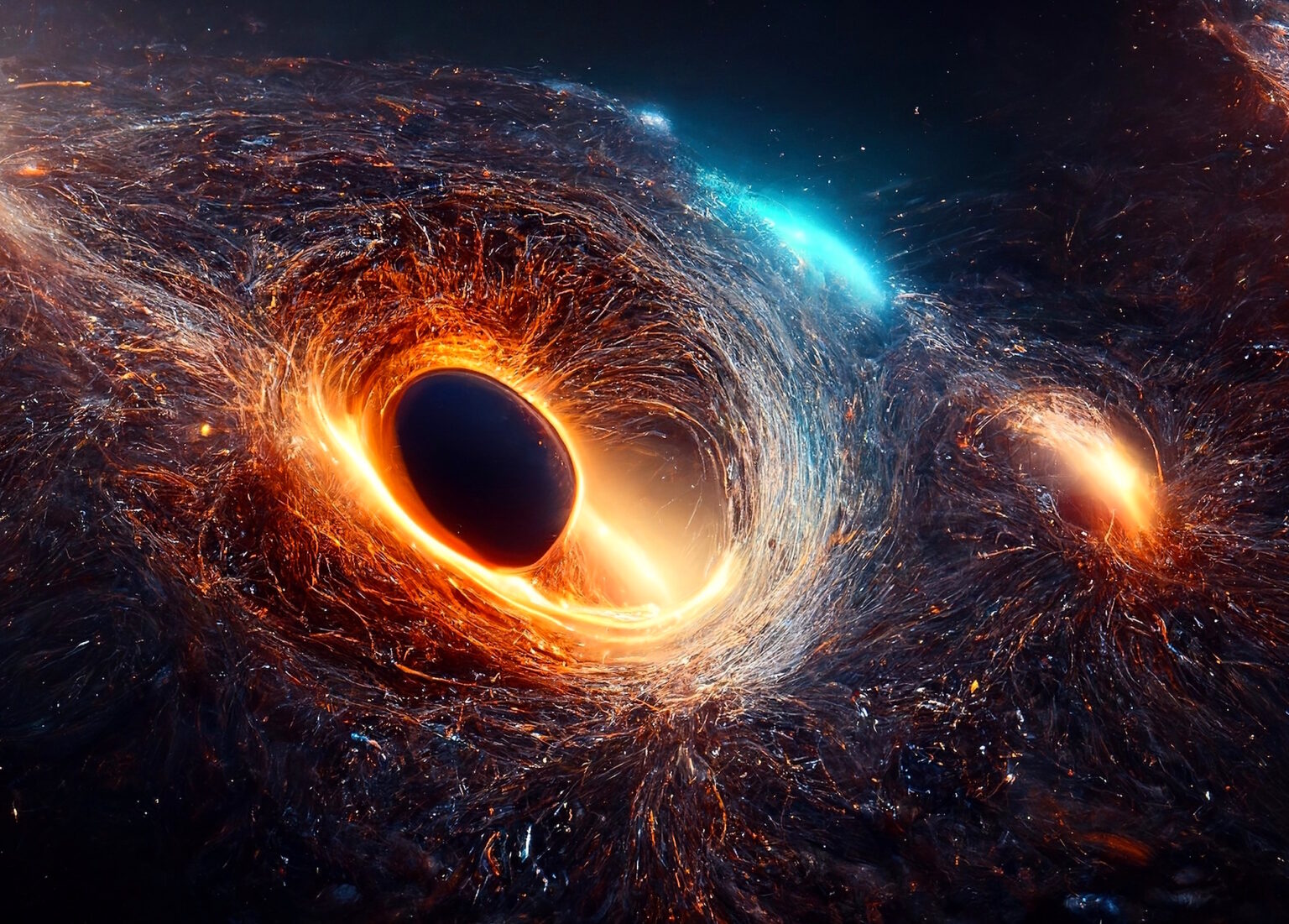
Architects of the early Universe
Scientists attempted to find the answer to the question of how exactly primordial black holes could have influenced the formation of the first stars — the so-called Population III stars that illuminated the Universe during the Epoch of Reionization — using complex computer models. They created a large-scale cosmological simulation that tracked the evolution of dark matter and gas until the gas cooled and contracted to form the first stars. The researchers then “zoomed in” on selected regions, adding primordial black holes of different masses and numbers to the model.
In the simulation, primordial black holes had two main ways of affecting their environment: gravitational pull and radiation feedback from absorbing matter. These two mechanisms played opposite roles: gravity compressed the gas, accelerating its collapse into a star, while radiation from accretion heated the gas, preventing it from condensing.
Battle of Gravity and Radiation
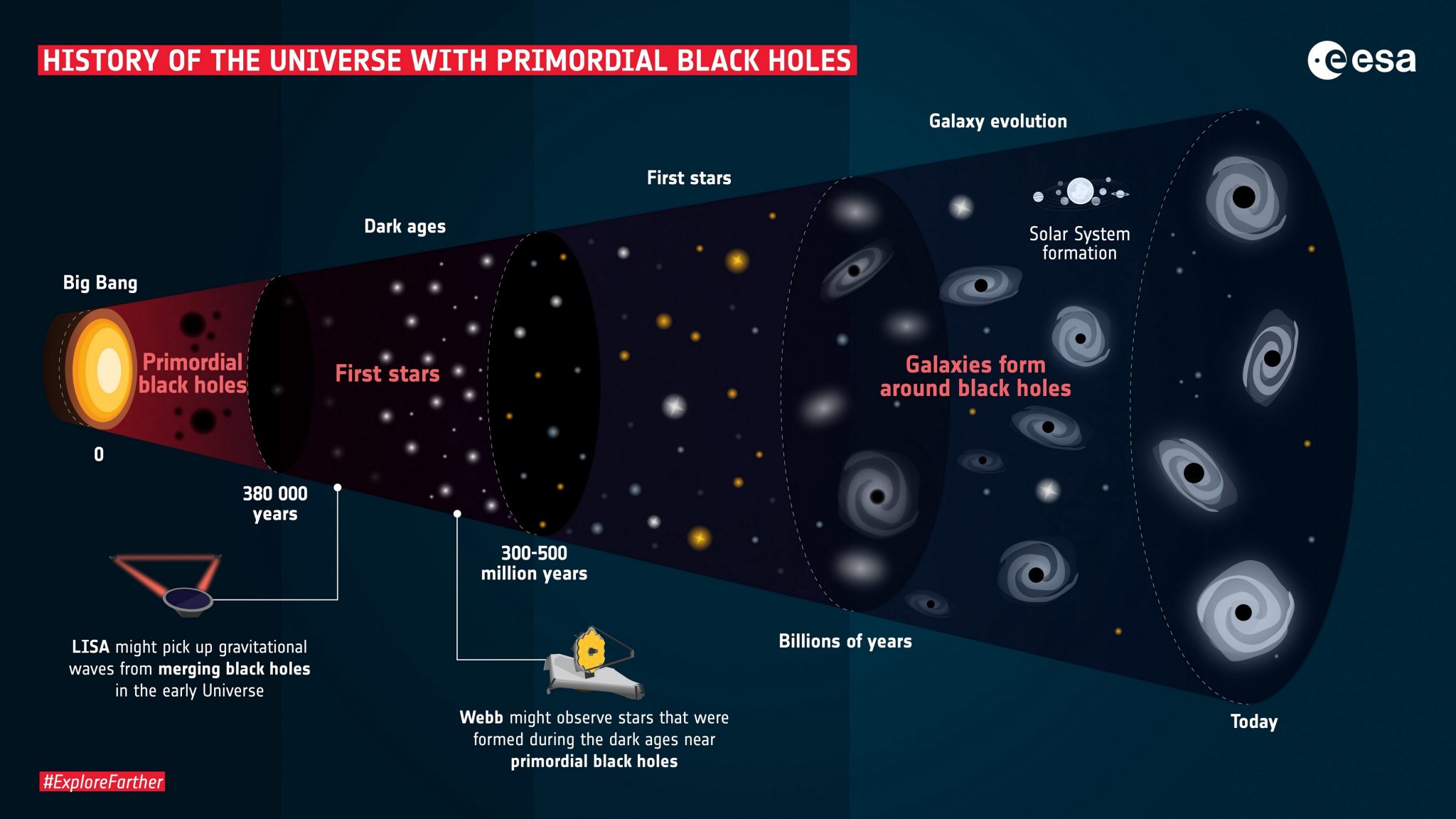
Analysis of the simulations revealed a clear relationship between the mass of black holes and the time of the appearance of the first stars. More massive primordial black holes, weighing up to 10,000 solar masses, led to a significantly earlier and faster increase in hydrogen density — an indicator of active star formation. This effect was observed regardless of their number, pointing to the dominance of gravitational effects.
However, for smaller protostars, which had a mass of about 10 solar masses, the picture changed. If their number was high, they could still accelerate the formation of stars. But as their prevalence decreased, radiation heating began to prevail. It effectively “dried out” the gas clouds, delaying or even suppressing the birth of Population III stars.
New restrictions for old mysteries
This work proposes a new tool for searching for primordial black holes. By comparing the model’s predicted star formation times with data from future observations of the early Universe, scientists will be able to place strict constraints on the mass and prevalence of PBHs. These constraints will be a valuable addition to data from gravitational wave detectors and measurements of cosmic microwave background radiation.
Thus, the study of the first stars in the Universe is directly linked to unraveling the nature of dark matter. Perhaps it was precisely the primordial black holes, these invisible sowers of darkness, that gave rise to the first light.
We previously reported on how primordial black holes may still be components of dark matter.
According to astrobites.org

