

China has demonstrated a “telepathic radar” that allows military units to maintain stable communications and conduct reconnaissance while remaining completely silent on the radio. On July 8, 2025, a team from the Chinese Academy of Sciences published a description of a new passive communication system in the Journal of Radars, the innovation which has already been unofficially dubbed “radio telepathy.” Its secret lies in its “smart surface” made up of hundreds of programmable metamaterial tiles. When such tiles are illuminated by a satellite with synthetic aperture radar, they instantly switch between phases 0° and 180°, encode bit sequences, and reflect the signal back into orbit. Due to the absence of their own radiation, tanks, ships, or aircraft equipped with this module remain virtually invisible to enemy radars and electronic intelligence systems.

Researchers claim that laboratory tests have confirmed the transmission of large amounts of data without a noticeable energy “trace.” If successful in field trials, the technology could disrupt the traditional “cat-and-mouse game” between communications and electronic warfare systems, dramatically reducing the risk of interception, jamming, or targeted attacks.
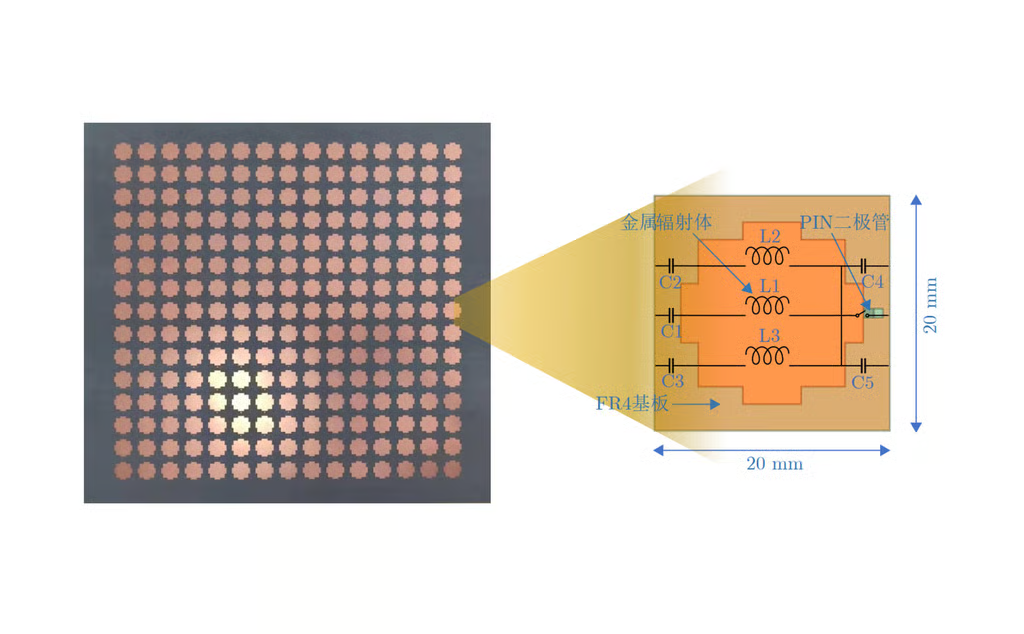
Passive encoding of reflected radar signals could be an advancement, and not just for the military. For small interplanetary spacecraft, this technique opens the door to super low-power communications without huge antennas. Astronomical observatories operating in the radio range will benefit from the reduction in radio noise: instead of powerful transmitters, probes will only generate weak, controlled reflected echo signals that are almost imperceptible to telescopes. In addition, the network of radar satellites that return these echo signals can also serve as a high-precision radiometric tracking system for spacecraft, improving navigation accuracy during deep space missions.
If you want to truly appreciate the potential of “telepathic” radio, it is worth taking a broader view — of the entire satellite infrastructure that envelops the Earth like a web and provides ideal “mirrors” for new passive communication technologies. Find out how this global network is formed, why we are increasingly dependent on orbit, and what will happen when it becomes too crowded: go to the article “The satellite web above the Earth: how does it function, and why do we rely on orbit?”
According to scmp, interestingengineering

