

Scientists have studied the beds of ancient rivers in an area known as Noachis Terra. Based on their shape and relative position, they determined that it was a system that had been stable for a long time. Thus, the climate of the red planet at that time was indeed wetter compared to now.
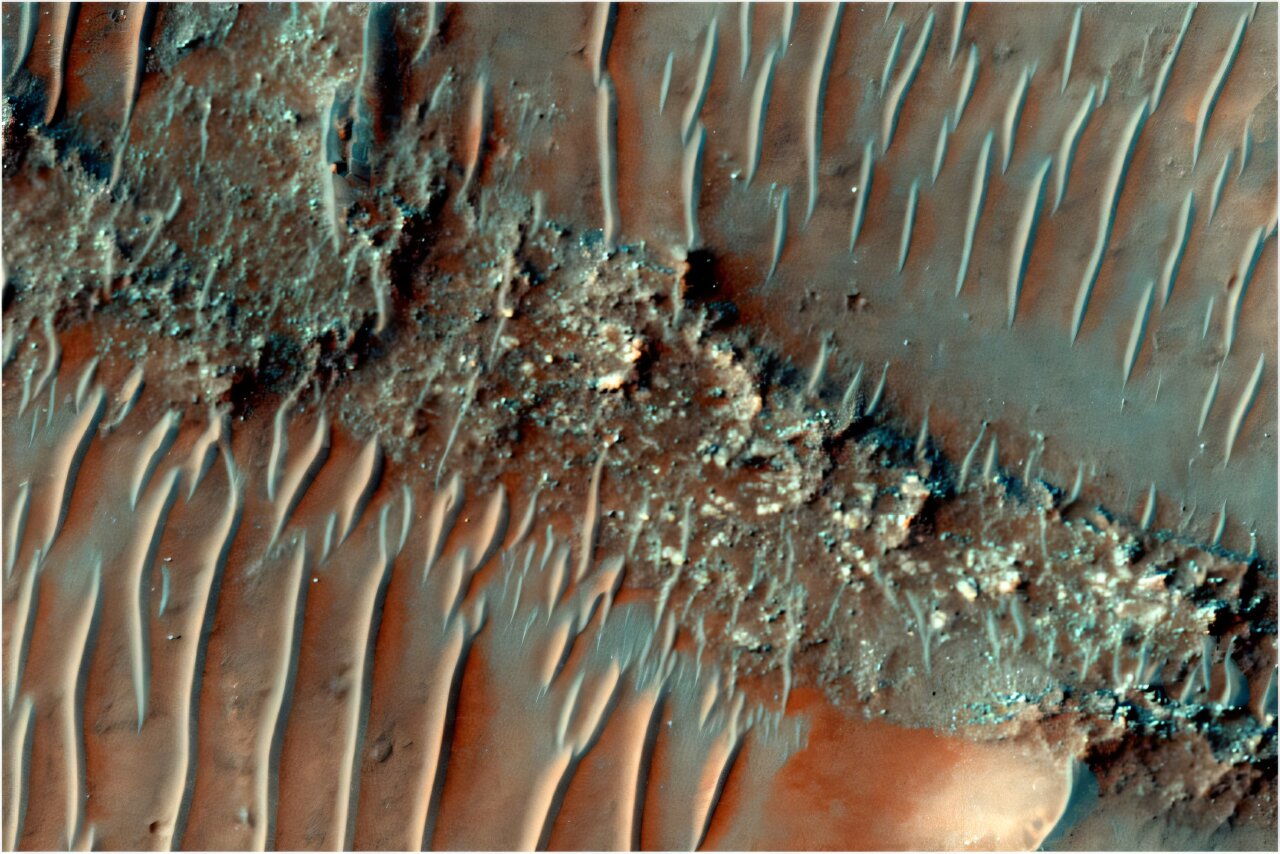
Riverbeds on Mars
Once upon a time, Mars’ climate was significantly warmer and wetter than today. But were there conditions at that time for rivers to exist permanently, or were these short-lived thaws during which streams flowed through the valleys, only for everything to freeze again afterwards?
Only the river valleys remain from those times, which are clearly visible to spacecraft orbiting Mars. And that was enough for astronomers to figure out what they were. They explored a region called Noachis Terra, which has been relatively unexplored until now.
The surface here is approximately 3.7 billion years old. In other words, it represents a transitional period from the Noian to the Hesperian epoch, when the planet’s climate began to change, but even after that it remained quite humid.
River valleys
Of course, there is not a drop of water left in the river valleys, but their shape has been preserved. These datasets enabled the team to map the location, length, and morphology of ridge systems across a large area.
Many of the traces of flows are isolated in nature. However, many of them are grouped into entire systems, and their overall shape suggests that water flowed there continuously. These are not narrow ditches cut into the soil by temporary erosion, but rather the result of long-term erosion.
The fact that the ridges form branched interconnected systems indicates that the water conditions should have been relatively long-lasting, which means that Noachis Terra experienced warm and humid conditions during a geologically relevant period.
These results contradict existing theories that Mars was generally cold and dry, with a few valleys formed by meltwater from the ice sheet during sporadic, brief periods of warming.
According to phys.org

