

Over the course of decades of observation, humanity has discovered approximately 6,300 exoplanets. The Nancy Grace Roman Space Telescope could surpass that figure in a single survey and discover around 100,000 new worlds. Most of them are located in regions where no mission has ever searched before.
Another corner of the galaxy
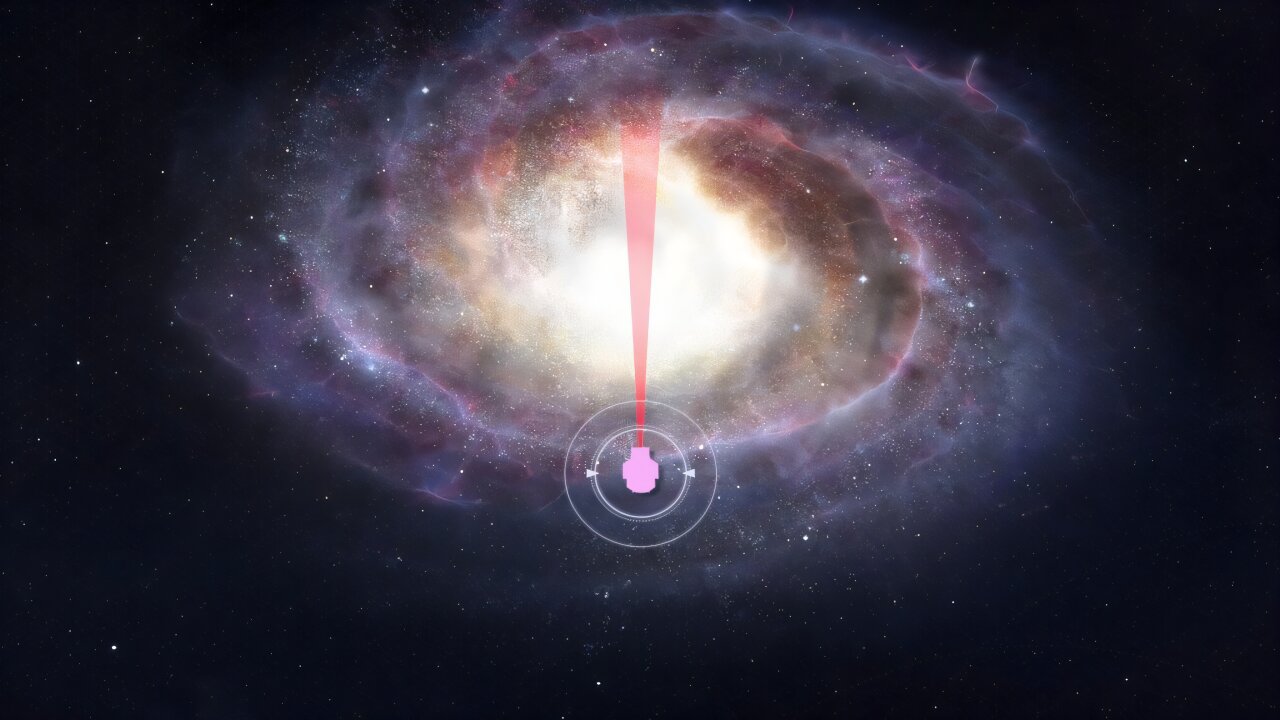
Almost all known exoplanets are located within a few thousand light-years of Earth. The new telescope will peer much further into space. Its primary survey will cover the galactic bulge, the central region of the Milky Way where stars are more densely packed than anywhere else, and will extend all the way to the opposite edge of the galaxy, which is hidden from us by its center.
Conditions for planet formation can vary dramatically in this region. Stars in the bulge are older than those in the galactic disk and have a slightly different chemical composition, with higher levels of silicon, oxygen, and magnesium. Planets form from the same material as their parent stars, so their chemical composition directly influences the types of worlds that form around them.
Two search methods
The telescope will use two different approaches. The transit method detects brief dimming of a star when a planet passes in front of its disk. This method is best for detecting large, super-hot planets, because they block more starlight and do so more frequently.
Microlensing works differently. If another star and its planets pass between the observer and a distant star, their gravity temporarily amplifies the brightness of the background source. This method allows us to detect stars with large orbits, such as those in the Solar System, as well as objects the size of Earth or even Mars. Such bodies are virtually inaccessible to other observational methods.
Atmospheres on a large scale
In addition to cataloging new planets, the telescope will help study the atmospheres of several thousand of them. To do this, Roman will use the infrared spectrum, which allows it to detect thermal radiation from distant worlds.
The James Webb Space Telescope is capable of analyzing the chemical composition of individual planetary atmospheres in detail, while Roman will measure temperature patterns and climatic behavior across thousands of objects simultaneously. This will provide a statistical picture that James Webb can then refine for the most interesting cases.
Infrared Vision
The telescope’s infrared capabilities will make it possible to detect “hot Jupiters.” These are Jupiter-sized planets that orbit their stars in just a few days and are hot enough to emit a significant amount of infrared light on their own.
Planetary systems containing such objects exhibit two dimming events: when the planet passes in front of the star and when it moves behind it. It is the second drop in brightness that reveals information about the planet’s temperature, the temperature difference between its day and night sides, and its atmospheric circulation.
The telescope is set to launch into space as early as September 2026, ahead of the original schedule. Over the course of its five-year mission, it will observe billions of objects and collect more data than any previous NASA mission.
According to phys.org

