

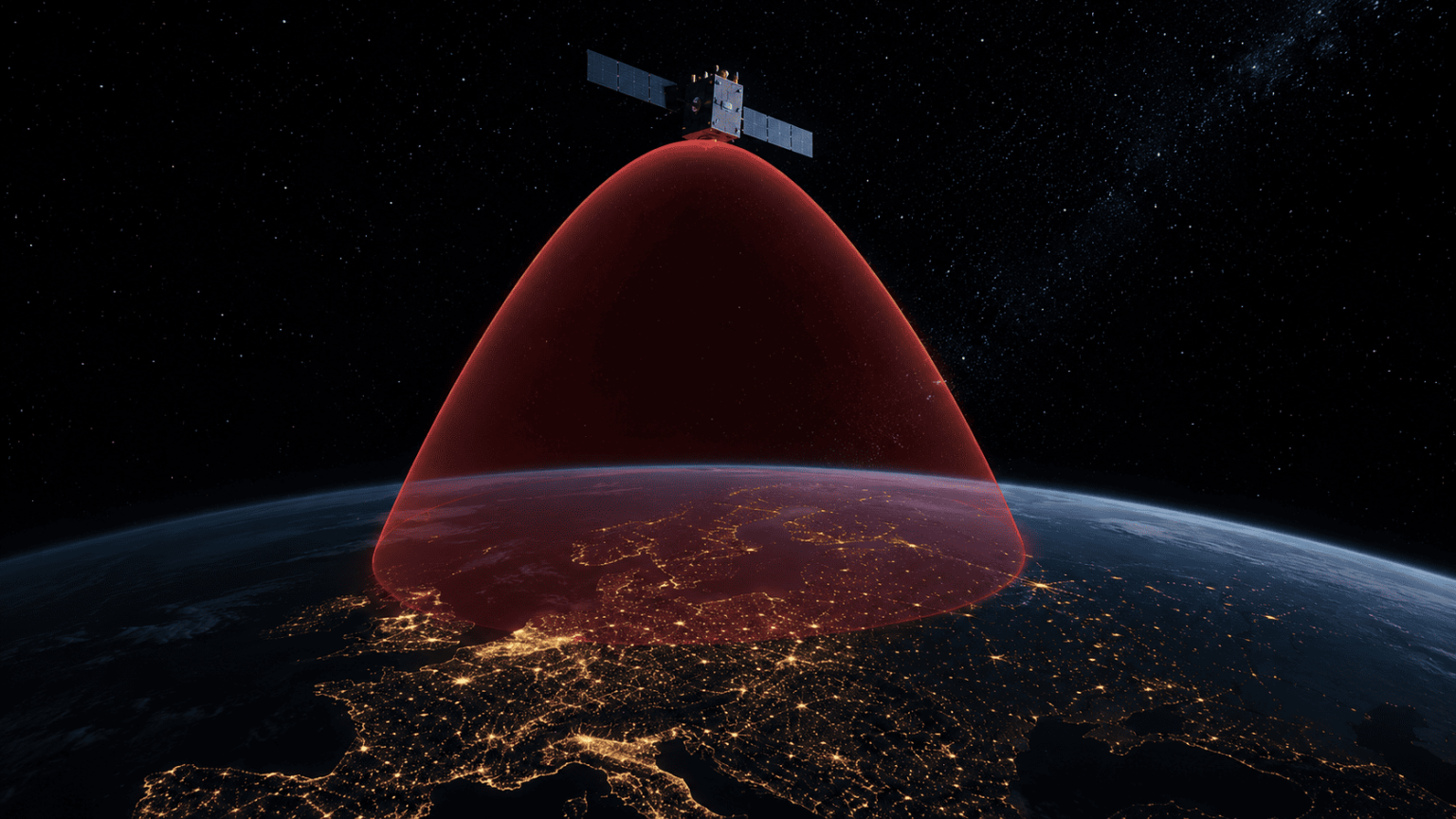
Russia’s “Molniya” early-warning satellites in orbit have been systematically causing severe GPS signal interference over Europe since 2019. Researchers have identified a specific satellite for the first time and confirmed that these disruptions originate in space.
What the researchers found
Researchers from the University of Texas at Austin and Stanford University analyzed public data from the International GNSS Service (IGS) network of ground stations. They identified a pattern: from 2019 through April 2026, there were 75 days when receivers across Europe, Greenland, and Canada simultaneously recorded a sharp drop in GPS signal strength.
Each event lasted less than ten seconds. At the same time, the coverage was so extensive—from Spain and Poland to Greenland and Canada—that no source located on the ground or in an aircraft could physically have been the cause. Geometric analysis showed that the source of the interference was at an altitude of at least 1,200 km, which is significantly higher than the orbit of the International Space Station.
How the satellite was identified
Initial analysis narrowed the list of suspects down to 14 satellites in high orbits, but the lack of raw signal data prevented further progress. In September 2025, the researchers presented their preliminary findings at a conference of the American Institute of Navigation in Baltimore. Following this, the scientific community joined the search.
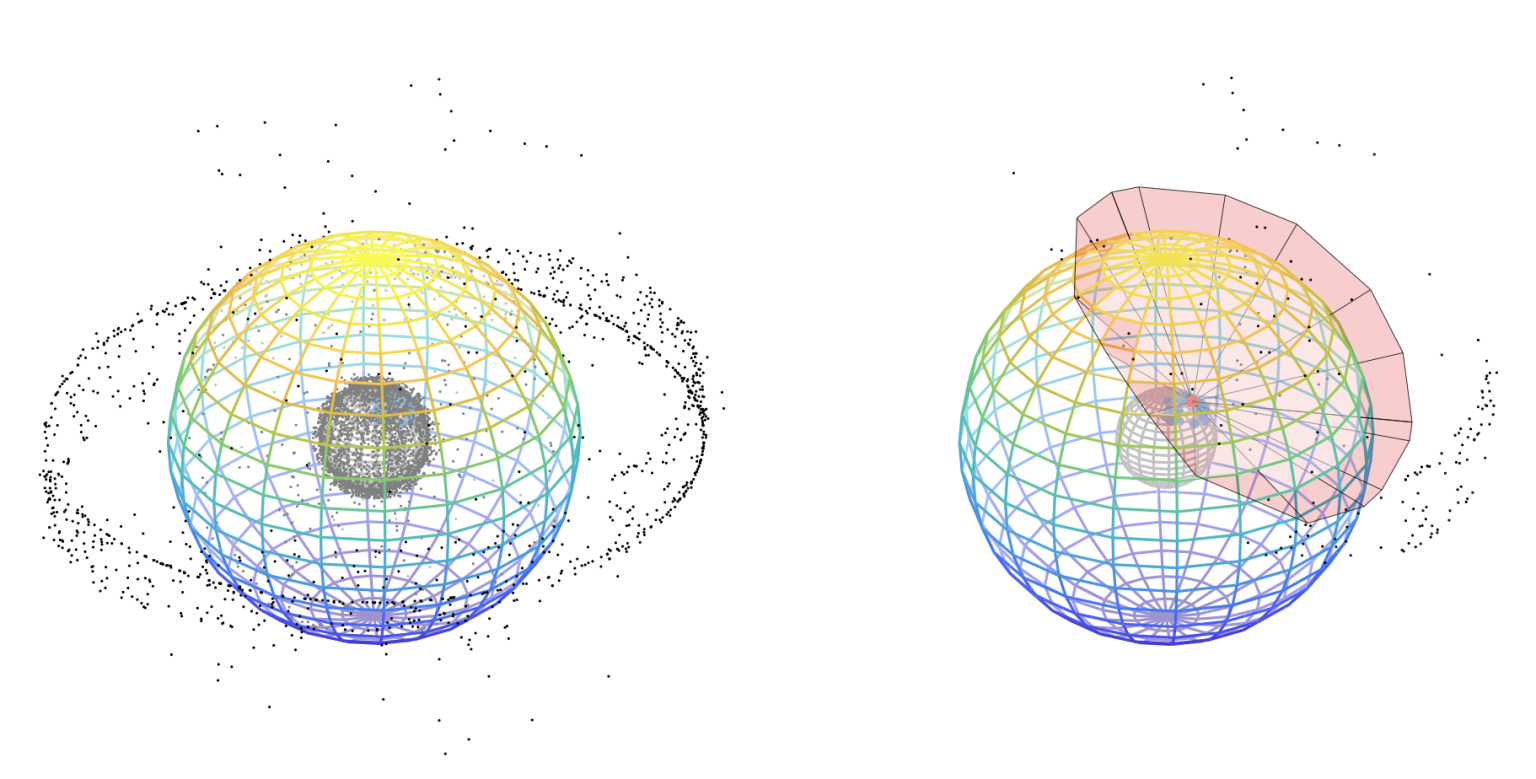
In February 2026, stations in the Netherlands and Norway detected an unprocessed radio signal during a routine event. By analyzing the time difference in the signal’s arrival at the two stations, researchers were able to pinpoint the source’s likely location within a margin of error of just 5 meters. Of all the satellites, only one had an orbit that matched.
Cosmos 2546 and the Molniya system
The identified satellite—Cosmos 2546 (NORAD ID 45608)—was launched in May 2020. It is part of a six-satellite constellation of Russia’s Unified Space System (USS), designed to provide early warning of ballistic missile launches.
The EKS satellites follow a so-called “Molniya” orbit, that is, a highly elongated elliptical trajectory that takes them to an altitude of about 40,000 km above the Northern Hemisphere. This allows several satellites to take turns covering high latitudes for extended periods and, together, to cover vast areas of the globe, including the territory of Ukraine. Analysis confirmed that during each of the recorded events, at least one EKS satellite was within line of sight over the affected region.
Since Cosmos 2546 was not launched until 2020, it could not have been the source of the events in 2019. The researchers concluded that the EKS group as a whole was responsible for all 75 documented cases. The interference fell within a narrow 5 MHz frequency band centered at 1577.5 MHz—precisely where GPS and other navigation systems operate. The signal was hundreds of times stronger than a typical GPS signal.
The raw data also revealed a distinct spike at 1558.5 MHz, the frequency used by the Chinese BeiDou navigation system. It is noteworthy that the interference affected the navigation systems of the United States, China, and the European Union, but did not affect the Russian GLONASS system.
A preprint of the study was published in June 2026 on the arXiv platform and submitted to the peer-reviewed journal NAVIGATION of the Institute of Navigation. The findings have not yet undergone formal peer review, but independent European teams have confirmed certain aspects of the results.
Versions and comments
In a video by the science-popularization channel Veritasium, lead researcher Todd Humphreys offered a theory about the nature of the interference. According to him, the signal is intentionally offset from the GPS frequency. This could indicate that the system is being tested without fully revealing its capabilities. “If a hot conflict arises, they will tune the transmitter directly to the GPS band,” he said.
Todd Humphreys also noted that the group was technically capable of jamming navigation signals over a much wider area than had been observed previously, including over U.S. territory. “I tend to believe that this is routine testing of capabilities that, if deployed in combat, would cause enormous damage,” he added.
Richard Bowden of GMV, whose team independently tracked signals to Russia’s early warning system satellites, offered an alternative explanation. According to him, the short pulses could be service messages between satellites and ground stations, rather than tests of the signal jamming system.
Bowden also noted that intentional jamming signals typically resemble random noise, whereas the recorded signal has a distinct structure. The European Union has announced an investigation, the details of which are classified.
Bowden also noted that deliberate jamming signals typically resemble random noise, whereas the recorded signal has a distinct structure. The European Union has announced an investigation, the details of which are classified.
Pavlo Podvig, director of the Russian Nuclear Forces Project, which monitors Russia’s nuclear forces and weapons, noted that he would be very surprised if Russia were deliberately using these satellites for jamming, since the EKS is the country’s only known early warning system.
According to nytimes.com, arxiv.org, youtube.com/Veritasium

