

The Atacama Desert is one of the driest places on Earth. This is because it is located between the Andes in the east and the cool Peru-Chile Current in the west. The mountain range creates a rain shadow, and the current cools the air so much that it limits evaporation and cloud formation.
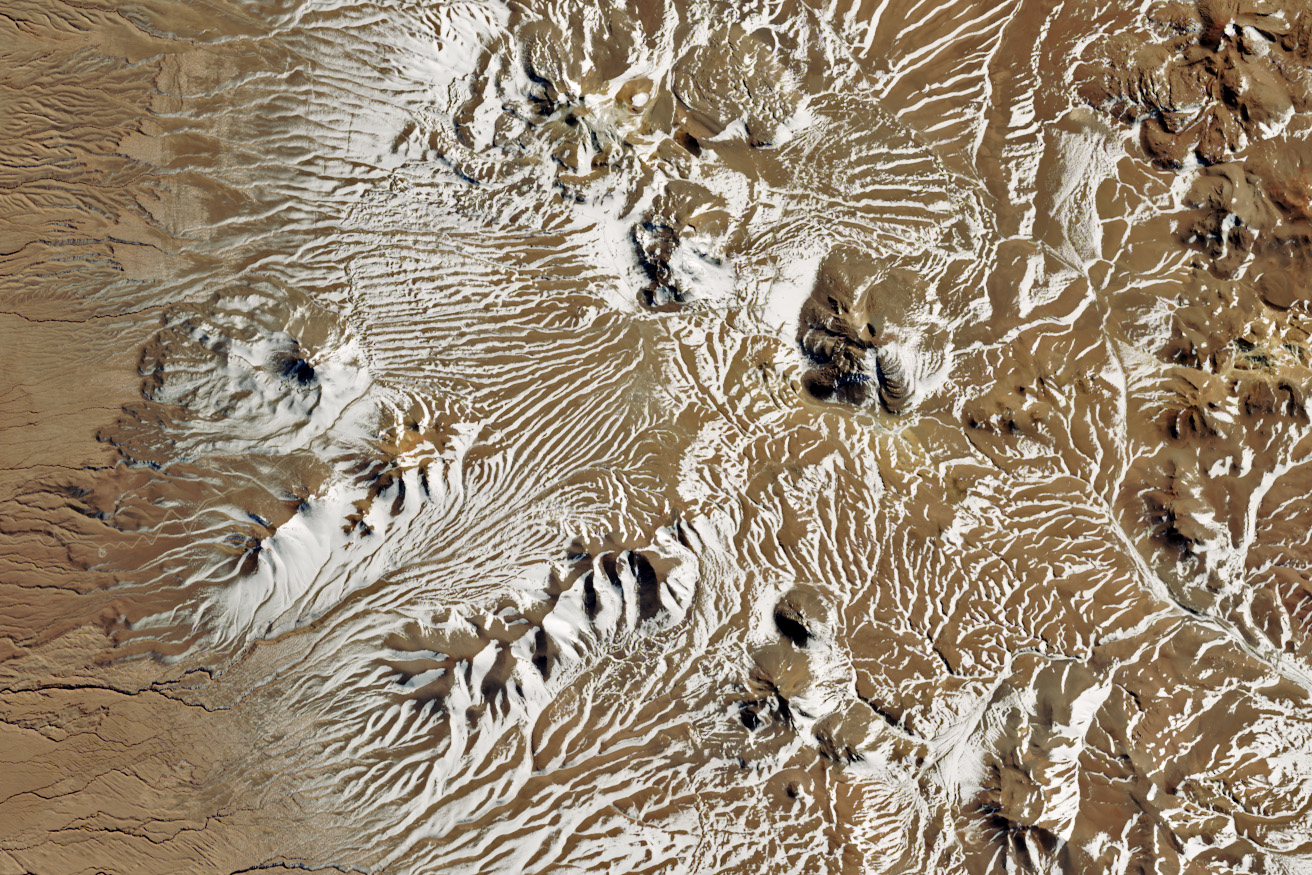
Nevertheless, although very rarely, cyclones sometimes manage to break through this barrier and bring rain or snow to the Atacama. This is exactly what happened on June 25, 2025, when a rare snowstorm covered a significant part of the desert with a white blanket.
Among the places where snow fell was the Chajnantor Plateau in northern Chile. Located at an altitude of over 5,000 meters above sea level, it is characterized by exceptionally clear and dry skies, which has helped transform it into a center for astronomical research. The Chajnantor Plateau is home to the ALMA antenna array. Due to the first snowfall in more than a decade, it even had to temporarily suspend its operations.
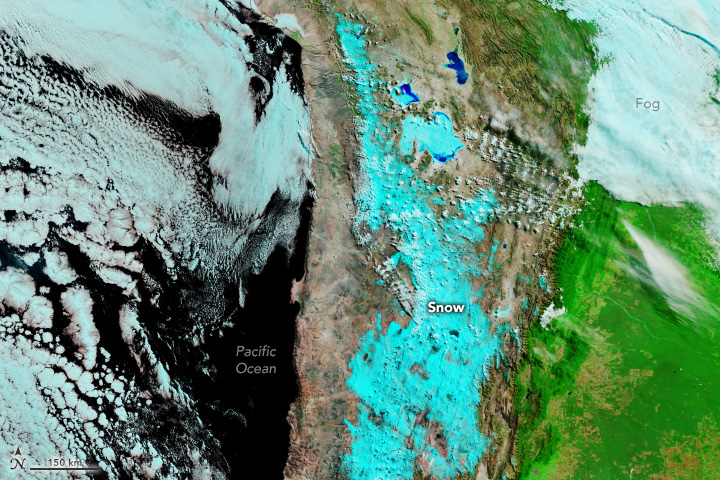
The day after the snowfall, NASA’s Terra satellite captured an image of its aftermath using the MODIS spectroradiometer. The colors are artificial to help distinguish between areas of snow and ice (blue) and clouds (white). On July 10, the Landsat 9 satellite photographed the remaining snow on the plateau in natural colors, and on July 16, the Terra satellite took another photo of it.
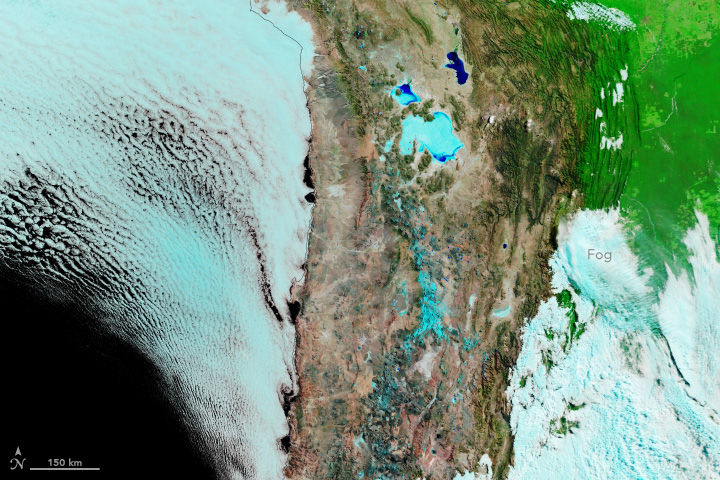
As the images show, snow does not usually remain on the ground for long, even in this high-altitude region. This is partly because this area has one of the highest levels of solar radiation on Earth. A dry environment promotes snow melting by accelerating sublimation, i.e., the conversion of snow directly into gas. Clean air, high altitude above sea level, the presence of certain types of clouds, and location, all contribute to unusually high solar radiation. As a result, by July 16, snow remained on the Chajnantor Plateau only in low-lying areas that remained in the shade for most of the day.
According to Earthobservatory

