
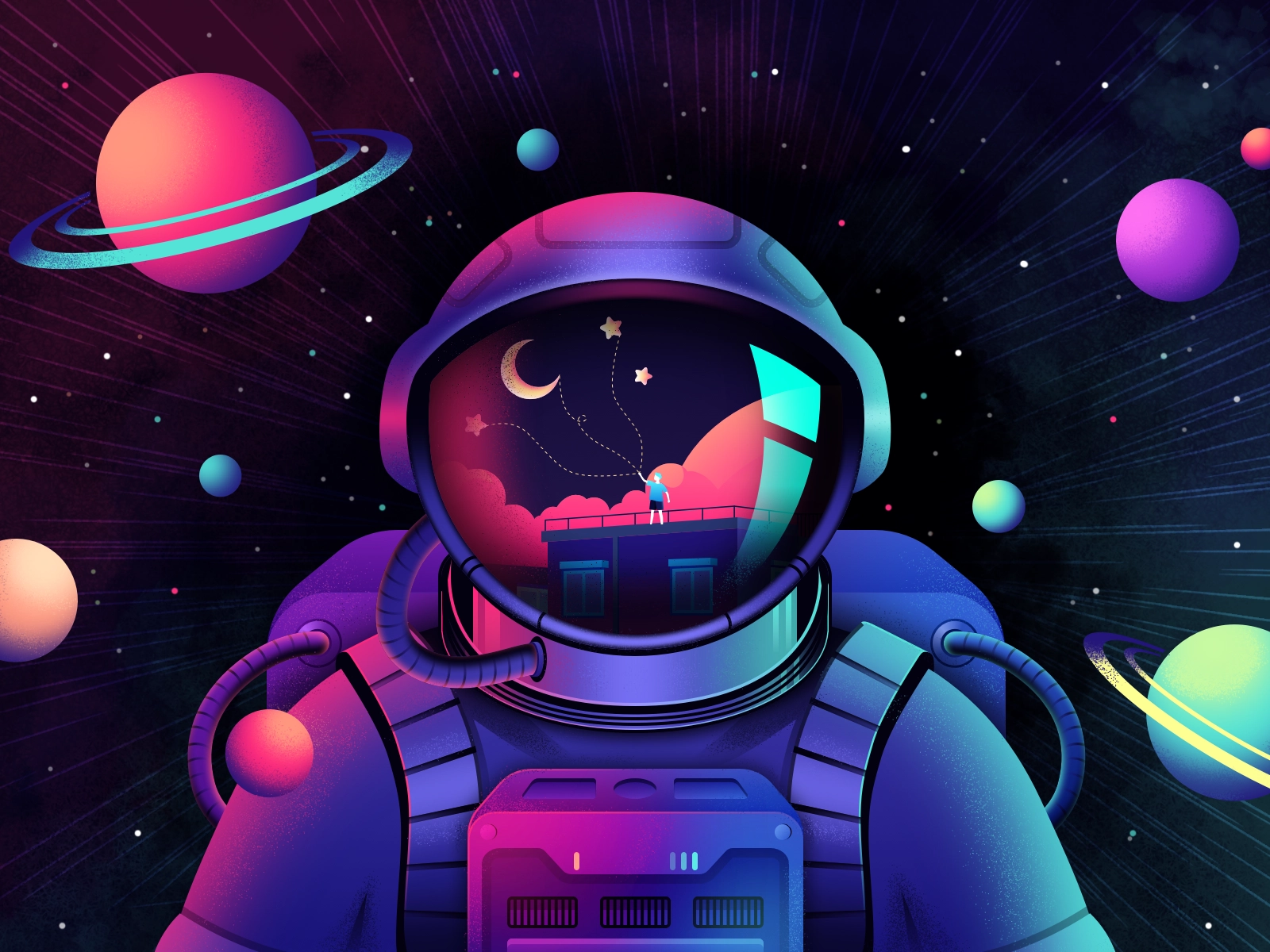
We associate Halloween with jack-o’-lanterns, carnival costumes, and various creatures and otherworldly beings that, according to legend, can enter our world on the night of October 31 to November 1. But the traditional images of this holiday are found not only on our planet, but also throughout the universe.
In honor of Halloween, the editors at Universe Space Tech have compiled a selection of the most unusual and frightening space photographs, featuring ghosts, witches, jack-o’-lanterns, and even a galaxy-sized emoji.
The Sun is a jack-o’-lantern
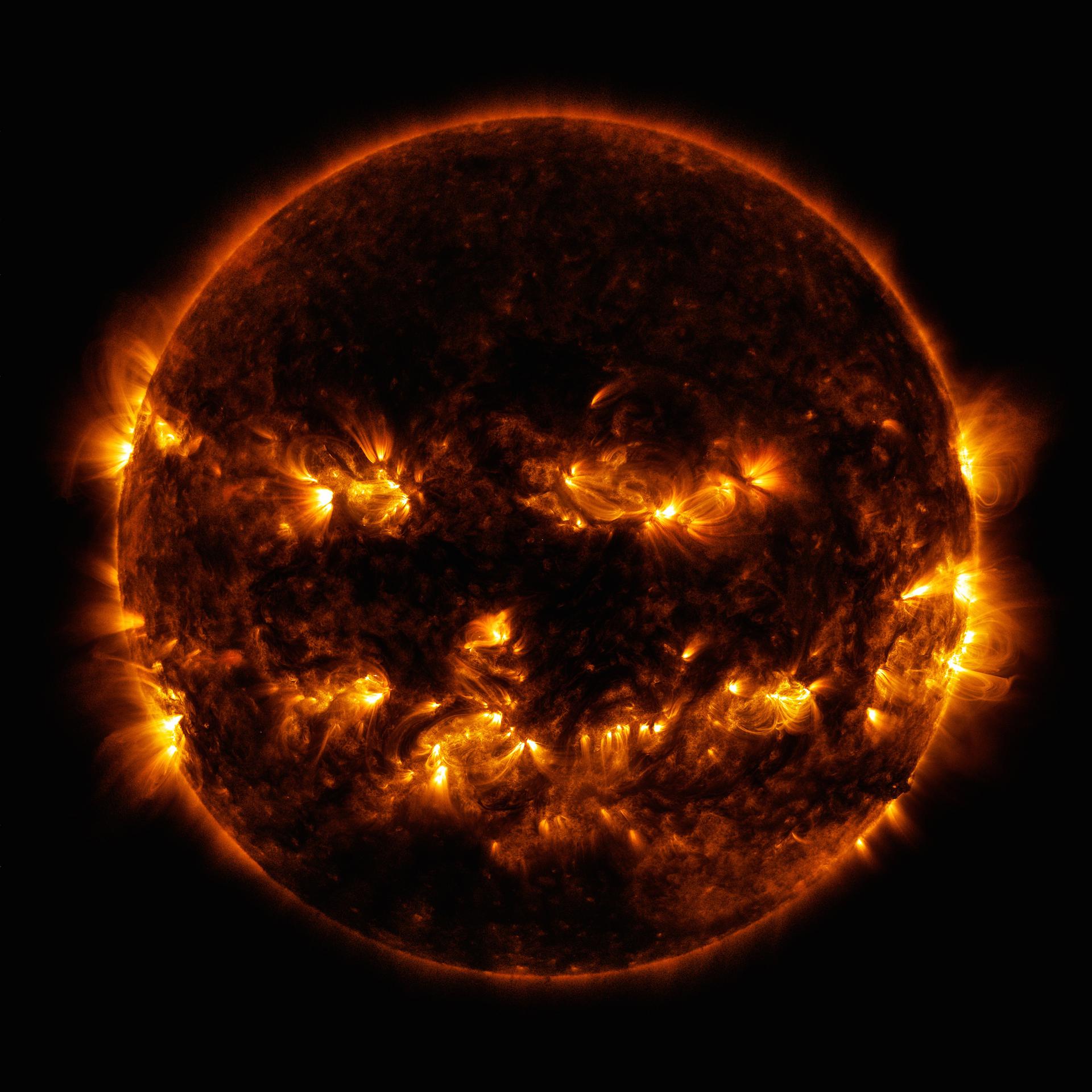
This image was captured by the SDO spacecraft on October 8, 2014, and shows active regions on the surface of our star. By a strange coincidence, they are arranged in a pattern that closely resembles a traditional Jack-o’-lantern.
Dead Man’s Hand
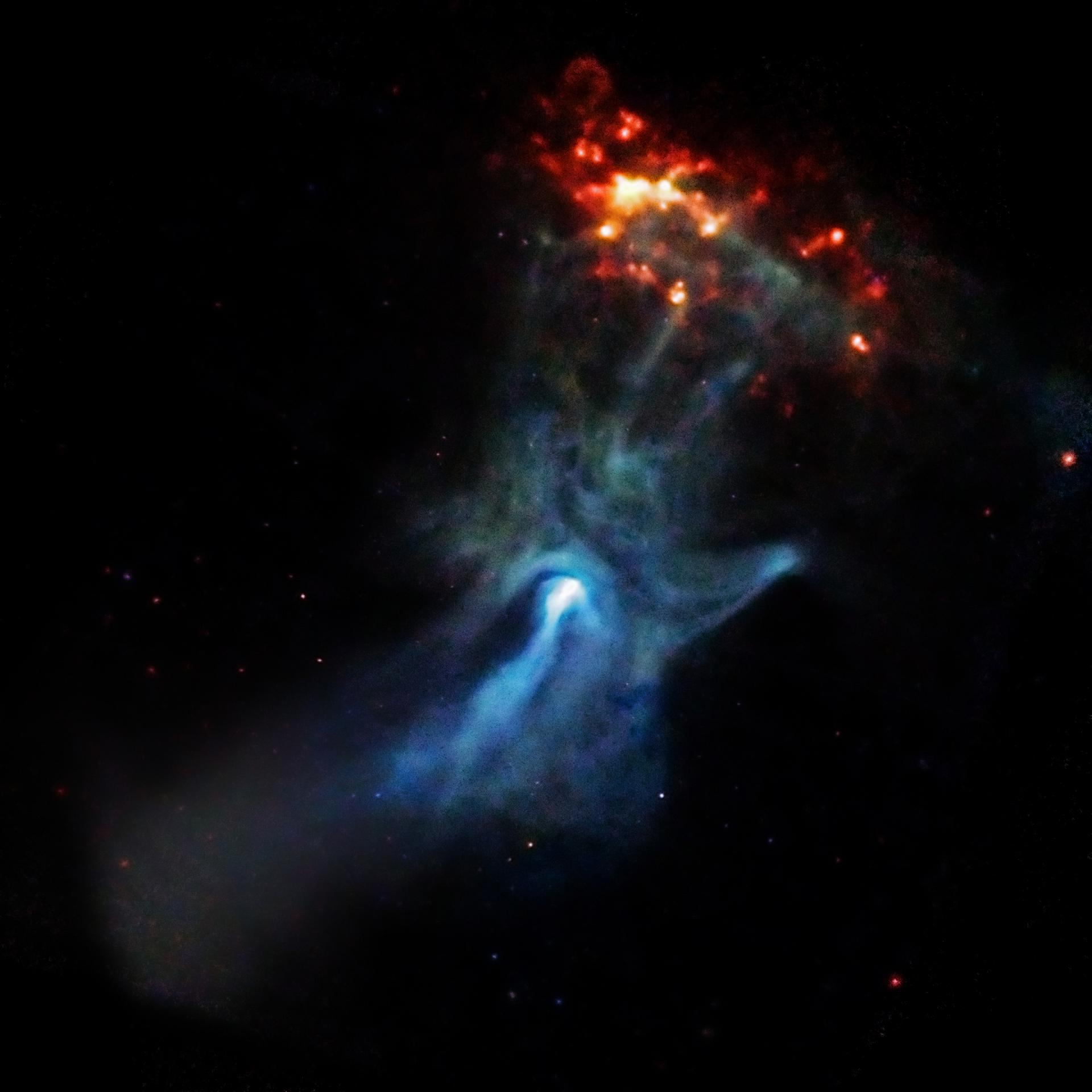
This image was obtained by the Chandra X-ray telescope. It shows a nebula located 17,000 light-years from Earth. At its center is a pulsar, the remnant of a star that exploded about 1,700 years ago. It rotates at a speed of 7 revolutions per second, affecting the surrounding matter and creating various bizarre structures resembling a giant ghostly hand.
Eye of Sauron
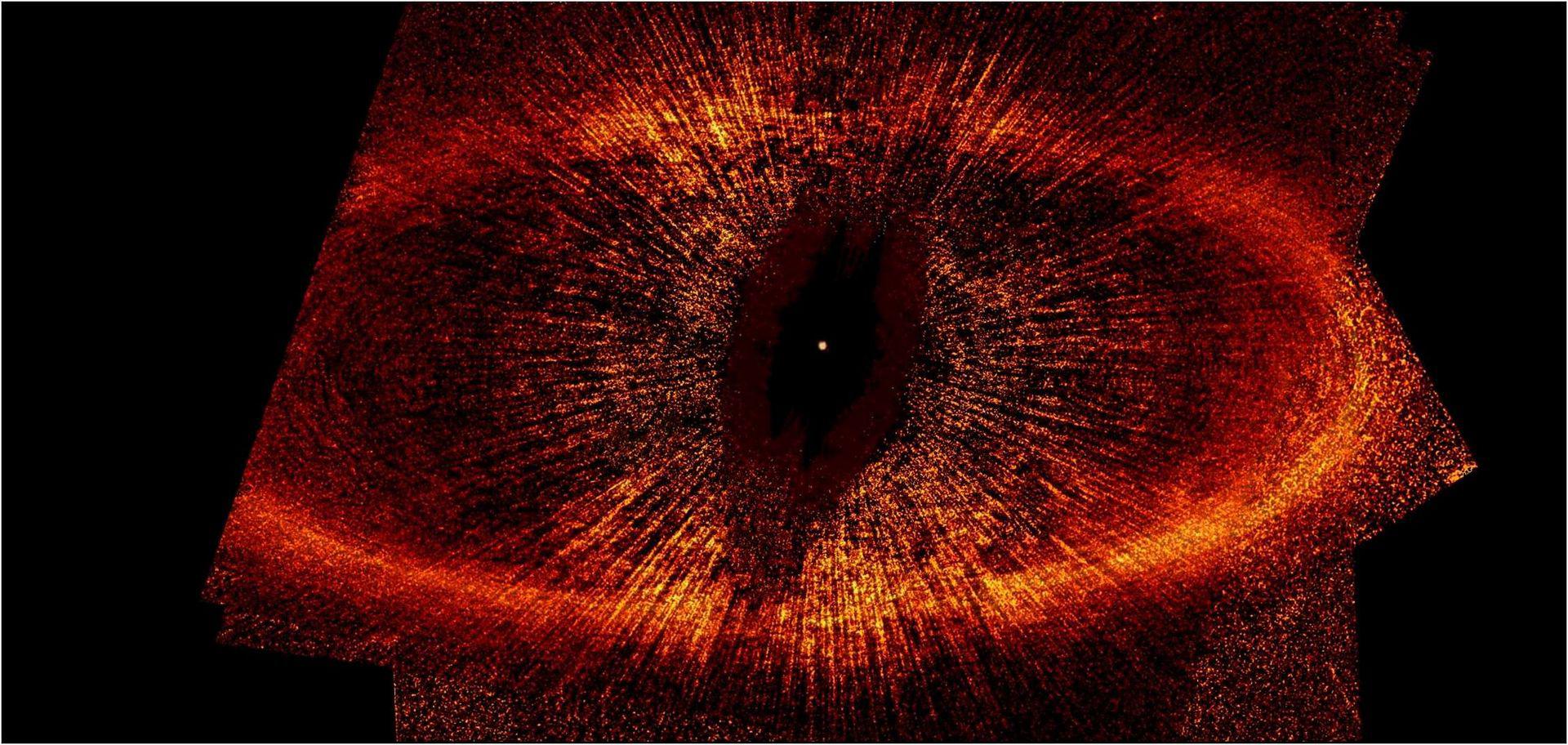
This Hubble Space Telescope image shows one of the brightest stars in the night sky, Fomalhaut. It is still very young and is surrounded by a residual disk consisting of dust and various debris. In images taken by space telescopes, the star resembles a giant eye. Because of this, it is sometimes called the Eye of Sauron.
Witch Head Nebula
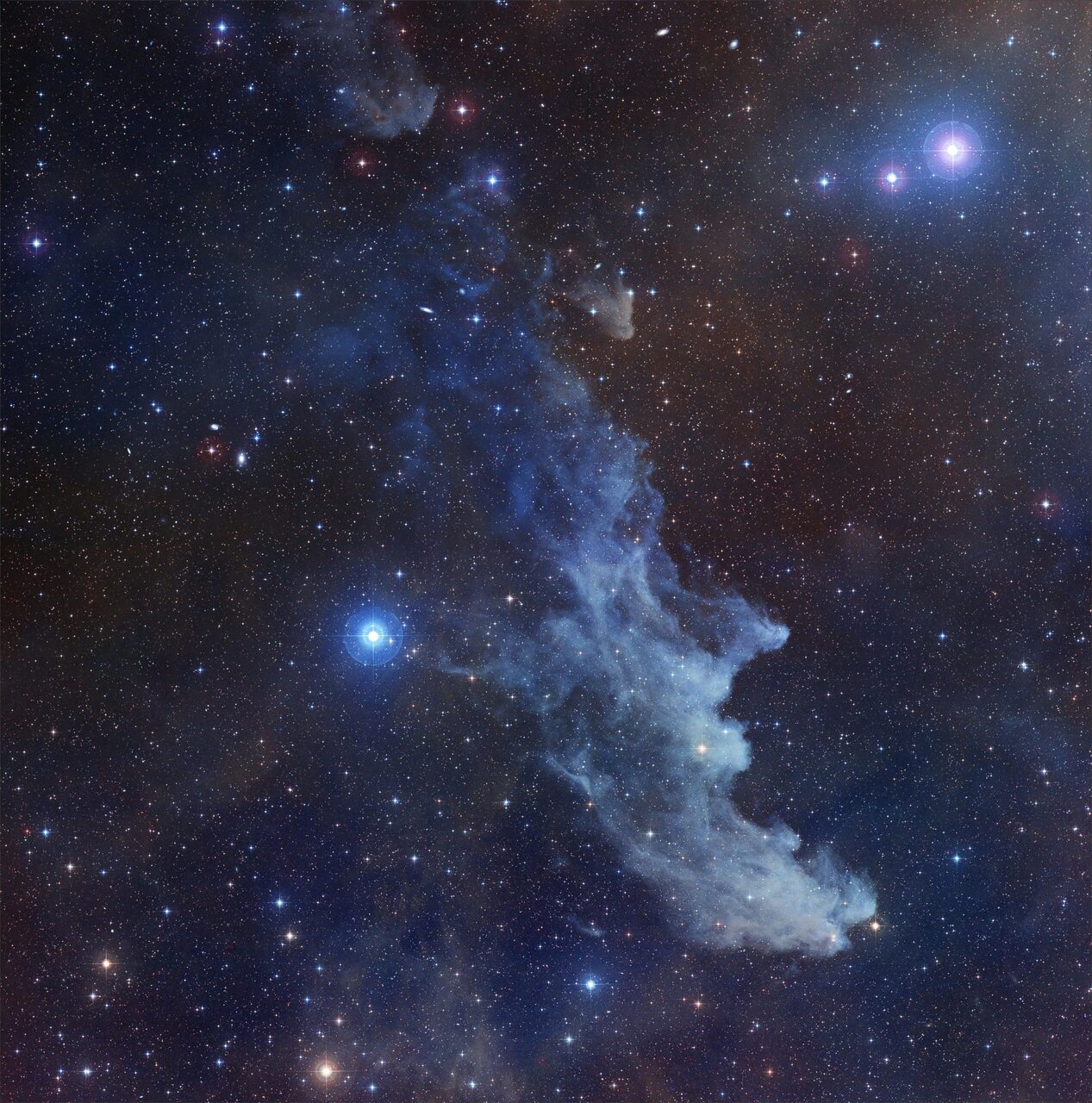
This bizarre object has the official designation IC 2118, but is much better known by its informal nickname. In fact, the Witch Head Nebula is a reflection nebula in the constellation Eridanus, located thousands of light-years from Earth. It glows with the reflected light of the supergiant star Rigel. Its powerful wind is most likely responsible for the nebula’s unusual shape.
Hole in the sky
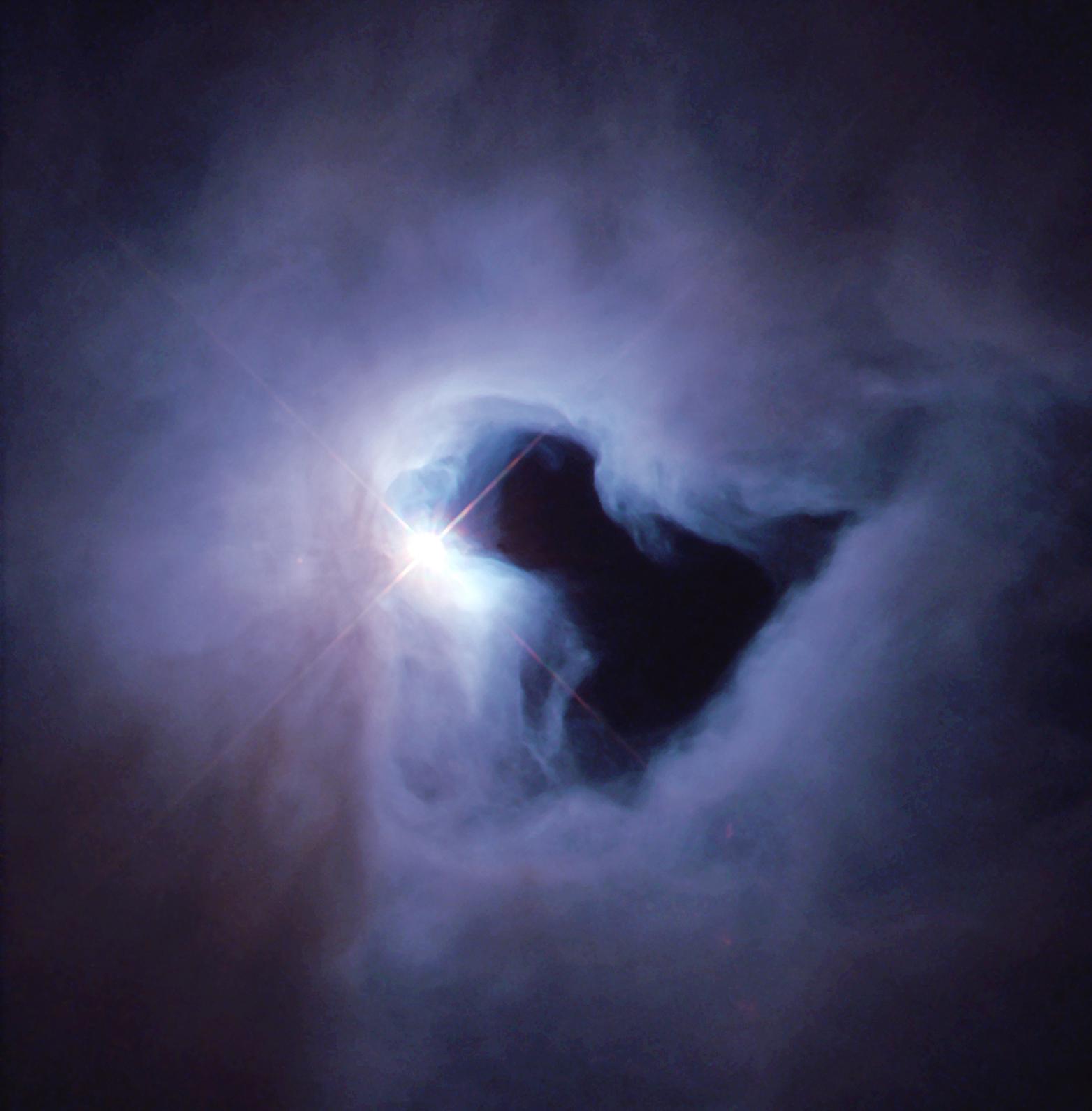
Due to its unique appearance, the NGC 1999 nebula has long attracted the attention of astronomers. It was previously thought that the characteristic dark area in its center was actually a cloud of gas and dust so dense that it simply blocked all visible light. However, recent observations have shown that this region is indeed empty. There are no gas and dust clouds or stars hiding inside it. What we see is a true cosmic void.
Creepy emoji
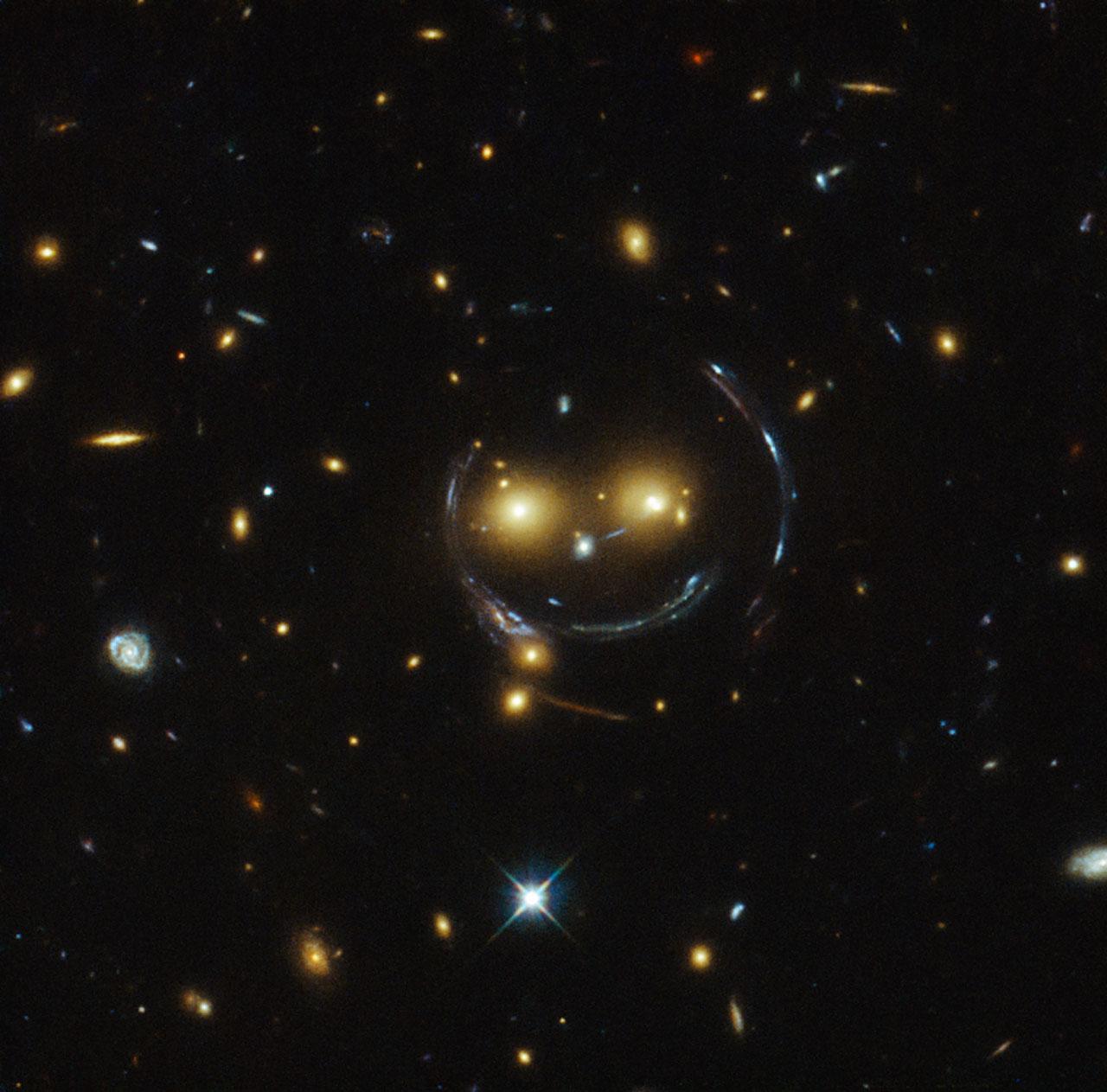
The powerful gravity of the largest structures in the universe can do truly strange things with light: amplify it and bend the direction of photons, leading to the formation of various cosmic mirages. One of them is captured in the photo shown here. The gravity of the SDSS J1038+4849 galaxy cluster has created a giant smiley face, whose smile makes an eerie impression. In reality, its “eyes” are two large elliptical galaxies that are part of the cluster itself, and its “nose” is a smaller galaxy. As for the ‘smile’ and “head,” these are distorted light from more distant galaxies.
Skull and bones
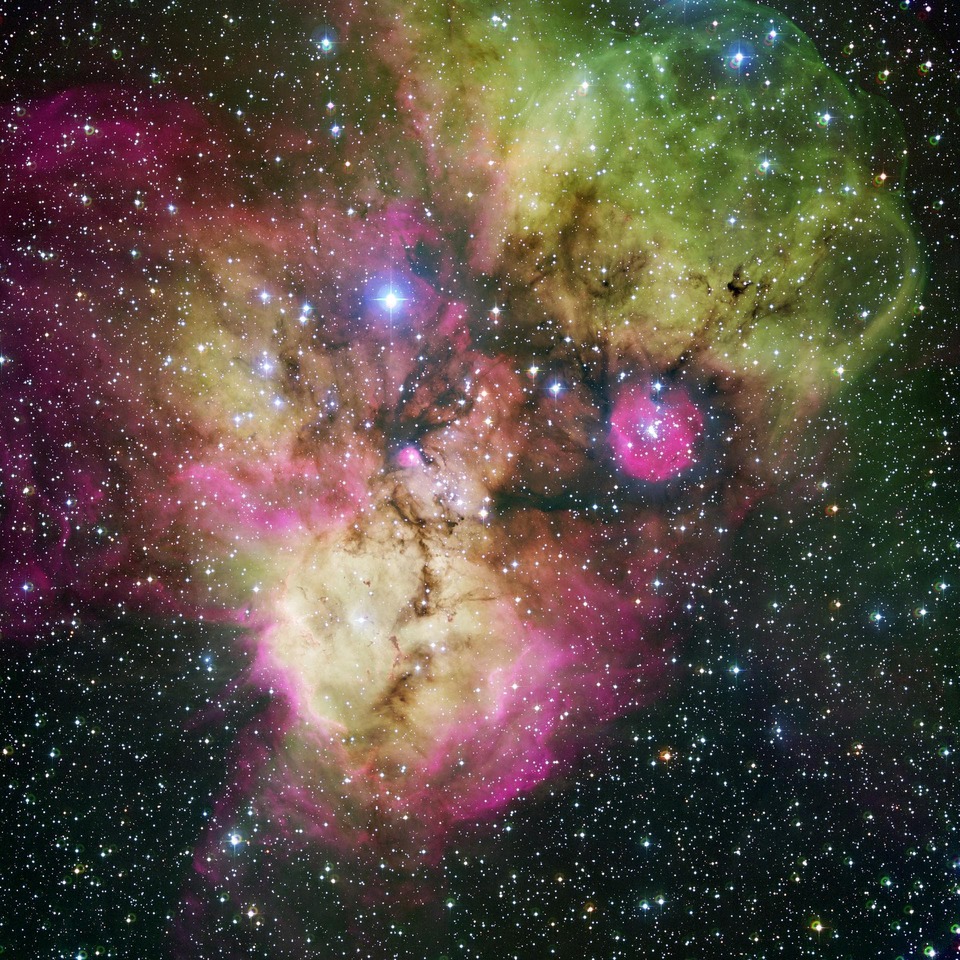
Appearances can be deceiving. Looking at images of the distant cosmic object NGC 2467, we see something that closely resembles a grinning skull. In reality, what we see is a stellar “maternity ward” that has given birth to many generations of young stars. Interestingly, NGC 2467 is not a single object, but rather several nebulae and groups of stars moving at different speeds. This image is the result of the observer seeing all of its objects in a single line, with their images overlapping each other.
Space virus
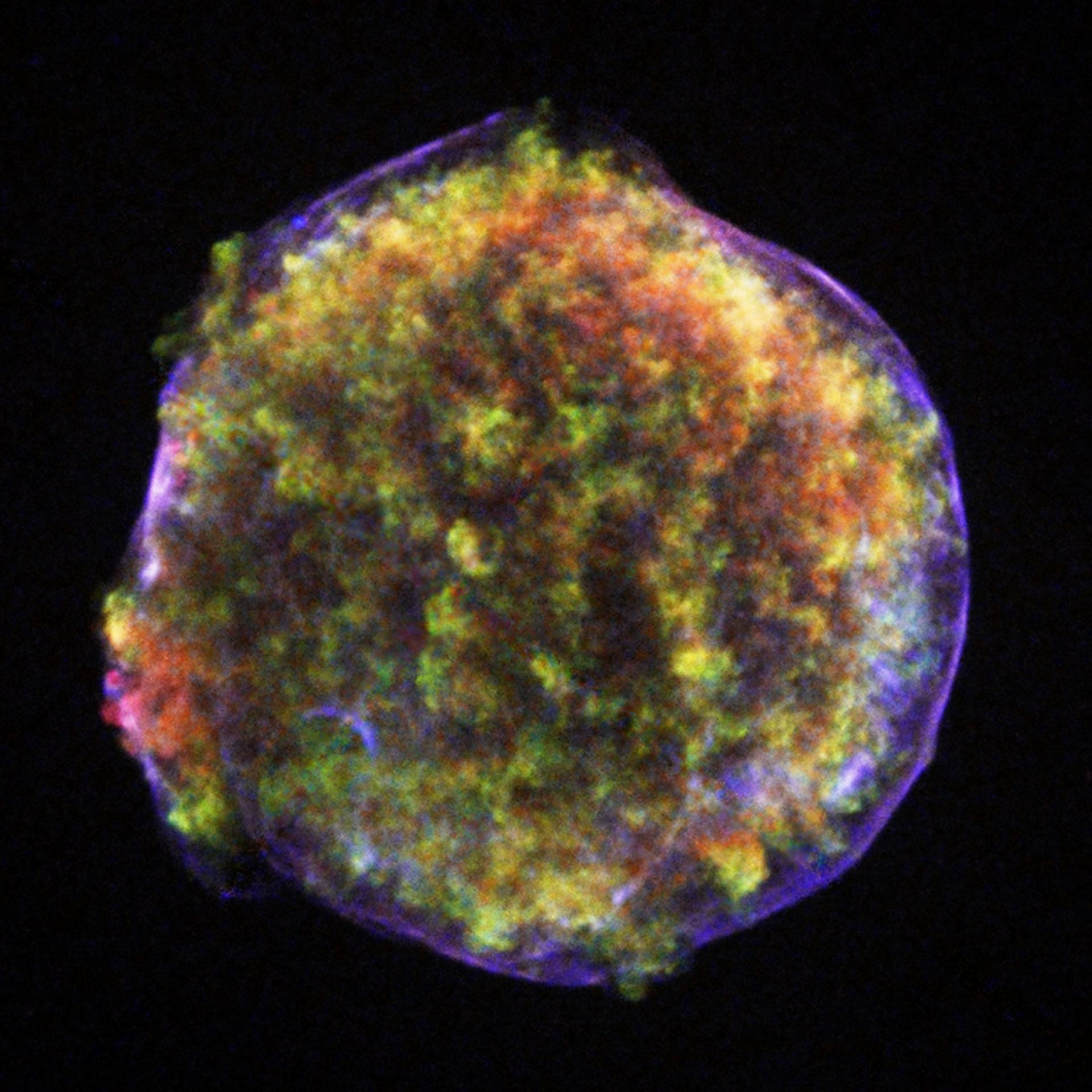
This image is quite capable of evoking memories of the COVID-19 pandemic, as it resembles a photograph of the virus taken with an electron microscope. But in fact, what we see here is not a microcosm, but a macrocosm. What we see is the remnant of a supernova that exploded in the constellation Cassiopeia in 1572. It is a bubble of hot gas rapidly expanding from the site of the explosion. In the process, it collides with the surrounding matter, generating shock waves and accompanied by the formation of high-energy radiation.
Death Star
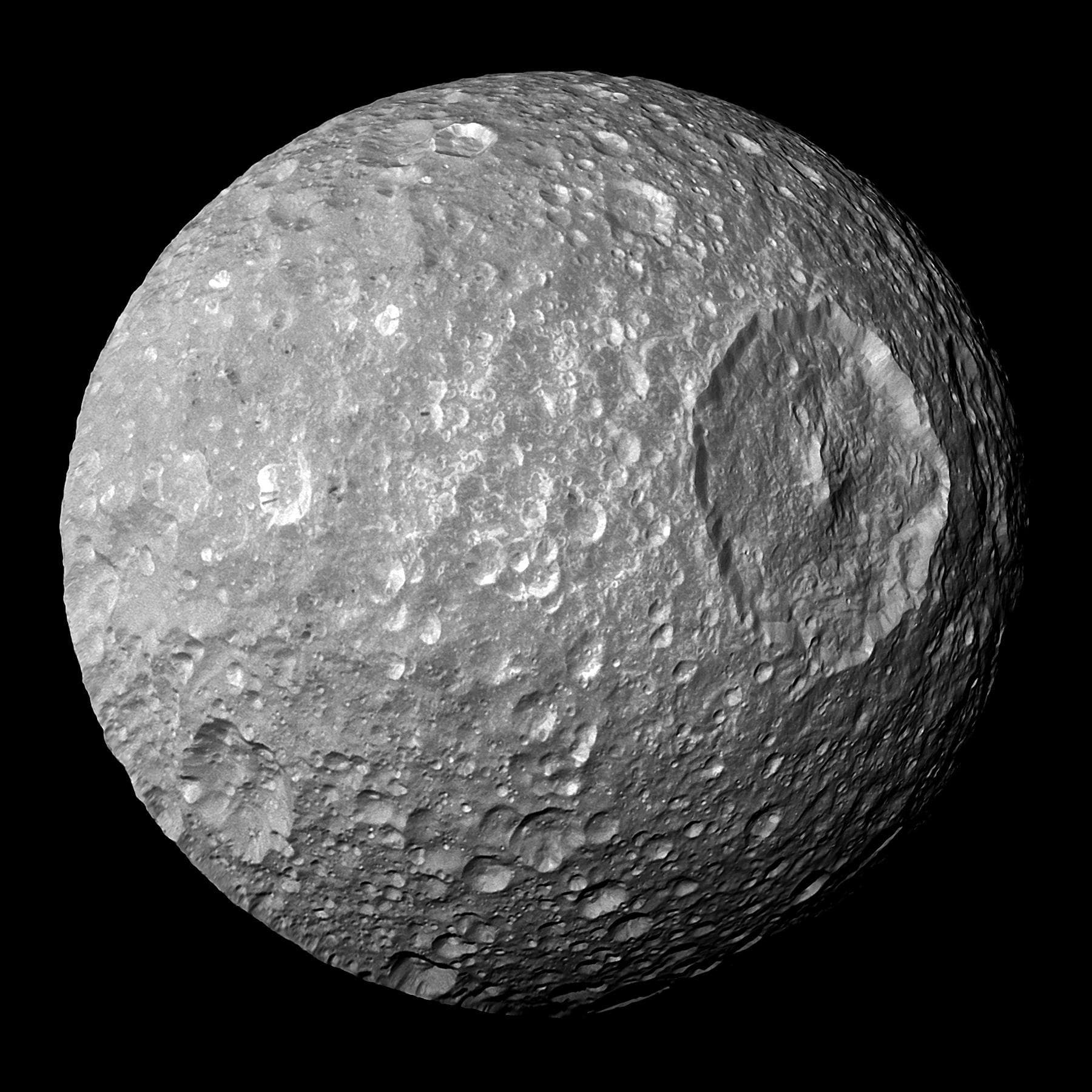
Saturn’s natural satellite Mimas is known for two reasons. First, it is the smallest spherical body in the Solar System. Second, thanks to the Herschel crater, Mimas bears a striking visual resemblance to the famous Death Star. The crater’s diameter is 139 kilometers, which is more than a third of the natural satellite’s diameter. Miraculously, this impact did not destroy the icy moon. Interestingly, Mimas was first photographed by the Voyager spacecraft. They were launched in 1977, just when the first Star Wars movie hit the screens.
Skull Nebula
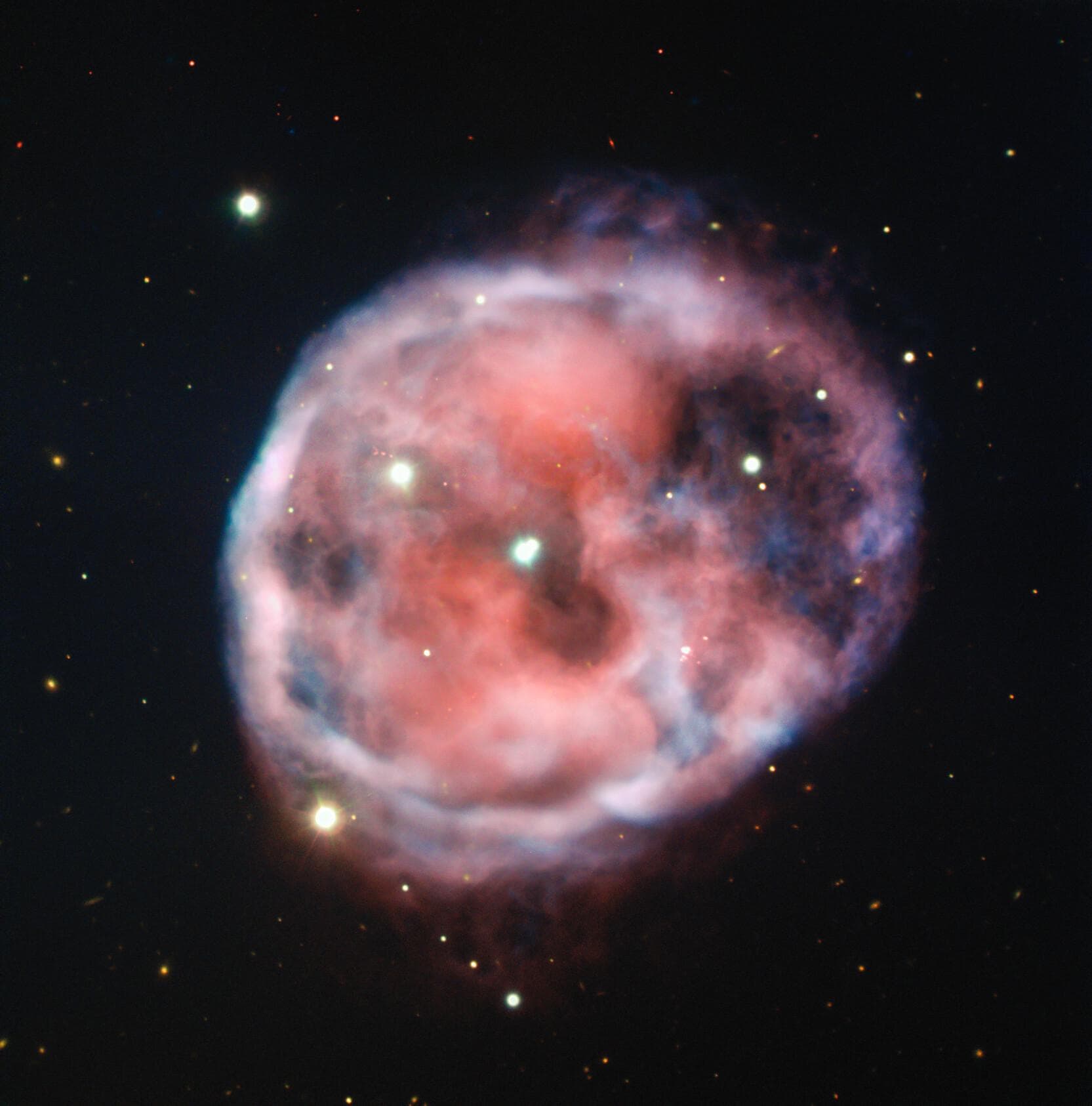
Different stars die in different ways. Some end their existence in a dazzling fireworks display, while others shed their outer layers and turn into white dwarfs. This is exactly what happened to one of the stars at the center of the NGC 246 nebula. The matter ejected by it formed a bizarre shape resembling a skull. Unlike most of the other objects on our list, in this case, the unofficial name quite accurately conveys the essence of what is happening. We see a huge burial shroud enveloping the recently deceased star.
Ghost of Cassiopeia
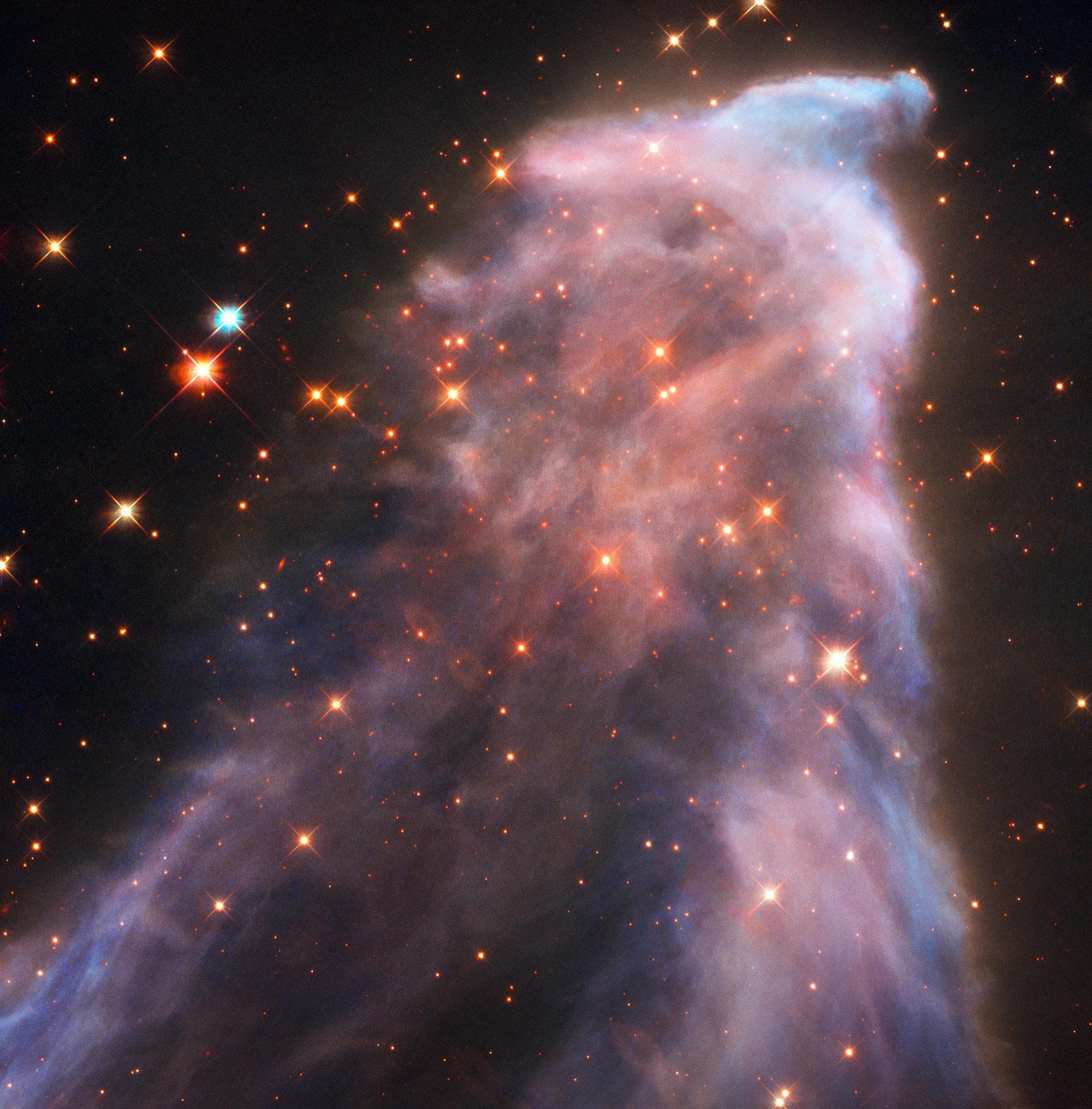
Ghosts and spirits are an integral part of the folklore of virtually all peoples of the world. Therefore, it is not surprising that their images can even be found in space. This Hubble Space Telescope image shows the IC 63 nebula, also known as the Ghost. Of course, in reality, this object has nothing to do with the otherworldly realm. IC 63 is a gas and dust cloud in the constellation Cassiopeia that glows under the influence of a neighboring giant star. Over time, this radiation will destroy the cosmic Ghost, scattering its matter throughout the Milky Way.
Scary face
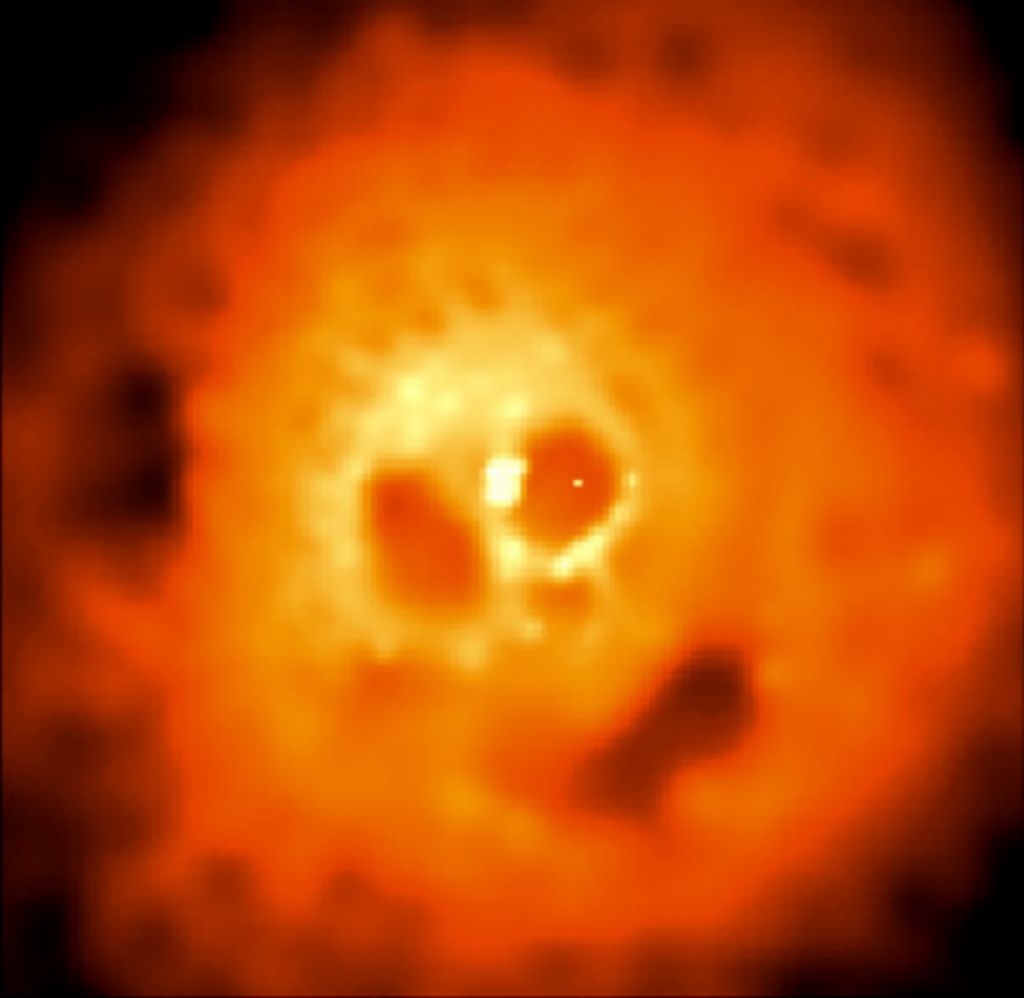
This terrifying face seems to be writhing in pain caused by the surrounding fire. Fortunately, no one was hurt in reality when this photograph was taken. In fact, what we see here is an image of the Perseus cluster taken by the Chandra Observatory. The “skull” is formed by fluctuations in X-ray radiation caused by hot gas filling the cluster. The bright spot in the center of the image corresponds to a supermassive black hole located in the center of the Perseus A galaxy.

