

Martian meteorites are rare messengers from another world that hold the key to unlocking the secrets of the Red Planet’s geology—and perhaps its biology as well. However, a new study, the results of which were published in the journal Applied Geochemistry, offers a fresh perspective on the issue of the sterility of space samples.
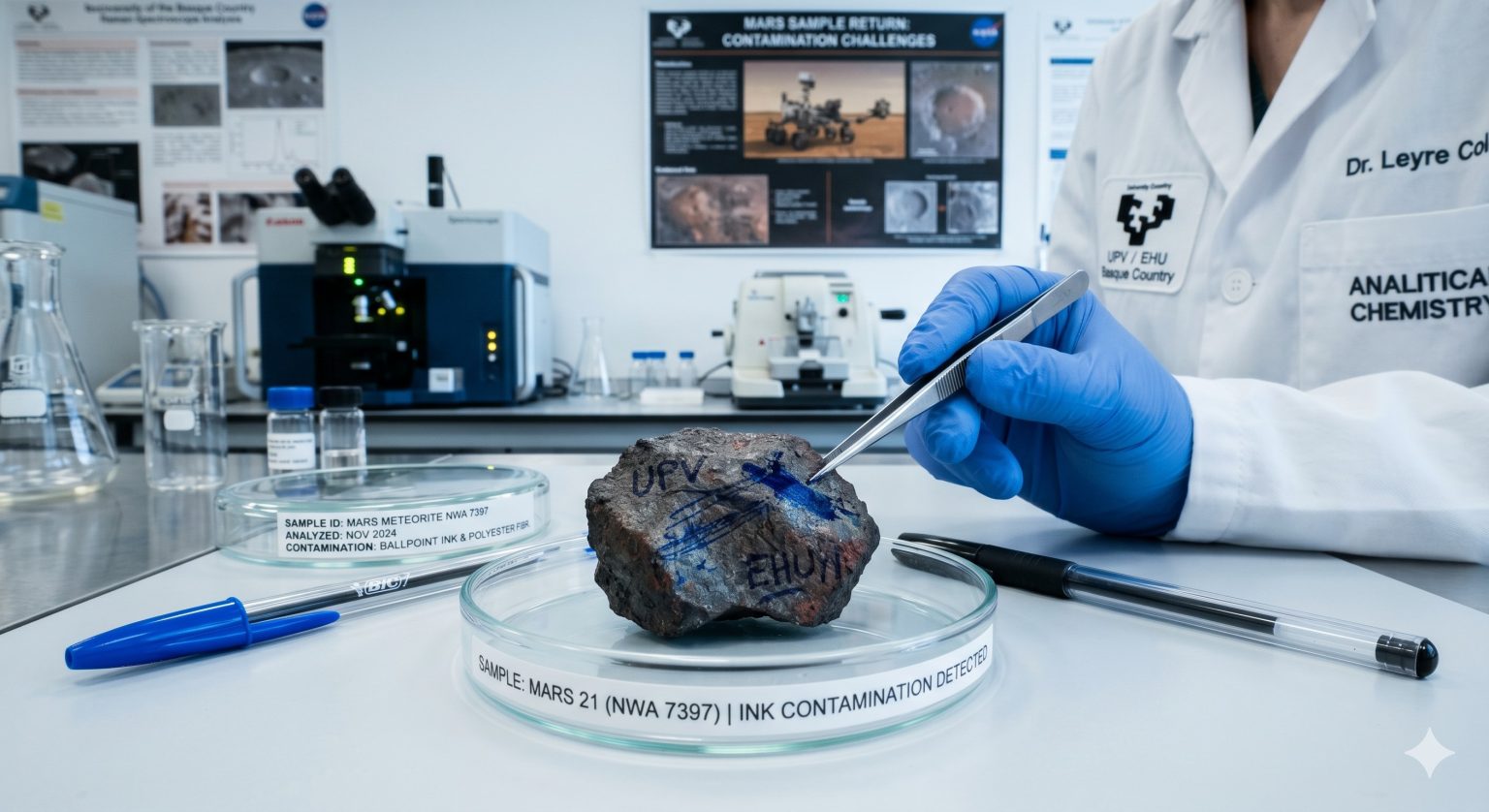
A group of scientists from the University of the Basque Country (Spain) has discovered something in Martian rocks that definitely shouldn’t be there: traces of ink from a standard ballpoint pen. This discovery has nothing to do with extraterrestrial civilizations. As it turned out, the traces were left behind after the team prepared the samples they received from NASA’s Johnson Space Center. This discovery highlights the critical vulnerability of space materials to terrestrial contamination, which can sometimes be impossible to remove.
Space rock
It is important to understand that no sample from Mars or the Moon ever reaches researchers in a completely unchanged state. The journey through space and re-entry into Earth’s atmosphere alter the meteorite. Under the influence of extreme temperatures and pressure, a so-called fused crust forms on meteorites.
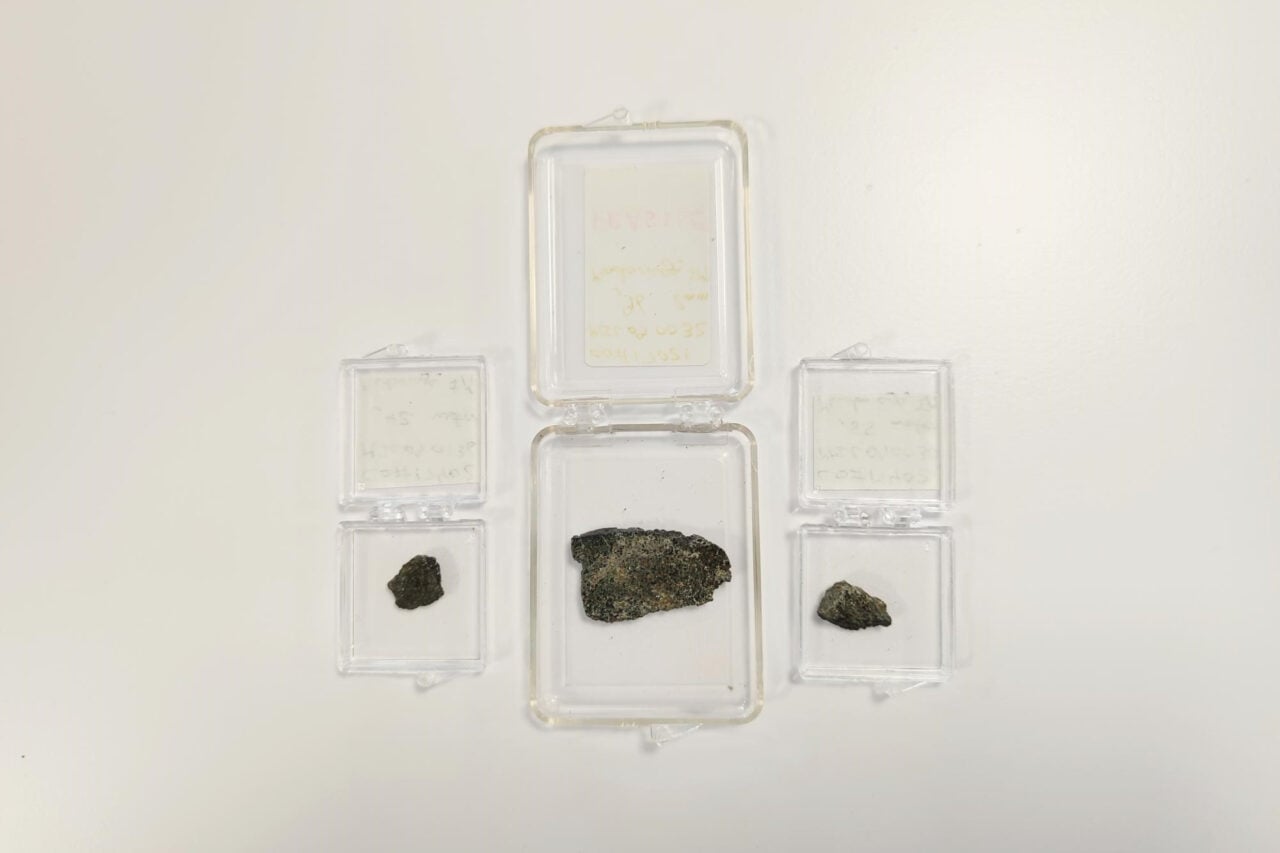
According to analytical chemist Leire Coloma, this outer layer obscures the original mineralogical composition. As a result, scientists are forced to remove it using complex procedures: ultrasonic cleaning, cutting with diamond saws, and soaking in solvents or polymeric lubricants. However, at this stage, a paradox arises: in their attempt to reach a “pure” state, researchers inadvertently introduce contaminants themselves. The lack of standardized international protocols for sample preparation only exacerbates this problem, making it more difficult to identify the compounds found.
Spectroscopy and unexpected impurities
For the analysis, the team examined six sections of Martian meteorites found between 2001 and 2014. A meteorite that had never undergone laboratory processing was used as a control sample. Using Raman spectroscopy, the scientists identified seven different types of contaminants.
Some of them, such as diamond microparticles from saws or ethyl alcohol, could easily be linked to industrial processes. But other findings turned out to be much stranger:
- Copper compounds and organic molecules found in ink for ballpoint and gel pens.
- Rosin derived from tall oil, which is commonly used in printer ink.
- Blue polyester, likely originating from a staff member’s clothing or textiles in the laboratory.
A reason for caution, not panic
Despite the curious nature of the discovery, researchers insist there is no reason to doubt scientific findings. Modern analytical methods make it possible to distinguish terrestrial contaminants from Martian materials with a high degree of accuracy. The likelihood that scientists would mistakenly interpret blue polyester as evidence of “life on Mars” is negligible.
Nevertheless, this study serves as an important warning for the future. The Perseverance rover has collected soil samples that will eventually be returned to Earth as part of the Mars Sample Return mission. A team from the University of the Basque Country hopes that their recommendations will help improve decontamination protocols and minimize risks. After all, when it comes to finding answers to the universe’s fundamental questions, every molecule of earthly ink can become an unnecessary obstacle on the path to truth.
We previously explained why you shouldn’t use magnets when searching for meteorites.
According to gizmodo.com

