

Scientists have reassessed the danger posed by asteroid 2024 YR4, which came close to Earth last year. It will not collide with our planet in the future, but it may well collide with the Moon. And the best way to prevent this is to explode the space rock.
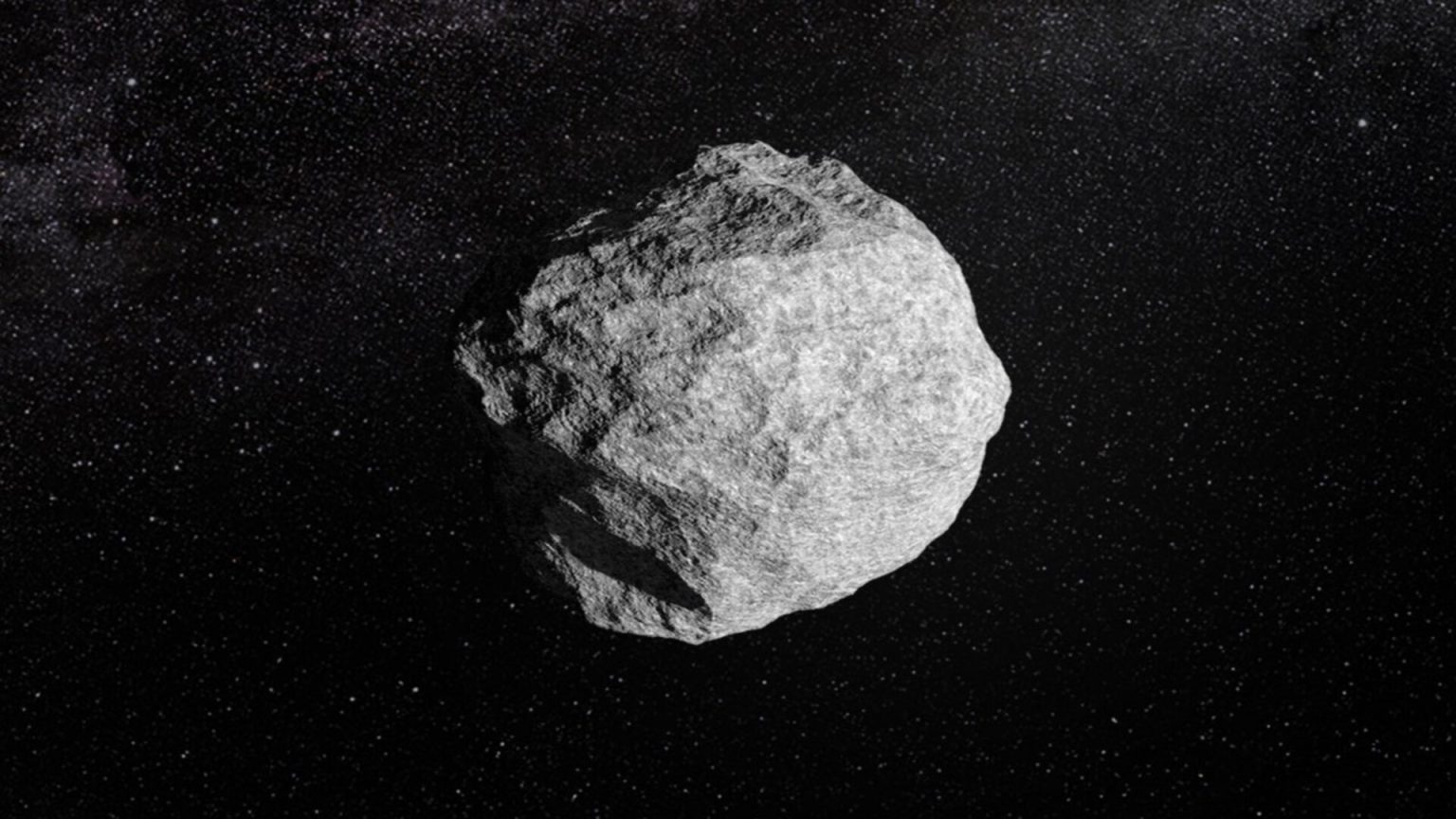
Possible impact of asteroid 2024 YR4
Asteroid 2024 YR4 caused considerable hype last year when it was discovered and initially calculated to have a 3% chance of colliding with Earth. Since then, the models have been refined, and although the probability of a collision with Earth no longer exists, there is a 4% probability of a collision with the Moon in December 2032.
When that time approaches, we will have a better idea of the probability, but engineers and scientists are also planning ahead for what we will need to do to prevent the asteroid from hitting our only natural satellite at all. The first question that comes to mind is, why should we care? At this point, there are no definitive plans for a permanent human presence on the Moon, so this will not directly affect any human activities. Except that an asteroid of this size could create a huge debris field that would increase the number of micrometeorites striking Earth by 1,000 times compared to the normal average background level for several days.
Although it would be one of the best meteor shows in the last few hundred years, it would also pose a danger to satellites orbiting the Earth, and even to astronauts on the ISS and other space stations — assuming they are still there in 2032.
In fact, there are only two options to prevent such an event if 2024 YR4 actually hits the Moon, which, frankly speaking, is still very unlikely. One option is to deflect it. Another is to destroy it.
Is it possible to deflect an asteroid?
It would have been better to deflect its trajectory—just a slight shift in its orbit would have been enough for it to bypass both Earth and the Moon. The sooner we do this, the less of a push will be needed, so it’s better to do it sooner rather than later. However, in order to accurately deflect 2024 YR4, we need to know how much it weighs.
We have a relatively accurate estimate of its diameter—approximately 60 m with a margin of error of 10%. However, estimating its mass depends on its density, which is difficult to calculate from such a distance. The weight of an asteroid can range from 51 million kg to over 711 million kg — and the amount of energy required to move any of these weights a very precise distance varies significantly. If the asteroid deflection mission is based on an incorrect calculation of its mass, it could accidentally alter its trajectory, making the situation even worse, including potentially redirecting it toward Earth.
Engineers could develop a reconnaissance mission to try to obtain a more accurate estimate of the mass of 2024 YR4, but the best time for this would be in 2028, which is only three years away. The development and launch of a special mission in such a short time frame has never been done before, and while it may be a mission to solve a problem that poses a fairly high level of threat, 2024 YR4 is probably not one.
In this regard, we could repurpose existing missions that are already in space or are in the development stage. OSIRIS-APEX is the name of the extended mission of OSIRIS-Rex, which is now heading towards Apophis, another asteroid approaching Earth. Psyche could also be redirected toward its primary target in the asteroid belt.
But in both cases, these missions will have to abandon their planned objectives in order to get closer to 2024 YR4. Another option is Janus, which is currently in storage, but it is unclear how well they will be able to determine its weight.
Destroying the asteroid is the most realistic option
Given the uncertainty of the deflection option, the other option is at least realistic. The destruction of the asteroid can take two forms. The first is “kinetic”: basically, this involves striking the asteroid with something large and heavy, powerful enough to break it into smaller fragments measuring 10 meters across. Recently, the DART mission proved the possibility of changing the trajectory of an asteroid by doing the same thing, but striking with the aim of destroying an asteroid will be a much more difficult task, although we will certainly be able to develop and build the necessary equipment in time for the launch, scheduled for between April 2030 and 2032.
Another option for destroying the asteroid is to destroy it with nuclear weapons. A nuclear bomb is to be detonated at a certain altitude above the surface of 2024 YR4. Known as the “height of burst,” we will still need reconnaissance to attempt to set up the explosion. However, according to calculations in the article, a 1-megaton nuclear bomb would be sufficient to destroy 2024 YR4 regardless of its size — and this is well within the capabilities of our current nuclear arsenal.
It is as much a political decision as it is a technical one as to whether this will be a viable option for this particular threat to our planetary system. We are not even sure whether 2024 YR4 will hit the Moon, and we will only find out in 2028. But if it turns out that it is, then it is better to at least have the option to deflect it if we want to. This decision will have to be made in the next few years, as the window for launching missions is getting smaller every day — regardless of whether they are nuclear or not.
According to phys.org

