

A new study has refuted the popular theory about the unexpected shortening of Dimorphos’ orbital period. Scientists have discovered that the proposed mechanism would actually have the opposite effect.
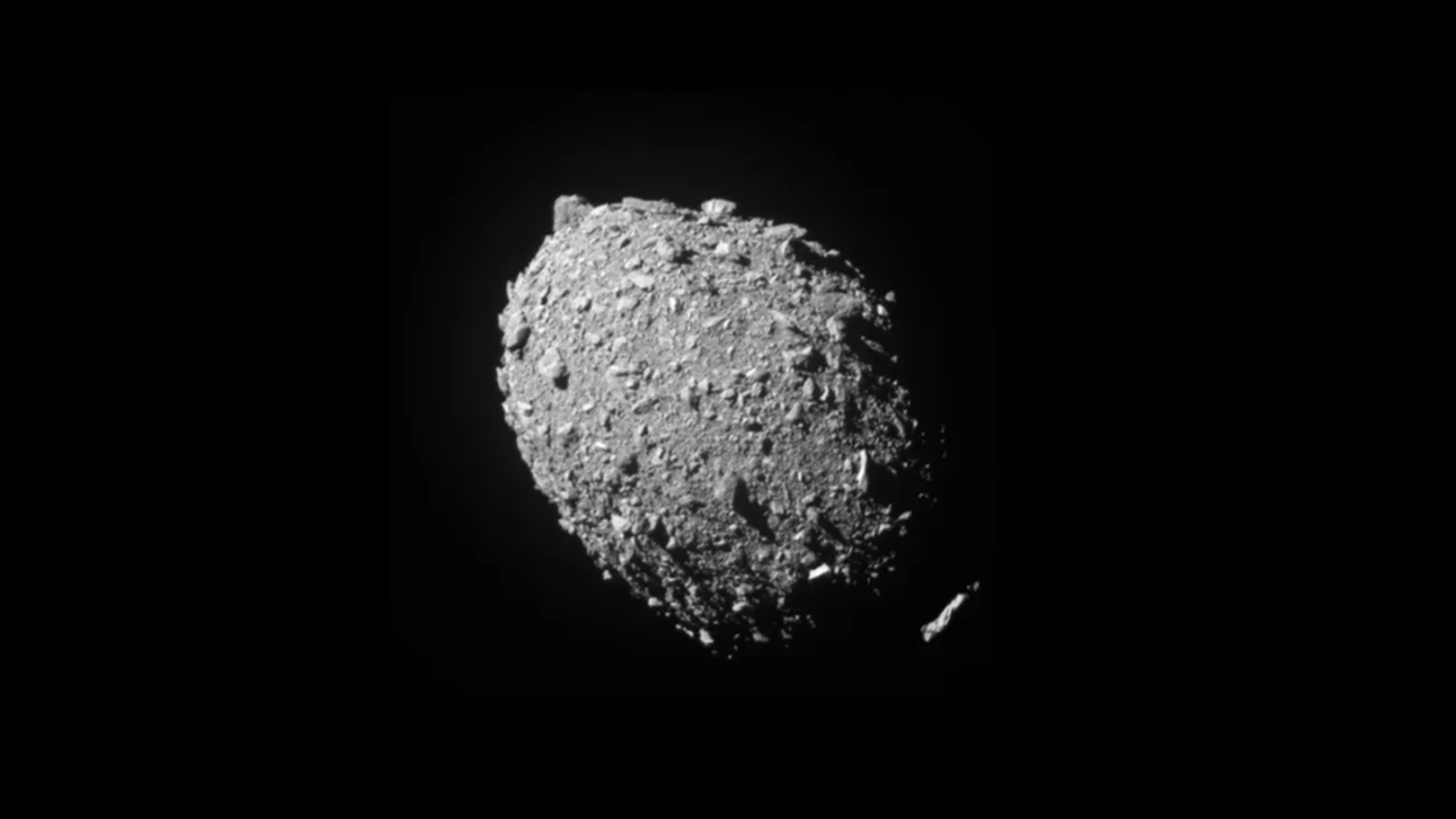
In 2022, NASA’s Double Asteroid Redirection Test (DART) vehicle deliberately collided with Dimorphos, a small satellite of the near-Earth asteroid Didymos. The mission was dedicated to protecting our planet. Scientists wanted to test whether the space ram technique could be used to change the orbit of a celestial body threatening Earth.
The demonstration was quite impressive. The period of Dimorphos’s orbit around Didymos after the impact was reduced by as much as 33 minutes, which far exceeded the scientists’ expectations. However, in the following weeks, something unusual happened: observations revealed an additional reduction in the orbital period of another 30 seconds. This situation has left researchers perplexed as to its causes.
The initial hypothesis suggested a scenario known as binary system hardening. It involves debris ejected as a result of the collision interacting with Dimorphos’ gravity and ultimately being ejected from the system, causing it to lose angular momentum and acquire a tighter orbit.
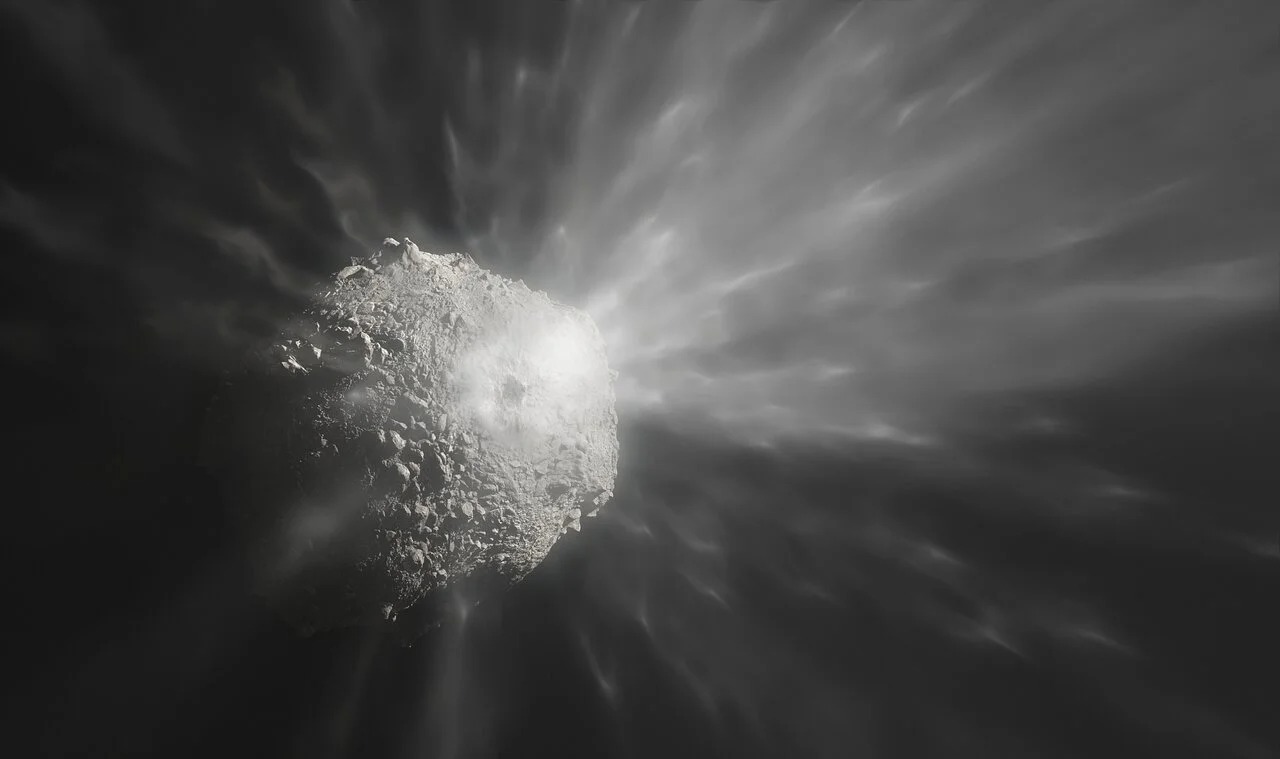
However, the results of a recent study conducted by scientists from Université Côte d’Azur have cast doubt on this scenario. Simulation showed that Dimorphos was too weak a “scatterer” to affect the angular momentum of the system.
If the ejected particles do not disperse, the most likely consequence will be re-accretion, in which the debris falls back onto one of the components of the binary system. Since the collision between DART and Dimorphos was head-on, most of the ejected material entered prograde orbits. This means that they are moving in the same direction as Dimorphos and Didymos in their mutual motion around the Sun. In turn, when material moving in the prograde direction re-accretes, it increases the angular momentum of the binary system. This leads not to a decrease, but to an increase in the orbital period, which contradicts the observed pattern.
All this suggests the existence of an additional mechanism that can counteract this effect and cause the observed decrease in the orbital period. Researchers suggested that the most likely alternative explanation is a change in the shape of Dimorphos after the impact. At the same time, they admitted that further research would be needed to reach a final conclusion.
Perhaps the European Hera mission will provide the answer to this question. It will reach Didymos and Dimorphos at the end of 2026.
According to Phys.org

