

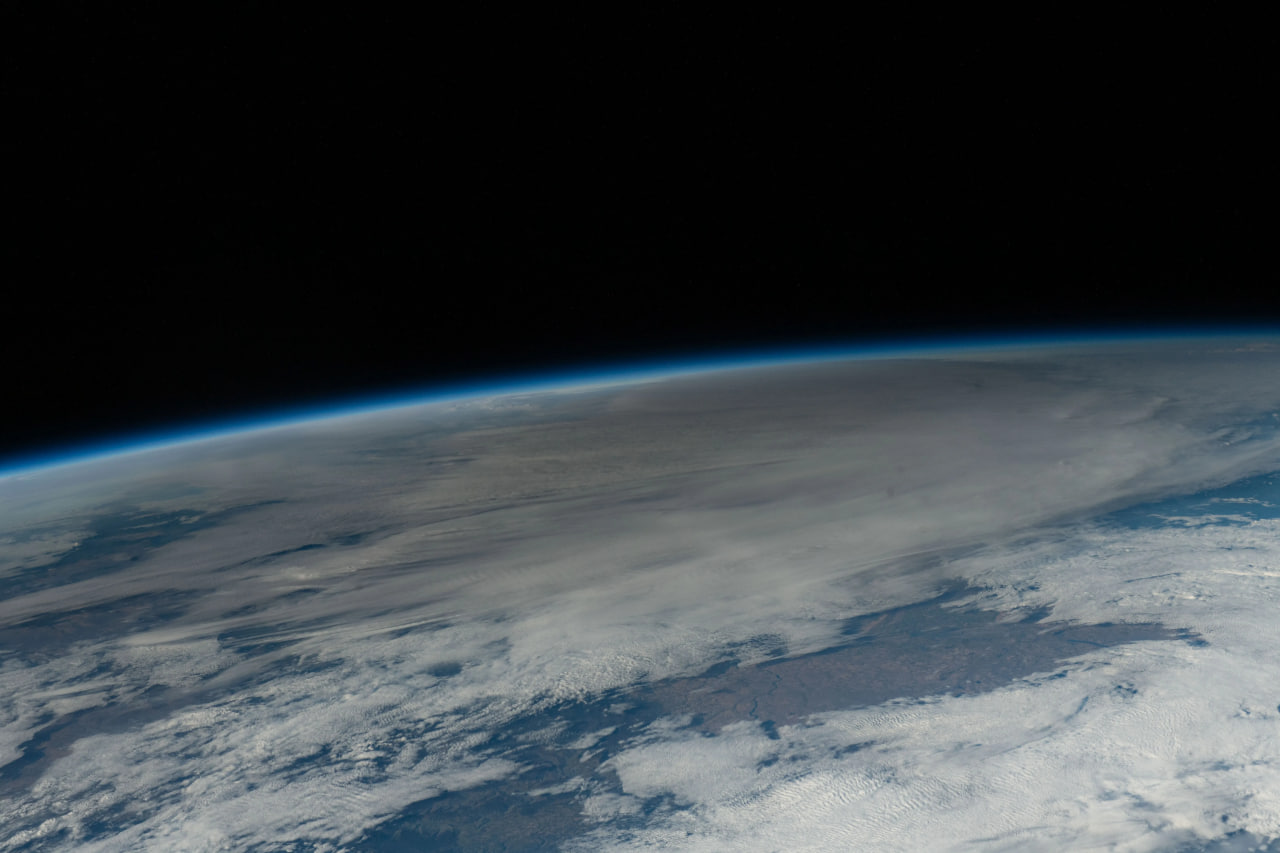
Astronomers believe that the shadow of our planet may hold the key to finding possible extraterrestrial spacecraft. A study published in Monthly Notices of the Royal Astronomical Society suggests using this “clean zone” as a place to search for alien probes that could theoretically be monitoring Earth.
Near-Earth space is now crowded with satellites and space debris. This makes it very difficult to search for unknown objects in orbit. To get around this problem, a team led by Beatriz Villarroel from Stockholm University decided to take a different approach: to search for objects only in the Earth’s shadow.
There are no reflections from satellites or debris in this shadow, so it is a kind of “quiet zone.” Using more than 200,000 images from the ZTF telescope in California and the NEOrion artificial intelligence system, researchers have recorded thousands of unusual objects. Most of them turned out to be meteors, airplanes, or known asteroids, but one case remains a mystery to this day. This object was moving faster than asteroids and wasn’t listed in any catalog.
Another idea from scientists is to examine old astronomical photographs taken before the launch of the first satellite in 1957. If strange objects appear on them, this could be a clue to their artificial, and possibly extraterrestrial, origin.
In addition, the team studies light spectra to identify materials that have been exposed to space for a long time. This will help distinguish ordinary natural bodies from technologically created structures.
At the same time, another group of scientists, led by Pinchen Fan from the University of Pennsylvania, is studying our own radio signals. It turned out that when the planets are aligned, signals from Earth travel particularly clearly and far. This means that it is precisely at that moment that extraterrestrial civilizations, if they exist, can hear us. And perhaps they send replies at such moments.
So far, there is no confirmation of the existence of extraterrestrial spacecraft. But these new approaches offer astronomers a real chance to move from chaotic searching to targeted observations — in those places and at those moments where the probability of finding something truly unusual is greatest.

